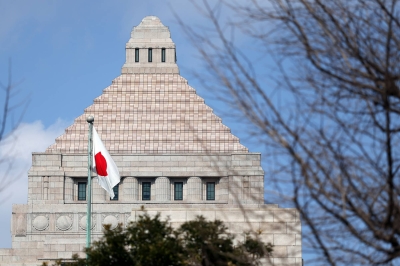
The draft revision of the Artificial Intelligence Basic Plan highlights the growing risk of cyberattacks that exploit AI.
How the world covered this
Read the editorial comparison
Prose synthesis of how each outlet framed the story, with side-by-side outlet quotes and divergence notes.
3 articles from 2 sources
01
02
Exports of some key types of tungsten, as well as rare-earths dysprosium and terbium, stayed at zero in May, according to Chinese customs data.

03
Led by Japan, East Asia seems to be setting off along a road to nowhere – beyond tension and maybe eventual conflict. This may seem a harsh indictment yet consecutive Japanese leaders have shown a lack of vision on the…

AI read
What the coverage agrees on, and where it splits
This view is generated from the clustered articles, so it is best read as a map of coverage rather than a replacement for the source reporting.
Broadly agreed
- Japan Times confirms China's exports of key tungsten, dysprosium, and terbium to Japan remained at or near zero in May 2026.
- SCMP confirms Japan led a G7 rare earth proposal that generated regional tension.
Contested framing
- Japan Times frames China's export restrictions as a supply-chain vulnerability requiring defensive policy response; SCMP frames Japan's G7 rare earth proposal as potentially escalatory and counterproductive to regional stability.
Still unclear
Whether G7 members beyond Japan have committed to the rare earth diversification proposal, and what specific supply-chain alternatives Japan has identified, remain unspecified.
Notable omissions
South Korean and Taiwanese perspectives on the Japan-China rare earth dispute — both equally exposed to Chinese mineral export leverage — are absent from available summaries.
Quality check
China's mineral export restrictions are confirmed; G7 response scope and regional dynamics are incompletely covered.
- Contested framing: Japan Times frames as vulnerability requiring defense; SCMP frames as potentially escalatory. Both policy positions present but not reconciled.
- Unknown: G7 member commitment beyond Japan and Japan's identified supply-chain alternatives remain unspecified.
- Major omission: South Korean and Taiwanese perspectives (equally exposed to Chinese mineral leverage) entirely absent. Readers lack full regional risk assessment.
- China export curbs: confirmed at/near zero but whether this is temporary retaliation or sustained policy is not clarified.
Review confidence: 72%
Signal strength
2/5
Narrative divergence
2
Sources compared
1
Days in coverage
How each outlet frames this story
Divergence
2/5
Narrative Divergence
How differently the sources covering this story frame it — measured by tone, emphasis, and what each outlet chooses to highlight or omit.
1 — Sources frame the story almost identically
2 — Minor differences in tone or emphasis
3 — Noticeable differences; some outlets highlight what others omit
4 — Stark contrasts; conflicting narratives
5 — Sources tell fundamentally different stories
Japanese
Japan Times covers Japan's AI Basic Plan revision emphasising growing cyberattack risks exploiting AI, framing it as a techno-security governance challenge requiring international cooperation.
Japanese
Japan Times also reports China's key mineral exports to Japan staying at near-zero levels in May, treating it as an ongoing supply-chain vulnerability in the context of tech competition.
Chinese
SCMP frames Japan's G7 rare earth proposal as risking further regional tension in East Asia, positioning Japan's supply-diversification strategy as potentially escalatory rather than defensive.