Mortgage rates hit highest level since the start of the war with Iran CNN
How the world covered this
Read the editorial comparison
Prose synthesis of how each outlet framed the story, with side-by-side outlet quotes and divergence notes.
5 articles from 3 sources
01
02
Gas is nearly $4 again and diesel just topped $5. It’s not what you think CNN
03
Many Nigerians clamoured that petrol prices should return to the pre-war level. The post Nigerians want cheaper petrol, but renewed Hormuz battle won’t make that happen appeared first on Premium Times Nigeria .
04
KARACHI: The ongoing war in the Gulf has further reduced foreign investment in Pakistan, with Bahrain withdrawing its investments from domestic bonds within the first 10 days of the current fiscal year. The State Bank…

05
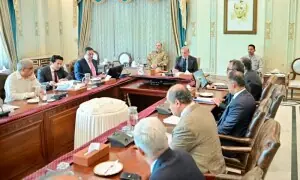
ISLAMABAD: Prime Minister Shehbaz Sharif on Thursday warned that the adverse impact of fresh tensions in the Middle East, triggered by the recent US-Iran attacks , could hit the country’s economy again. The prime…
AI read
What the coverage agrees on, and where it splits
This view is generated from the clustered articles, so it is best read as a map of coverage rather than a replacement for the source reporting.
Broadly agreed
- Multiple sources confirm the US-Iran conflict has driven energy prices higher globally, with US domestic fuel prices approaching $4 per gallon for gasoline.
- Sources from Pakistan, Nigeria, and South Korea confirm the conflict is creating tangible economic disruption in energy-importing developing economies.
Contested framing
- CNN frames the energy price impact through US domestic consumer pain; Pakistani Dawn frames the same global price rise through investment outflow and supply chain fragility affecting an already vulnerable emerging market.
- Korea Herald's 14th tanker success story frames the same Red Sea security situation as manageable through operational competence; Premium Times frames the same global supply disruption as a direct reason Nigerian petrol prices will remain high.
Still unclear
Whether Iran will execute its threat to close the Strait of Hormuz entirely, which would represent a qualitatively different level of global economic disruption, remains the key unresolved risk.
Notable omissions
The economic impact on Gulf state economies themselves — Bahrain, Kuwait, Jordan, Qatar — which are hosting US military facilities being struck by Iranian retaliation, is absent from market-focused coverage.
Quality check
Energy price rises confirmed; systemic closure risk, Gulf state impact, and causal attribution remain partially unverified.
- Iran's threat to close Strait entirely unconfirmed—remains speculative triggering event
- Gulf state economic impact (Bahrain, Kuwait, Jordan, Qatar) entirely absent despite stated relevance
- Contested framing reflects outlet geographic focus rather than substantive economic disagreement
- US mortgage rate attribution to Iran conflict unverified in summaries—multiple causal factors possible
Review confidence: 70%
Signal strength
3/5
Narrative divergence
3
Sources compared
1
Days in coverage
How each outlet frames this story
Divergence
3/5
Narrative Divergence
How differently the sources covering this story frame it — measured by tone, emphasis, and what each outlet chooses to highlight or omit.
1 — Sources frame the story almost identically
2 — Minor differences in tone or emphasis
3 — Noticeable differences; some outlets highlight what others omit
4 — Stark contrasts; conflicting narratives
5 — Sources tell fundamentally different stories
American
CNN reports US mortgage rates have hit their highest level since the start of the war with Iran, and that gas is nearly $4 and diesel topped $5, framing the conflict's domestic economic consequences for American consumers.
Nigerian
Premium Times directly explains to Nigerian readers why the renewed Hormuz fighting will not bring cheaper petrol prices, linking the global supply disruption to local retail fuel costs.
Pakistani
Dawn covers the Gulf war triggering investment outflow from Pakistan, with Bahrain specifically withdrawing investments, framing the conflict's economic impact through Pakistan's acute vulnerability to Gulf capital flows.