The Ceuta crossings have shaken Europe politically, exposing divisions over the sensitive issue of migration, the BBC's Sarah Rainsford writes.
How the world covered this
Read the editorial comparison
Prose synthesis of how each outlet framed the story, with side-by-side outlet quotes and divergence notes.
24 articles from 16 sources
01

02
There have been tense exchanges between Spain and other EU states over the influx of migrants into the enclave of Ceuta.

03
At least 72 migrants died during last week's mass crossing into Spain's North African enclave of Ceuta, where tens of thousands swam from Morocco, local officials said Su...

04
Marrocos contabiliza mortos e desaparecidos depois de travessia em massa para Ceuta
Amina Saadoun spent Saturday (1st) on the road that connects Ceuta to Morocco, showing a small photo of her 15-year-old brother to each migrant who returned at a slow pace. "Have you seen this boy?
05
Sobe para 72 o número de migrantes do Marrocos mortos em tentativa de entrar em Ceuta
The number of migrants killed in the attempted mass entry into Ceuta rose to 72, shows a new report released this Sunday (2) by the local government. Read more (02/08/2026 - 10:11 am)
06
Nearly all of the more than 50,000 migrants who breached the border this week have returned to Morocco, according to Spanish officials. At least 72 people died in the border rush.
07
The death toll from a mass rush of migrants from Morocco into the Spanish enclave of Ceuta last week reached at least 72 on Sunday, as five more bodies were found along the North African coast, officials said. The…

09
Parents sought reassurance from those returning, showing them pictures of their loved ones and asking for news.
10
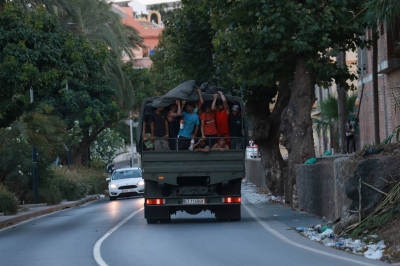
Most of the migrants who rushed into Spain’s North African territory have returned to Morocco.
11
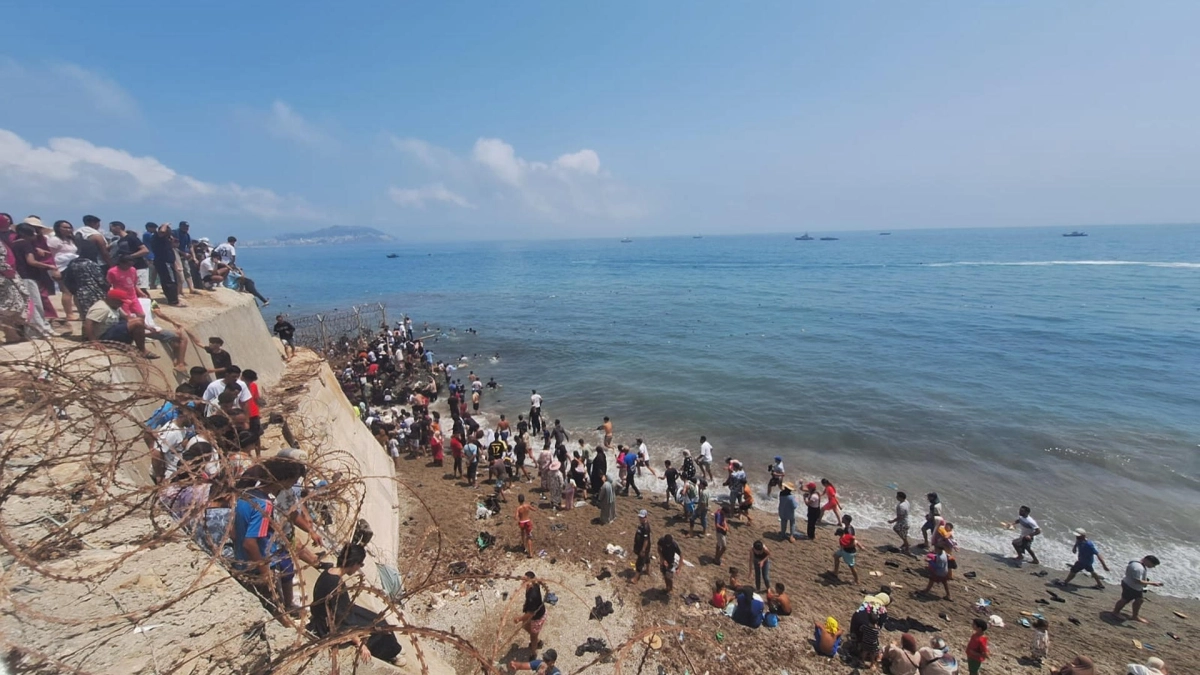
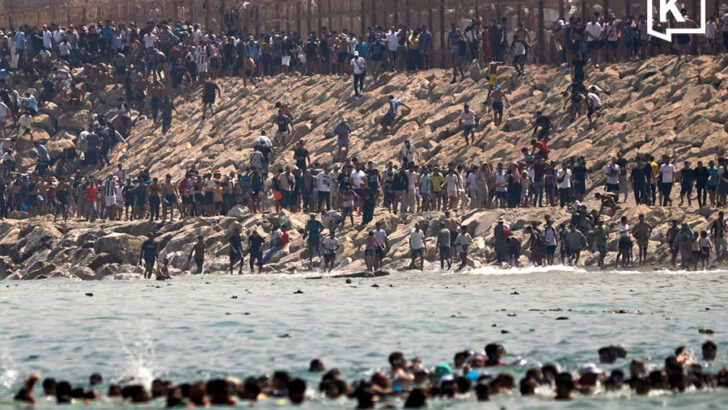
More than 50,000 people crossed into Ceuta by land and sea, driven to migrate by economic hardship and encouraged by social media rumors.
12
Marruecos admite por primera vez que 40.000 migrantes cruzaron a Ceuta y confirma 11 muertos
The figures contrast with those of Spain, which brings the number of migrants who entered its territories to more than 50,000 and the number of deaths to 72.
13
Decenas de familias marroquíes buscan a sus allegados tras la crisis en Ceuta: 'Ruego a Dios que vuelva sano y salvo'
There are already 72 deaths confirmed by the authorities, but the toll could increase. Almost all of those who crossed were returned to Morocco.

14
Video| Rescatan a dos bebés que flotaban en el mar durante la crisis migratoria en Ceuta
The minors were found while search and rescue efforts continued due to the immigration emergency on the Spanish border.

15
The largest migrant rush into the enclave has caused an international crisis for Spain, with European partners criticising Madrid for its immigration policies.

16
Comment le Maroc met sous pression les enclaves espagnoles de Ceuta et de Melilla
The sudden arrival of 50,000 people in Ceuta raises questions about the role of Rabat in this migration crisis, while the Shereef kingdom contests the belonging of the two cities to Spain.
17
Crise migratória é resultado do colonialismo que perdura no norte da África
Countless young men coming out of the sea, armed soldiers, steel fences. Images from Ceuta that circulated last week show the migration crisis in North Africa that led to the deaths of at least 72 people.
18
Ceuta, allarme bambini: sono migliaia i minori arrivati dal Marocco
One thousand five hundred in the reception centres, just as many outside among the bodies that the sea returns, including those of crushed children
19
L’esperto: “Rabat ha organizzato tutto è un avvertimento a Madrid”
Pierr Vermeren: “Those desperate young people couldn't get there on their own: for the monarchy, the two exclaves are just the fruit of colonialism”
20
In the first comment after the crisis.. Morocco announces the influx of about 40,000 people to Ceuta
في أول تعليق بعد الأزمة.. المغرب يعلن تدفق نحو 40 ألف شخص إلى سبتة
The Moroccan Ministry of the Interior announced - yesterday, Sunday - that about 40,000 people headed towards the city of Ceuta in attempts at irregular crossing, during events that resulted in the death of 11 people, in Rabat’s first official suspension.
21
Soldiers round up Moroccans roaming the streets and hiding in poorly-lit areas

22
スペイン飛び地不法移民 大半帰還
23
スペインの飛び地 不法移民が殺到
24
MADRID (AP) — Thousands of migrants have streamed into the tiny Spanish territory of Ceuta in North Africa from Morocco, with at least 18 dying in the attempt, prompting Spain to deploy its military to restore the…
AI read
What the coverage agrees on, and where it splits
This view is generated from the clustered articles, so it is best read as a map of coverage rather than a replacement for the source reporting.
Broadly agreed
- All covering sources confirm at least 72 migrants died during the mass crossing, with over 50,000 people having entered Ceuta.
- Sources agree most migrants have since returned or been expelled to Morocco, with Spain deploying military and physical barriers.
- The EU called an emergency meeting on migration in response to the crisis, confirmed across multiple European and international outlets.
Contested framing
- Le Monde and La Repubblica cite expert analysis that Morocco orchestrated the crossing as political pressure on Spain; Al Jazeera Arabic reports Morocco's official figures (40,000 crossings, 11 deaths) without challenging the lower death count.
- Times of Israel runs an opinion that Spain has effectively lost Ceuta; BBC and Deutsche Welle frame it as a political storm with Europe divided but no territorial concession implied.
- Folha de S.Paulo frames the crisis as a colonial legacy and structural inequality issue; Italian and French outlets frame it primarily as a bilateral Spain-Morocco diplomatic pressure campaign.
Still unclear
The precise role of the Moroccan government in enabling or orchestrating the crossings remains unconfirmed publicly, with Morocco's official statement acknowledging numbers but not intent.
Notable omissions
People's Daily, TASS, and most Asian outlets are silent on the Ceuta crisis despite its global humanitarian and diplomatic significance; the specific identities and conditions of the approximately 1,500 unaccompanied minors in reception centers receive limited coverage outside Italian and Spanish-language outlets.
Quality check
Read critically: death toll and causation are genuinely disputed between sources; Morocco's role is alleged, not proven.
- Morocco's government role in orchestrating crossings alleged but unconfirmed
- Contested death toll figures (11 per Morocco vs 72 per Spanish sources)
- Moroccan intent and policy remain publicly unverified
- Conditions of ~1,500 unaccompanied minors receive minimal coverage
Review confidence: 72%
Signal strength
4/5
Narrative divergence
16
Sources compared
1
Days in coverage
How each outlet frames this story
Divergence
4/5
Narrative Divergence
How differently the sources covering this story frame it — measured by tone, emphasis, and what each outlet chooses to highlight or omit.
1 — Sources frame the story almost identically
2 — Minor differences in tone or emphasis
3 — Noticeable differences; some outlets highlight what others omit
4 — Stark contrasts; conflicting narratives
5 — Sources tell fundamentally different stories
British
BBC focuses on how Ceuta crossings shook Europe politically and how social media amplified the crisis, framing it as a political storm exposing EU divisions.
French
Le Monde frames Morocco as having orchestrated pressure on Spain as a warning to Madrid over the disputed enclaves, citing expert analysis that desperate young people could not have organized the crossing alone.
Brazilian
Folha de S.Paulo foregrounds individual human stories — mothers searching for missing children — and frames the crisis as a legacy of colonialism persisting in North Africa, integrating structural inequality analysis.
Italian
La Repubblica emphasizes child alarm with thousands of minors arriving, the failure of offshore asylum processing models (Rwanda, Albania), and Italy's push for non-EU processing hubs by 2027.
Turkish
Daily Sabah reports the death toll and Spain erecting a floating barrier, framing it through institutional accountability for the deaths without broader geopolitical analysis.
Colombian
El Tiempo humanizes the crisis through Moroccan families desperately searching for loved ones and the rescue of two babies floating in the sea.
German
Deutsche Welle reports most migrants have left Ceuta and returned to Morocco per Spanish authorities, framing de-escalation while noting Spain's institutional crisis management.
Japanese
Yahoo Japan reports Spain building a sea fence in response, with minimal editorial framing.
Singaporean
Straits Times covers Moroccan families gathering at the border desperate for news, centering the human consequences over political analysis.
Irish
Irish Times reports from the ground in Spain on soldiers rounding up Moroccans, with locals suspecting US role in the influx, adding a geopolitical conspiracy dimension.
Emirati
The National reports the death toll rising to 72, with terse factual framing.
Qatari
Al Jazeera Arabic reports Morocco's first official confirmation of 40,000 crossings and 11 deaths — figures sharply lower than Spanish and NGO counts — without interrogating the discrepancy.