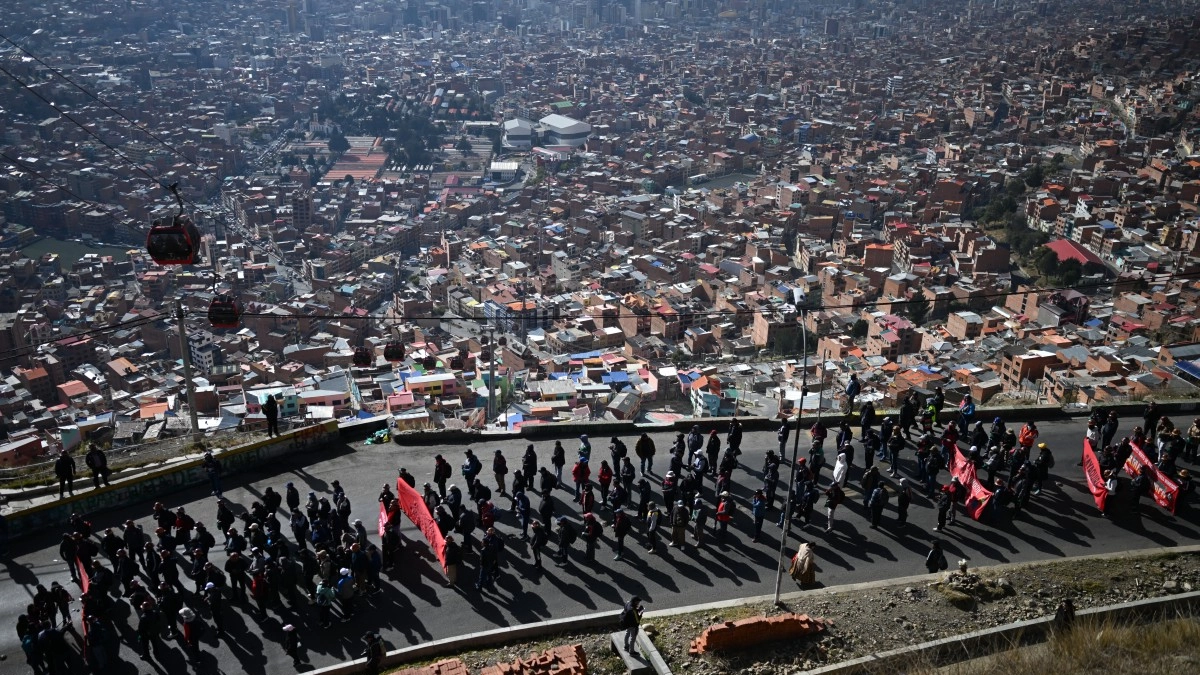
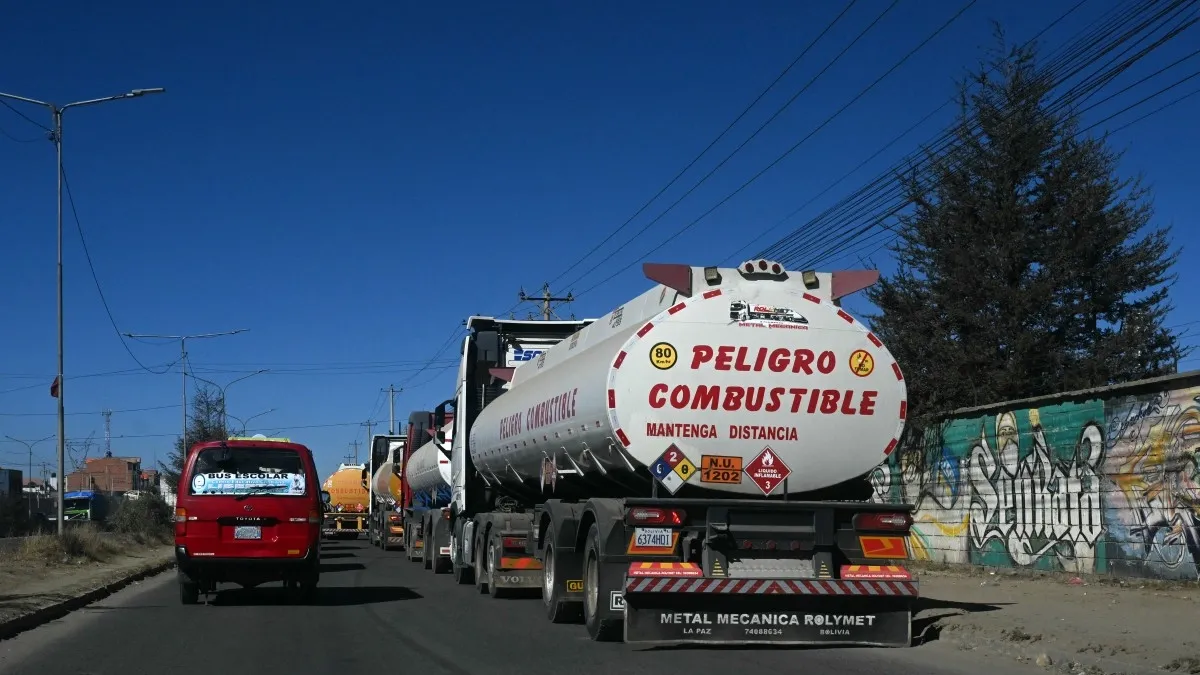
Evo Morales temporarily lifting his road blockades in Bolivia after a three-day state of emergency caused fuel shortages severe enough to make planes the only supply route — a politically manufactured economic crisis that reveals the fragility of President Rodrigo Paz's governance.
2 sources4 articles2 perspectives
2Sources in this topicDifferent outlets covering the same story arc.
4Articles collectedThe full set backing this topic page right now.
2/5Narrative divergenceHover for scale explanation.
Narrative Divergence
How differently the sources covering this story frame it — measured by tone, emphasis, and what each outlet chooses to highlight or omit.
1 — Sources frame the story almost identically
2 — Minor differences in tone or emphasis
3 — Noticeable differences; some outlets highlight what others omit
Evo anuncia 'trégua, mas não rendição' em bloqueios de estrada na Bolívia
Evo Morales, former president of Bolivia, announced this Monday (22) the temporary suspension of the last roadblocks imposed by protesters in the Cochabamba region around 50 days ago. In the last few…
Escassez faz voos virarem rota de abastecimento na Bolívia, com frangos congelados em caixas de isopor
"Fresh chickens, big chickens, chickens from Santa Cruz", repeated over and over a loudspeaker placed, improvised, on the roof of a silver van parked next to San Miguel square, in the south of La Paz.…
Bolivia empieza a normalizarse tras la reanudación del tráfico en la mayoría de las carreteras: el balance de tres días de estado de excepción
On Saturday, President Rodrigo Paz decreed a state of emergency to lift the blockades, which caused serious fuel shortages.
AI read
What the coverage agrees on, and where it splits
This view is generated from the clustered articles, so it is best read as a map of coverage rather than a replacement for the source reporting.
Broadly agreed
Multiple sources confirm Morales announced a temporary suspension of road blockades on June 22, describing it as a 'truce, not surrender.'
Bolivia experienced severe fuel and food shortages during the blockades, with air transport becoming a supply route.
Contested framing
Brazilian outlets frame the crisis through humanitarian consequence and food security; Colombian outlets frame it primarily as a political governance test for President Paz — different emphasis on cause versus consequence.
Still unclear
Whether Morales will resume blockades after the truce expires and what political conditions could produce a lasting resolution remain unresolved.
Notable omissions
The economic cost to Bolivian businesses and ordinary citizens from the fuel shortages, and whether emergency reserves were adequate, is absent from available summaries.
Quality check
Blockade suspension is confirmed as temporary; whether it leads to lasting political settlement or resumes is unclear and unlikely given framing of as 'truce, not surrender.'
Contested framing priorities: Brazilian outlets emphasize humanitarian consequence/food security; Colombian outlets frame as political governance test—different cause-vs-consequence focus.
Unconfirmed truce durability: Whether Morales will resume blockades after truce expires and what conditions could resolve crisis remain speculative.
Missing economic cost analysis: Impact on businesses and ordinary citizens from fuel shortages, and adequacy of emergency reserves, entirely absent.
Review confidence: 75%
Signal strength
2/5Narrative divergence
2Sources compared
1Days in coverage
How each outlet frames this story
Divergence2/5
Narrative Divergence
How differently the sources covering this story frame it — measured by tone, emphasis, and what each outlet chooses to highlight or omit.
1 — Sources frame the story almost identically
2 — Minor differences in tone or emphasis
3 — Noticeable differences; some outlets highlight what others omit
4 — Stark contrasts; conflicting narratives
5 — Sources tell fundamentally different stories
Brazilian
Folha de S.Paulo covers Morales announcing 'a truce, but not surrender' in roadblocks, and documents food and fuel shortages so severe that frozen chickens were being airlifted in Styrofoam boxes — foregrounding humanitarian consequence through vivid personal testimony.
Colombian
El Tiempo covers both the resumption of traffic following the state of emergency and Morales temporarily lifting protests, framing it as a civic crisis resolved through state pressure rather than political negotiation.
Copied!
Related coverage
More topic clusters connected by category, source overlap, or narrative signal.