Iran's foreign ministry says it made "no new commitments" on nuclear inspections after talks in Switzerland.
How the world covered this
Read the editorial comparison
Prose synthesis of how each outlet framed the story, with side-by-side outlet quotes and divergence notes.
33 articles from 12 sources
01

02
EN DIRECT, guerre au Moyen-Orient : « L’Iran administrera le détroit d’Ormuz » à l’issue du conflit, affirme le négociateur iranien
Mohammad Bagher Ghalibaf considers that Iran has obtained “great successes” in negotiations with the United States.
03
Iran and the United States agreed on June 22 to set up communication lines to keep the vital shipping route open and end fighting in Lebanon
04
In a video posted to Mr. Ghalibaf's Telegram account, he said the talks at the luxury Swiss resort of Burgenstock produced "good achievements"

05
Vice President JD Vance says his lengthy talks with senior Iranian officials in Switzerland created a good foundation for a final deal to end the Iran war

06
Mr. Trump said Iran was supposed to use the money being unfrozen to buy food exclusively from the United States

07
Irã permitirá inspeção nuclear, diz vice-presidente dos EUA sobre acordo
US Vice President J.D.
08
While both sides claim "encouraging progress," experts say there's a long way to go to turn the shaky diplomatic framework into a durable agreement.
09
US officials have cited ongoing negotiations on allowing nuclear inspections and opening the Strait of Hormuz in pausing sanctions for 60 days. JD Vance said a "foundation" is in place for a final deal.
10
U.S. President Donald Trump said Monday that Iran had agreed to extensive inspections of its weapons programs as part of efforts to ensure what he called 'nuclear honesty,' signali...
11
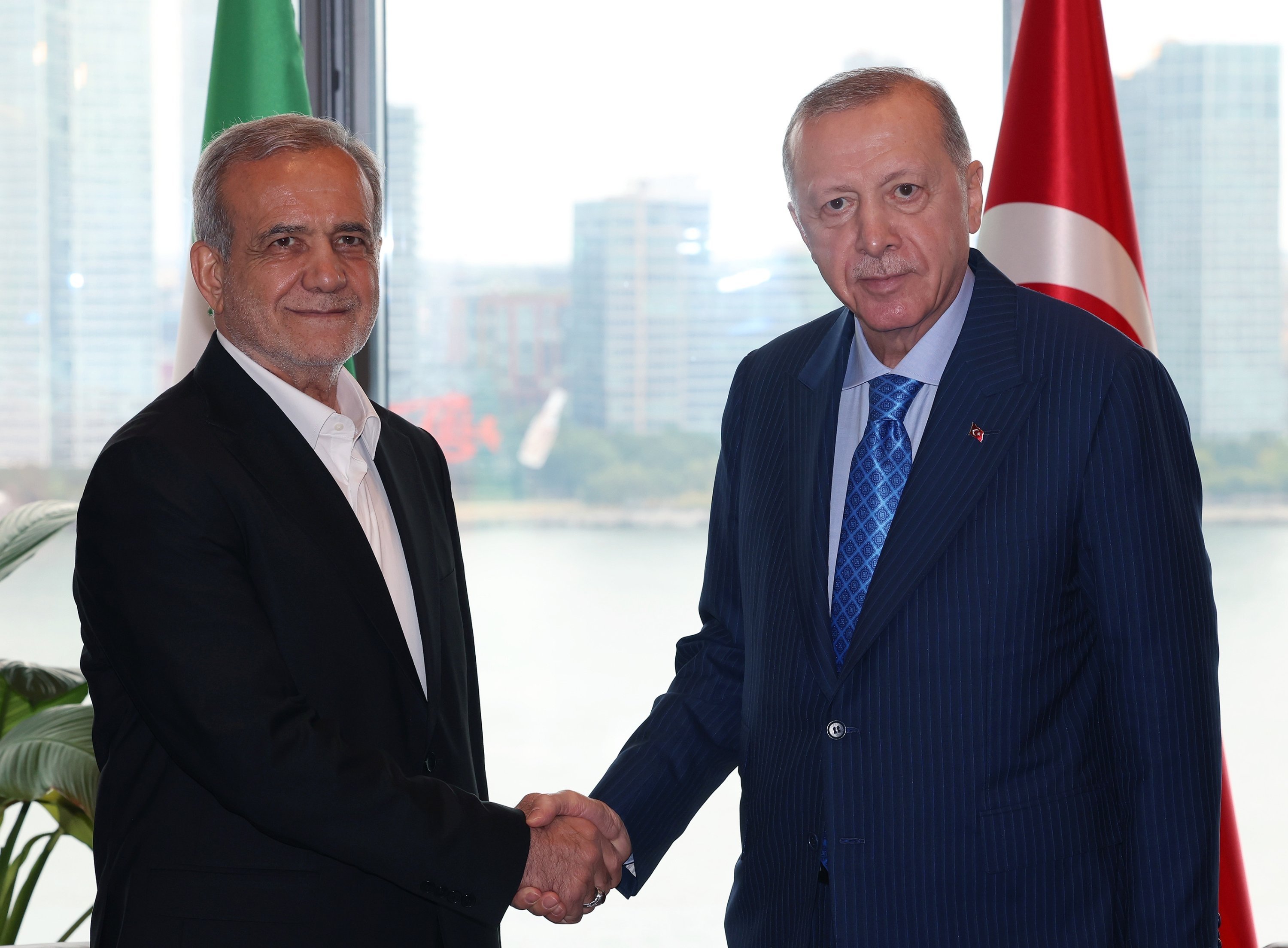
President Recep Tayyip Erdoğan welcomed the agreement reached between Iran and the United States during a phone call with Iranian President Masoud Pezeshkian, reaffirming Türkiye&#...
12
The U.S. and Iran shared cautious optimism Monday following the first round of peace talks in Switzerland, with Vice President JD Vance calling the discussions a 'good foundation'...

13
Brent crude traded below US$78 a barrel after falling 3.3%, the biggest drop in almost a week.
14
ABU DHABI, June 23 - U.S. Secretary of State Marco Rubio faces a delicate mission this week pitching Washington's Iran peace deal to Gulf Arab leaders who fear excessive concessions will strengthen Tehran and reshape…
15
WASHINGTON, June 23 - Tehran stands to gain billions of dollars from a 60-day reprieve from U.S. sanctions announced on Monday, but unwinding more than four decades of restrictions poses legal, political and commercial…
16
BUERGENSTOCK, Switzerland/WASHINGTON, June 23 - The United States waived sanctions on Iran for 60 days from Monday after the first talks under a nascent peace deal, with U.S. President Donald Trump saying he will \"do…
17
Iran and the US agreed on June 22 to set up communication lines to keep the shipping route open.
18
Il primo round dei negoziati va a Teheran, ecco perché il regime ha vinto su diversi fronti
To obtain the return of IAEA inspectors and the opening of Hormuz, the Trump administration must make important concessions such as removing sanctions on Tehran's oil
19
Heckman: “Troppi punti oscuri, Vance canta vittoria ma è vero il contrario”
The Nobel Prize-winning economist: "It will take months for Hormuz to return to normality. And the shipowners don't trust it, they are reluctant"
20
Avanzan las negociaciones entre Irán y Estados Unidos pese a nuevas amenazas de Donald Trump: se dan 60 días para lograr un acuerdo
The delegations of both countries agreed to create a committee to develop a roadmap that will allow them to reach a final agreement.

21
The US-Iran talks began on Sunday in Switzerland, after last week's agreement, which includes a commitment to reach a final deal within 60 days.

22
EUA e Irã concluem rodada de negociações na Suíça, dizem mediadores
The first round of negotiations between the US and Iran in Switzerland ended this Monday (22), Sunday night (21) in Brazil, said Qatar and Pakistan, who acted as mediators. Read more (06/21/2026 - 11:52 pm)
23
According to mediators from Qatar and Pakistan, the talks between United States and Iranian officials in Switzerland have ended with both sides agreeing on a roadmap. Technical talks will continue.
24
米イラン レバノン停戦巡り合意
25
米との協議 イラン代表団が退席
26
Vicepresidente de Estados Unidos, JD Vance, advierte que los fondos congelados de Irán no se liberarán si no hay más avances en el diálogo
Vance denied feeling "belittled" by the Iranians during the talks in Geneva.

27
US President Donald Trump said on Monday “I will do what I have to do” if Iran does not stick to its agreement with Washington. “If Iran doesn’t live up to their agreement, or if they’re not behaving, I will do what I…

28
Tehran has agreed to invite International Atomic Energy Agency inspectors back into the country, US Vice-President J.D. Vance said on Monday, after a first round of US-Iran talks towards ending the Middle East war.

29
China’s proactive role in stabilising global energy and fertiliser markets amid the Strait of Hormuz crisis shows the country is a defender of global supply chains, rather than a disruptive force as “hyped” by the West,…

30
Tehran stands to gain billions of dollars from a 60-day reprieve from US sanctions announced on Monday, but unwinding more than four decades of restrictions poses legal, political and commercial challenges that could…
31
NEW DELHI: Top Indian and Iranian security officials met in New Delhi on Monday, the foreign ministry said, as security chiefs gathered for a BRICS meeting that also included China’s Foreign Minister Wang Yi. India’s…
32
Iran’s President Masoud Pezeshkian will undertake an official visit to Pakistan tomorrow, the Foreign Office (FO) said on Monday. During his visit, which is at the invitation of Prime Minister Shehbaz Sharif, the…
33
Tehran stands to gain billions of dollars from a 60-day reprieve from US sanctions announced on Monday, but unwinding more than four decades of restrictions poses legal, political and commercial challenges that could…
AI read
What the coverage agrees on, and where it splits
This view is generated from the clustered articles, so it is best read as a map of coverage rather than a replacement for the source reporting.
Broadly agreed
- The US announced a 60-day waiver of Iran oil sanctions following Switzerland talks, confirmed by multiple outlets including BBC, Straits Times, and Deutsche Welle.
- Both sides described the talks as producing some positive progress, though the degree and nature of commitments remain disputed.
- Brent crude fell significantly — over 3% — following the sanctions waiver announcement, confirming markets responded to perceived de-escalation.
Contested framing
- BBC and Yahoo Japan report Iran's foreign ministry explicitly stated 'no new commitments' were made on nuclear inspections; Daily Sabah and SCMP report the US claiming Iran agreed to invite IAEA inspectors back — a direct factual contradiction.
- La Repubblica and Italian commentary frame the first round as a win for Tehran requiring important US concessions; CNN frames it as a political blunder for Trump; Times of Israel frames it as Israel being sidelined but not out of the fight.
- Le Monde reports Iran's negotiator claiming Tehran will 'administer' the Strait of Hormuz after the conflict; Times of Israel reports traffic continues flowing despite Iran's closure announcement — divergent accounts of Hormuz's actual status.
Still unclear
Whether Iran has made any binding commitments on nuclear inspections or Hormuz administration, and what conditions would trigger resumption of US military action, remains unverified and publicly contested between the two governments.
Notable omissions
Gulf state perspectives on the security implications of the deal are largely filtered through the US diplomatic framing in most Western outlets; the human rights dimension of Iran's domestic repression — 127 executions in June alone per El Tiempo — is absent from nearly all geopolitical coverage of the negotiations.
Quality check
Read with high skepticism on nuclear inspection and Hormuz control claims—sources directly contradict each other and neither side's assertions are independently verified.
- Direct factual contradiction on nuclear inspections: BBC/Yahoo Japan report Iran denies new commitments; Daily Sabah/SCMP report US claims Iran agreed to IAEA inspections. No source reconciles this.
- Strait of Hormuz status is contested—Le Monde reports Iran claims administration; Times of Israel reports traffic continuing. These cannot both be simultaneously true.
- Critical unknowns: No source confirms what binding commitments (if any) Iran made, or what triggers US military action resumption.
- Missing perspective: Gulf state security concerns filtered only through US framing; Iranian domestic repression (127 executions/June) absent from geopolitical coverage.
Review confidence: 65%
Signal strength
5/5
Narrative divergence
12
Sources compared
2
Days in coverage
→ stable
How each outlet frames this story
Divergence
5/5
Narrative Divergence
How differently the sources covering this story frame it — measured by tone, emphasis, and what each outlet chooses to highlight or omit.
1 — Sources frame the story almost identically
2 — Minor differences in tone or emphasis
3 — Noticeable differences; some outlets highlight what others omit
4 — Stark contrasts; conflicting narratives
5 — Sources tell fundamentally different stories
British
BBC emphasises Iran's foreign ministry statement that 'no new commitments' were made on nuclear inspections, foregrounding the credibility gap between US and Iranian accounts and maintaining distinction between verified facts and claims.
French
Le Monde reports Iran's chief negotiator claiming 'great successes' and asserting Tehran will 'administer' the Strait of Hormuz, framing the first round as a win for Tehran over Washington.
Indian
The Hindu reports the Pentagon seeking $80 billion from Congress for the Iran war while also covering BRICS security meetings where India, China, and Iran converge, emphasising India's independent positioning without Western alignment.
Brazilian
Folha de S.Paulo integrates humanistic consequence framing, reporting the Iran deal through the lens of worker deaths at the Qatar LNG plant and US Vice President Vance's claims about nuclear inspections.
German
Deutsche Welle frames the talks through institutional sustainability, noting tensions and mistrust remain deep and that turning the shaky diplomatic framework into a lasting deal faces a long road.
Turkish
Daily Sabah reports President Erdoğan welcoming the Iran-US agreement in a call with Pezeshkian, positioning Turkey as a regional diplomatic facilitator endorsing de-escalation.
Pakistani
Dawn covers Iranian President Pezeshkian's visit to Pakistan alongside the Iran deal, framing Pakistan's mediation role as a diplomatic masterstroke elevating it from regional to global player.
Singaporean
Straits Times focuses on the economic complexity of unwinding Iran's 'tangled nest' of sanctions, noting the 60-day reprieve offers billions but permanent relief will be slow and difficult.
Colombian
El Tiempo reports on Iran executions and arrests alongside negotiations, noting an NGO recorded 127 executions in June alone, adding a human rights dimension largely absent elsewhere.
Japanese
Yahoo Japan highlights the divergence between US and Iranian accounts on nuclear inspections, framing the disagreement as the central unresolved question of the talks.
Italian
La Repubblica frames the first negotiating round as a win for Tehran, with Nobel economist commentary suggesting Hormuz will not return to normality for months and shipowners remain distrustful.
Chinese
SCMP frames the Hormuz crisis through structural institutional vulnerability in supply chains, reporting China's role in stabilising global energy markets and defending its position in supply chains.