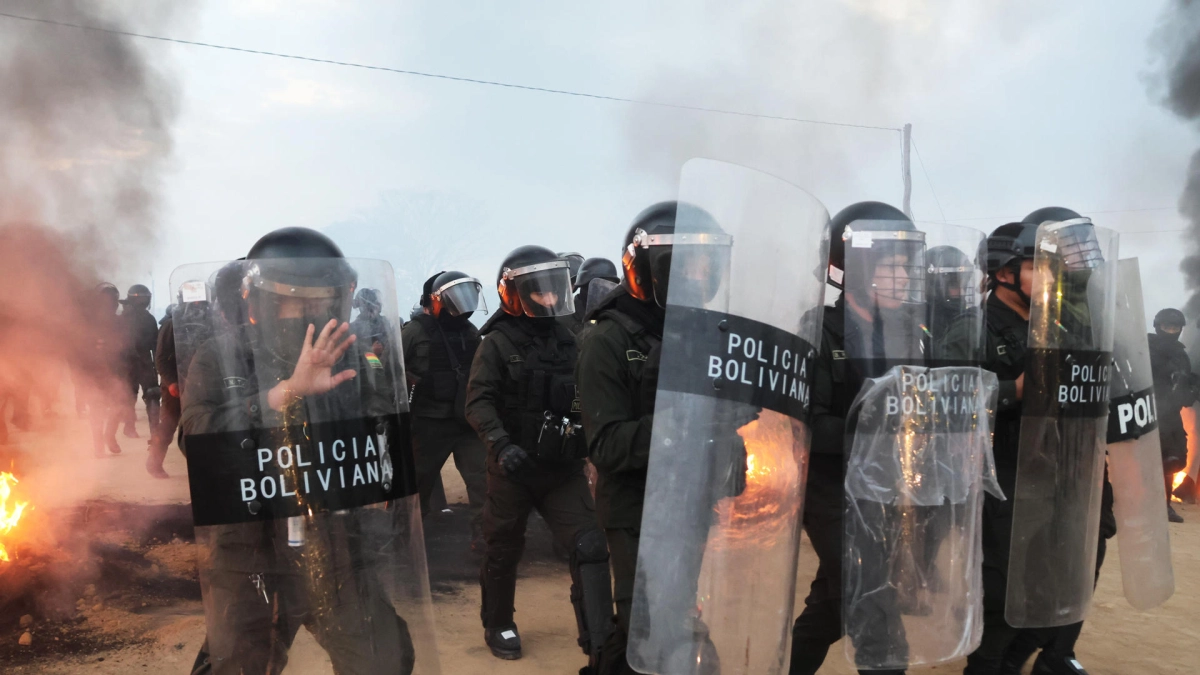
Congresso da Bolívia autoriza presidente a usar militares para desbloquear vias
The Bolivian Congress approved, this Sunday (7), a law that authorizes center-right President Rodrigo Paz to use the military to clear roads controlled for more than a month by protesters who…
Bolivia cumple un mes de bloqueos bajo la amenaza de un estado de excepción: las claves de la crisis que desafía al gobierno de Rodrigo Paz
This situation aggravates the economic crisis that Bolivians have been experiencing since 2023, marked by a shortage of foreign currency and inflation.
Confronto em protesto na Bolívia deixa 20 feridos, incluindo 4 policiais baleados
Protests in Bolivia showed further signs of escalation this Saturday (6). According to local press, more than 20 people were injured during a clash between protesters and police in San Julián, in eastern…
AI read
What the coverage agrees on, and where it splits
This view is generated from the clustered articles, so it is best read as a map of coverage rather than a replacement for the source reporting.
Broadly agreed
Folha de S.Paulo and Straits Times both confirm Bolivia's Congress passed legislation authorising presidential use of military force against road blockades.
Multiple sources confirm protests have continued for approximately one month and have caused significant economic disruption.
Contested framing
Folha de S.Paulo frames the military authorisation as institutional repression; Straits Times frames it as a necessary response to protests 'paralysing' the country — reflecting left-right framing differences.
Still unclear
Whether the military deployment will end the blockades or escalate the crisis into broader political violence remains unconfirmed.
Notable omissions
No sources address the specific economic demands of the protesters or whether Paz has offered any concessions alongside the military authorisation.
Quality check
Military authorization confirmed; whether it resolves or escalates crisis and what protesters specifically demand remain unspecified.
Framing variance: Folha frames military authorization as institutional repression; Straits Times frames as necessary crisis response—opposite political assessments
Critical unknown: Whether military deployment will end blockades or escalate violence remains unconfirmed
Important omission: No coverage of specific economic demands of protesters or whether concessions offered alongside military authorization
Contested causation attribution: Economic crisis since 2023 noted, but connection to current protest demands unclear
Review confidence: 75%
Signal strength
2/5Narrative divergence
3Sources compared
1Days in coverage
How each outlet frames this story
Divergence2/5
Narrative Divergence
How differently the sources covering this story frame it — measured by tone, emphasis, and what each outlet chooses to highlight or omit.
1 — Sources frame the story almost identically
2 — Minor differences in tone or emphasis
3 — Noticeable differences; some outlets highlight what others omit
4 — Stark contrasts; conflicting narratives
5 — Sources tell fundamentally different stories
Brazilian
Folha de S.Paulo reports Congress approving a law authorising centre-right Paz to use the military to unblock roads, framing it as institutional repression of protest with structural accountability analysis.
Singaporean
Straits Times reports Bolivia's Congress giving Paz power to use troops against 'crippling protests,' noting a month of heated protests calling for the president to step down has paralysed the country.
Colombian
El Tiempo covers the crisis from multiple angles — police injuries, road blockades, the state of exception threat, and the one-month context — framing it as a governance accountability story.
Copied!
Related coverage
More topic clusters connected by category, source overlap, or narrative signal.