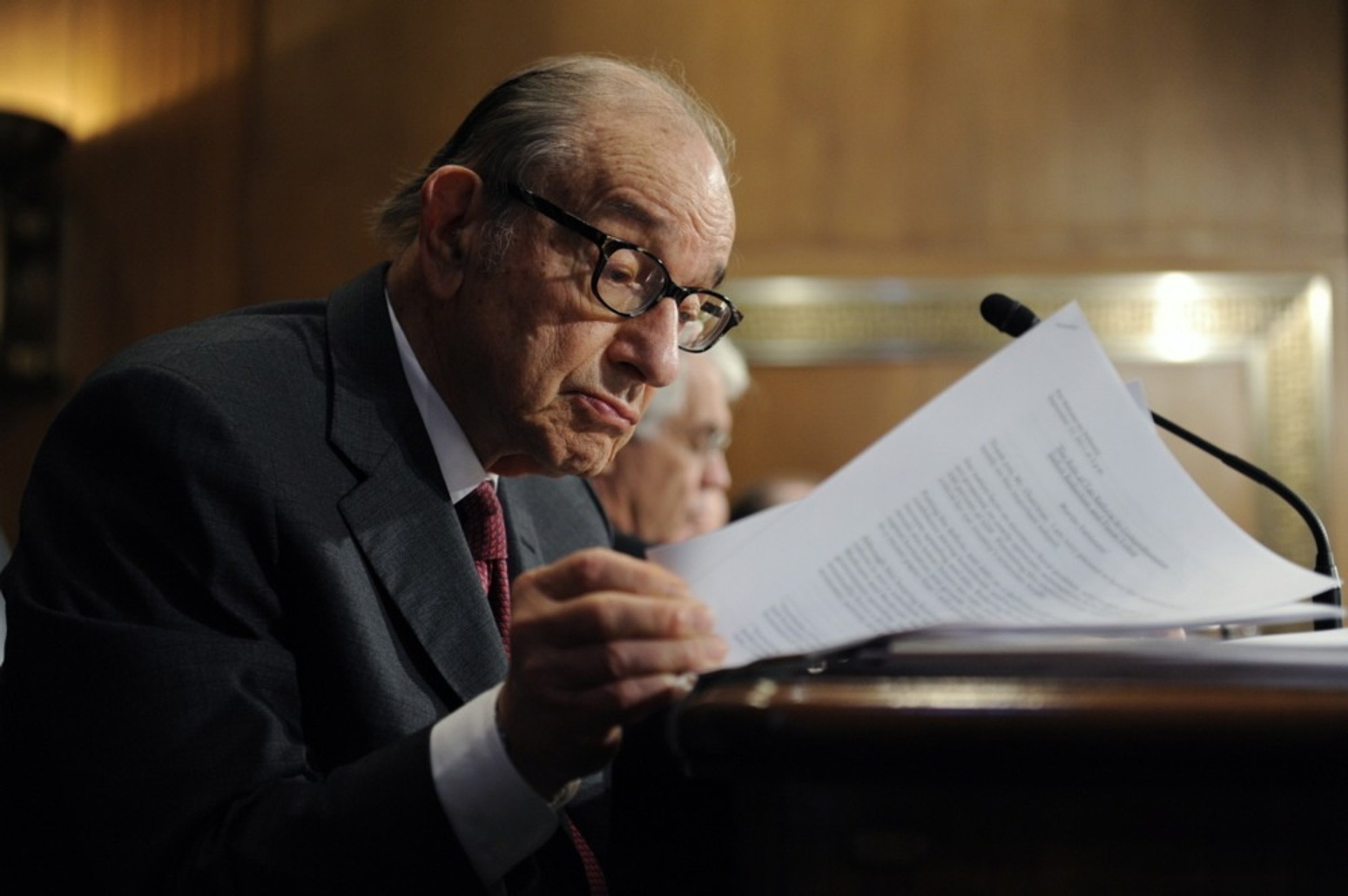
As chairman of the Federal Reserve, Alan Greenspan became the world's most high-profile banker.
How the world covered this
Read the editorial comparison
Prose synthesis of how each outlet framed the story, with side-by-side outlet quotes and divergence notes.
6 articles from 6 sources
01

02
Alan Greenspan oversaw the US Federal Reserve for nearly two decades from 1987 until 2006. Critics argue that his policies contributed to the Global Financial Crisis of 2008.
03
Alan Greenspan, the longtime chair of the U.S. Federal Reserve (Fed) who presided over an unprecedented American economic boom but was later blamed for failing to rein in financial...
04
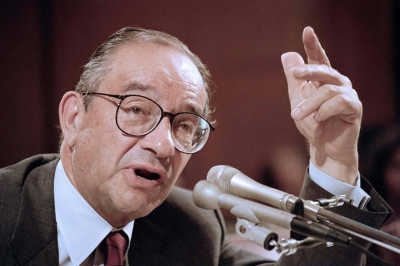
Some saw the Federal Reserve chair as a driving force for change at the Fed and a guiding light for investors, even as the 2008-09 global financial crisis clouds his legacy.
05
Alan Greenspan, hailed as the greatest Federal Reserve chairman when he retired in 2006 but derided for a severe financial crisis that followed barely two years later, died on Monday aged 100, NBC News reported.…

06
Longtime US Fed chair presided over long period of growth but also played a part in creating conditions for global financial crisis

AI read
What the coverage agrees on, and where it splits
This view is generated from the clustered articles, so it is best read as a map of coverage rather than a replacement for the source reporting.
Broadly agreed
- All sources confirm Alan Greenspan died at age 100 and served as Fed chairman from 1987 to 2006.
- Multiple sources acknowledge both the praise he received during his tenure and the subsequent criticism linking his policies to the 2008 financial crisis.
Contested framing
- Deutsche Welle frames Greenspan's legacy as fundamentally defined by what he 'knew but didn't say' — a deliberate failure of institutional transparency; BBC frames him as the 'architect of the modern American economy' — significantly different moral assessments of the same career.
- Irish Times takes an explicitly balanced 'mixed legacy' view; Turkish Daily Sabah leads with his positive achievements — divergent editorial positions on his ultimate historical standing.
Still unclear
Whether the financial community will ultimately reassess his legacy more positively given the 2026 geopolitical and economic context is speculative and not confirmed in any summary.
Notable omissions
The specific impact of Greenspan's policies on inequality and wealth distribution — a major dimension of post-2008 economic debate — is absent from all covering outlet summaries.
Quality check
Biographical facts are reliable; his historical legacy assessment is deeply contested and depends heavily on which outlet's framing you read.
- Contested legacy framing: Deutsche Welle frames as deliberate institutional transparency failure; BBC frames as 'architect of modern American economy'—fundamentally opposed moral assessments.
- Missing systemic analysis: Specific impact on inequality and wealth distribution—major post-2008 debate dimension—absent from all summaries.
- Speculative unknowns: Whether financial community will reassess his legacy more positively in 2026 context is purely speculative, not confirmed.
Review confidence: 80%
Signal strength
2/5
Narrative divergence
6
Sources compared
1
Days in coverage
How each outlet frames this story
Divergence
2/5
Narrative Divergence
How differently the sources covering this story frame it — measured by tone, emphasis, and what each outlet chooses to highlight or omit.
1 — Sources frame the story almost identically
2 — Minor differences in tone or emphasis
3 — Noticeable differences; some outlets highlight what others omit
4 — Stark contrasts; conflicting narratives
5 — Sources tell fundamentally different stories
British
BBC reports Greenspan as the 'architect of the modern American economy' and 'world's most high-profile banker,' emphasising his stature without leading with his failures.
German
Deutsche Welle frames Greenspan as 'the man who knew, but didn't say,' emphasising his deliberate opacity — his reputation for convoluted language — and the policy errors critics argue led to the 2008 crisis.
Turkish
Daily Sabah leads with his presiding over 'unprecedented American economic boom,' framing the legacy positively before noting critics' arguments.
Japanese
Japan Times frames Greenspan's legacy through 'irrational exuberance' to the 2008 crisis — a narrative arc that positions him as both a driving force for change and a cautionary figure.
Chinese
SCMP summarises his career noting he was 'hailed as the greatest Federal Reserve chairman when he retired in 2006 but derided for a severe financial crisis' — balanced but historically framed.
Irish
Irish Times emphasises his 'mixed legacy,' noting he presided over a long period of growth but played a part in creating conditions for the global financial crisis — characteristic balanced institutional accountability framing.