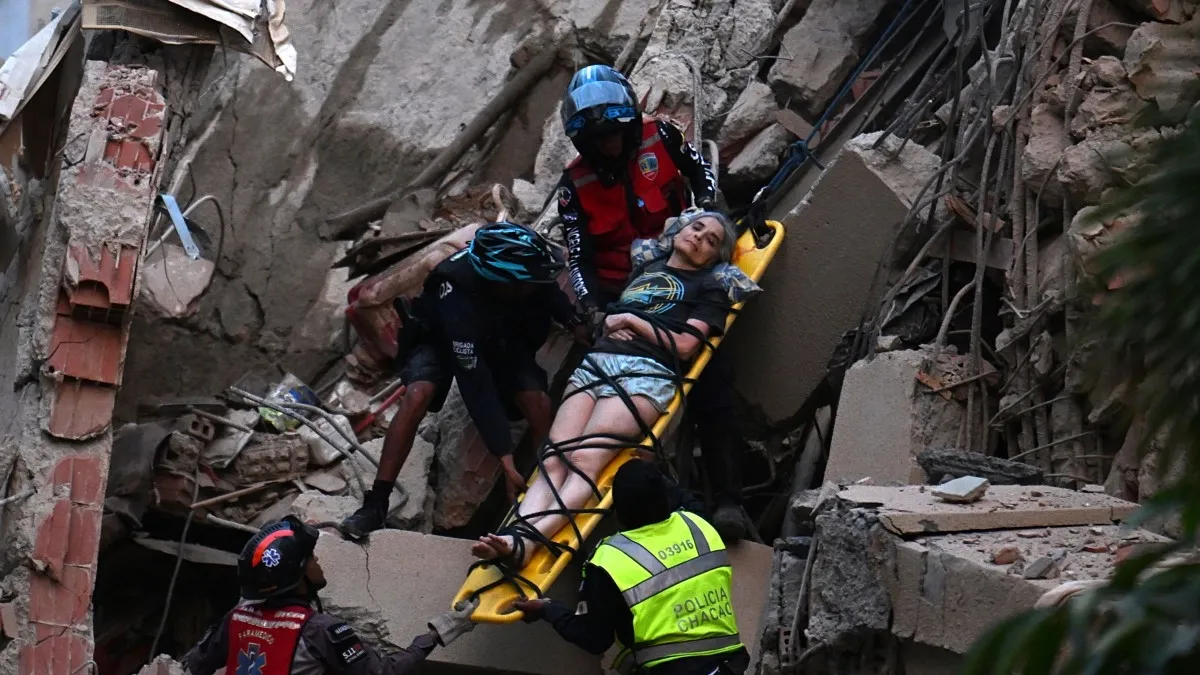
Rescuers search rubble for survivors as Venezuela earthquakes kill at least 235
At least 4,300 people have been injured after two seven-plus magnitude shallow quakes hit seconds apart.

Two back-to-back magnitude 7.2 and 7.5 earthquakes struck Venezuela's most populated coastal region, killing at least 235 people, injuring over 4,300, and triggering a massive international humanitarian...
BBC News leads with immediate rescue operations but frames the earthquakes as arriving at a moment of political uncertainty, explicitly noting Nicolás Maduro's seizure by US forces six months prior. This politicisation distinguishes BBC's coverage from Daily Maverick, SCMP, and other outlets, which treat the disaster primarily as a humanitarian logistics challenge requiring coordinated rescue and aid mobilisation.
La Repubblica's inclusion of a political scientist warning that regime corruption will 'nullify' aid introduces governance skepticism absent from other sources. SCMP and Straits Times treat aid offers straightforwardly, including from governments that have severed ties with Caracas, while El Tiempo and Colombian sources emphasise tracking national citizens caught in the disaster.
rescuers search rubble as earthquakes kill at least 235
thousands feared dead after two major earthquakes strike
death toll hits 235 as rescuers comb rubble for survivors
The final death toll, the number still missing, and whether Venezuelan authorities will fully cooperate with or obstruct international rescue teams remain unconfirmed.
No source in this cycle addresses the specific question of whether the political transition following Maduro's January 2026 detention has changed Venezuela's emergency management capacity, or whether Delcy Rodríguez's interim government has effective control over disaster response coordination.
BBC foregrounds the geopolitical dimension — the quakes hit less than six months after Maduro's seizure by US forces, framing the disaster as a devastating blow to an already uncertain Venezuela; also documents civilian panic with eyewitness testimony.
Folha de S.Paulo leads with humanistic consequence framing — precarious infrastructure caused by the economic crisis, missing persons narratives, personal testimonies, and Lula's direct call to Delcy Rodríguez; also confirms two Brazilian citizens killed.
El Tiempo provides intensive multimedia coverage including videos of building collapses and rescue moments, tracks the Colombian foreign minister's effort to census affected compatriots, and contextualises the disaster within Venezuela's broader fragility.
La Repubblica foregrounds scientific explanation of the 'doublet earthquake' fault mechanics, profiles the historically cursed La Guaira region, and includes a political scientist warning that regime corruption will undermine aid delivery.
Deutsche Welle provides factual death-toll reporting and an explainer on earthquake resilience in other countries, framing the disaster through an institutional preparedness lens.
The Hindu runs a live blog tracking the death toll and covers the UN aid chief's call for massive collective effort, and separately notes the Caracas airport closure affecting diaspora aid flows.
Daily Maverick uses Reuters wire to frame the rescue operation scale, noting hundreds still trapped and the scale of rubble searches.
Times of Israel focuses on Israel's immediate preparations to send an aid team, framing it as humanitarian outreach despite Venezuela's historically fraught ties.
Straits Times provides a historical contextualisation — ranking Venezuela's quakes among Latin America's deadliest — and tracks international aid flows without political framing.
Dawn uses Reuters wire reporting on the rescue race, noting Venezuelans searching rubble and the death toll rise to 235.
Khaosod English provides AP wire reporting on casualty numbers, maintaining factual hyperlocal style without geopolitical analysis.
Yahoo Japan flags Venezuela's consecutive M7-class earthquakes as a seismic event of global note, contextualised alongside Japan's own recent quake activity.
El Universal covers Venezuelan actress Sheryl Rubio's call for solidarity and national organisation, integrating celebrity voice into the disaster narrative.
SCMP frames international aid as drawing governments that had cut ties with Caracas, highlighting the geopolitical paradox of humanitarian diplomacy overriding diplomatic ruptures.
ABC Australia provides a scientific explainer on 'doublet earthquakes' — the rare phenomenon of two major quakes seconds apart — grounding the disaster in seismological terms.
This page maps the coverage. The 59 articles below are the original reports the comparison is drawn from — open them for each publisher's full reporting.
At least 4,300 people have been injured after two seven-plus magnitude shallow quakes hit seconds apart.
The twin quakes come less than six months after Venezuela's then-leader Nicolás Maduro was seized by US forces.

The capital and its surrounding areas have seen some of the worst damage from the 7.2 and 7.5 quakes, which hit a minute apart.

Two quakes hit the capital seconds apart, the first at a magnitude of 7.2 and the second at 7.5.

Thousands of Venezuelans were feared dead on Thursday after two powerful earthquakes wreaked havoc in and around the capital Caracas, trapping people beneath the rubble of collapsed buildings and setting off powerful…

LA GUAIRA/CARACAS/MORON, June 25 (Reuters) - Hundreds of people in Venezuela were trapped under rubble and many more remained unaccounted for on Thursday after two powerful earthquakes devastated areas in and around the…

Venezuelans searched for survivors beneath collapsed buildings on Thursday and rescue teams raced to northern areas rocked by a pair of powerful earthquakes that officials say killed at least 235 people and left some…

Venezuela has received offers of rescue teams and humanitarian aid from across the Americas, including from right-wing governments that had broken off diplomatic relations with Caracas less than two years ago, after…

The United States is mounting a large-scale humanitarian operation in Venezuela after twin earthquakes devastated the South American country, putting to the test Washington’s role as the most influential international…

Health Minister Carlos Alvarado said late on June 25 that around 235 dead had been received by medical centres.
Soccer fields filled with makeshift camps as families pitched tents for another night outdoors.
Two powerful earthquakes on June 24 killed at least 188 people and left more than 1,500 injured.
Thousands of Venezuelans were feared dead on Thursday after two powerful earthquakes wreaked havoc in and around the capital Caracas, trapping people beneath the rubble of collapsed buildings and setting off powerful…
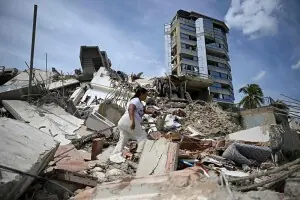
Desperate Venezuelans raced on Thursday to find and rescue loved ones trapped alive beneath the rubble of collapsed buildings after two major earthquakes that killed at least 235 people. Buildings cracked, crumbled, and…
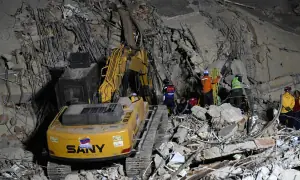
Emergency crews and residents scrambled to save survivors trapped beneath collapsed buildings in Venezuela Thursday after two powerful earthquakes killed at least 164 people and ca...

The death toll following the earthquakes that hit Venezuela on Wednesday night (24) rose to 235, Health Minister Carlos Alvarado said this Thursday (25). Read more (06/25/2026 - 10:03 pm)
The interim leader of Venezuela, Delcy Rodríguez, was this Thursday (25) in the coastal city of Macuto, in the state of La Guaira, the hardest hit by the earthquakes that devastated the country and killed at least 235…
The Brazilian Ministry of Foreign Affairs reported this Thursday (25) that two Brazilian citizens died as a result of the earthquakes that hit Venezuela this Wednesday. Itamaraty stated that it did not…
Since the earthquakes on Wednesday night (24), the population of Venezuela has been racing against time to locate and save residents trapped in the rubble. One of the places that concentrate this tension is the Petunia building,…
Amid rubble, crowded hospitals and interrupted communications, thousands of Venezuelans began harrowing searches for missing relatives after the earthquakes that caused death and destruction across the country in…
Northern Venezuela is no stranger to large, destructive earthquakes. But the two tremors that devastated the region on Wednesday (25) are a rare catastrophe - a double blow representing one of the tectonic events…
Almost 24 hours after the earthquakes that hit the north coast of Venezuela on Wednesday (24), the Venezuelan regime has not yet released any official tool to count the missing. Read more…
One of the earthquakes that hit Venezuela on Wednesday (24), measuring 7.5, is the strongest recorded in the country in more than a century. Read more (06/25/2026 - 1:55 pm)
Two earthquakes with a magnitude greater than 7 were recorded in Venezuela on Wednesday night (24/6) and left dozens dead and more than a hundred injured. Read more (06/25/2026 - 1:45 pm)
The Secretary of State of the United States, Marco Rubio, stated this Thursday (25) that he spoke with the interim leader of Venezuela, Delcy Rodríguez, after the earthquakes that hit the country, and announced the sending of…
In cities in northern Venezuela, the scenario resembles that of a war zone. Collapsed buildings, streets covered in rubble and residents searching for survivors among the rubble evoke the images seen in the Strip…
Imprisoned in the United States since January, Nicolás Maduro, deposed dictator of Venezuela, transmitted a message this Thursday (25) to people impacted by the two earthquakes in his country that caused destruction and…
The number of dead and injured is expected to rise with thousands reported missing after the 7.2- and 7.5-magnitude earthquakes
The number of dead and injured is expected to rise with thousands reported missing

Residents of La Guaira, a popular spot for beachgoers and the worst-hit city in the country, and Moron, near the quakes’ epicenter, were scrambling amid limited official help

“We are fully mobilised to support the people of Venezuela,” UN Under-Secretary-General for Humanitarian Affairs and Emergency Relief Coordinator Tom Fletcher said in a statement.

In Washington, the Trump administration said it’s sending $150 million to support relief efforts by aid groups and the United Nations, according to a U.S. State Department news release

The powerful back-to-back earthquakes killed at least 164 people and injured at least 971, Venezuela's Acting President Delcy Rodríguez said, as communities across the South American country sustained damage
The balance speaks of 235 deaths and 1,500 injured. La Guaira is the state that presents the most destruction.
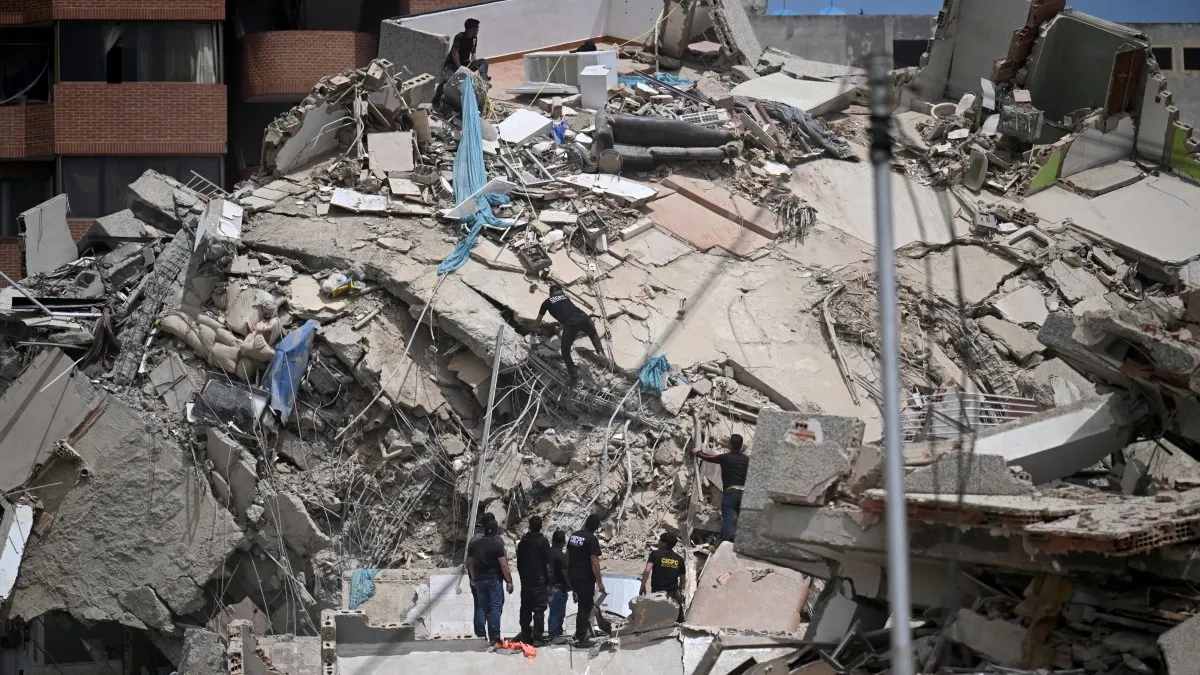
The Government of Venezuela raised the emergency toll to 235 dead and more than 4,300 injured after the 7.2 and 7.5 magnitude earthquakes.

Specialists had already documented the weaknesses of Venezuelan infrastructure. Many of the recommendations never happened.

The first tremor was of magnitude 7.2 and the second of 7.5; both occurred within a few seconds of each other.

The minor was found alive after arduous work by the community and relief agencies in a collapsed building.
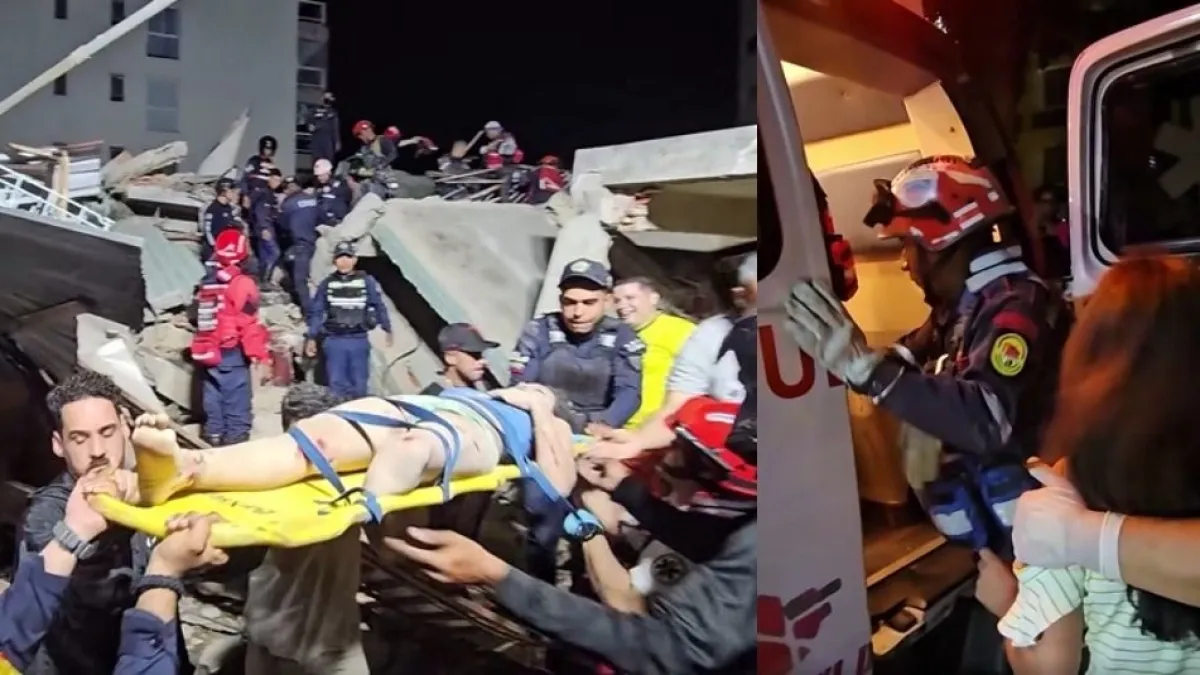
The moving scene went viral on social networks after the emergency that left hundreds of victims and destroyed structures in the neighboring country.

CARACAS, Venezuela (AP) — Back-to-back powerful earthquakes struck off the coast of Venezuela on Wednesday evening, collapsing buildings and sending panicked residents into the streets. The 7.2 and 7.5 magnitude…
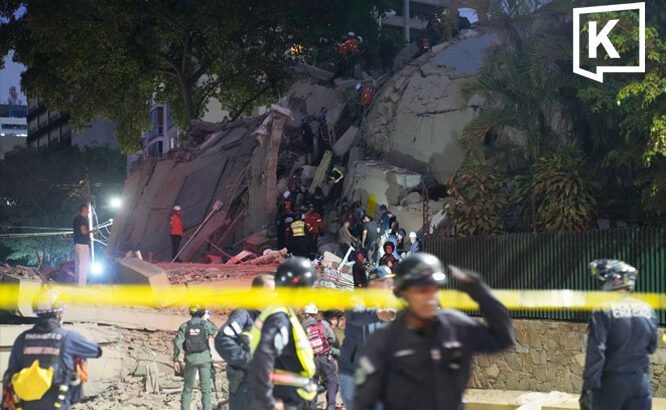
CARACAS, Venezuela (AP) — At least 164 people have died and 971 were injured after a pair of powerful quakes rocked Venezuela, Acting President Delcy Rodríguez said Thursday, adding that rescue teams are rushing to the…
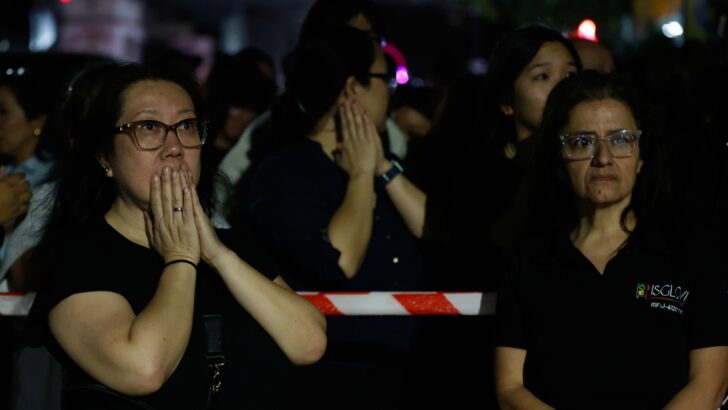
Israel making ‘immediate preparations’ to send aid team to quake-stricken Venezuela The Times of Israel
Another Israeli nonprofit to send emergency team to earthquake-stricken Venezuela The Times of Israel
The new reference superpower has promised "rapid, impressive and effective" support. Russia and China more cautious
The devastation of the buildings on the Caribbean Sea: in 1999 while the Bolivarian constitution was being voted on, the flood caused a massacre here
The lethal tremors a few seconds apart separated by just 5 km. The “doublet earthquake” in one of the most seismic areas of the planet
The system integrated into Androids perceives the first wave preceding the violent earthquake: some were saved
Interview with the political scientist and journalist, Minister of Trade and Industry of Venezuela from 1989 to 1990. “It is another catastrophe for my country, whose incompetent government has also destroyed the infrastructure”
The Southern Command reported that it sent ships, aircraft and specialized personnel to assess damage and deliver aid

Venezuela's health minister said at least 235 people have died after two strong earthquakes rattled the capital and surrounding regions. DW has the latest.
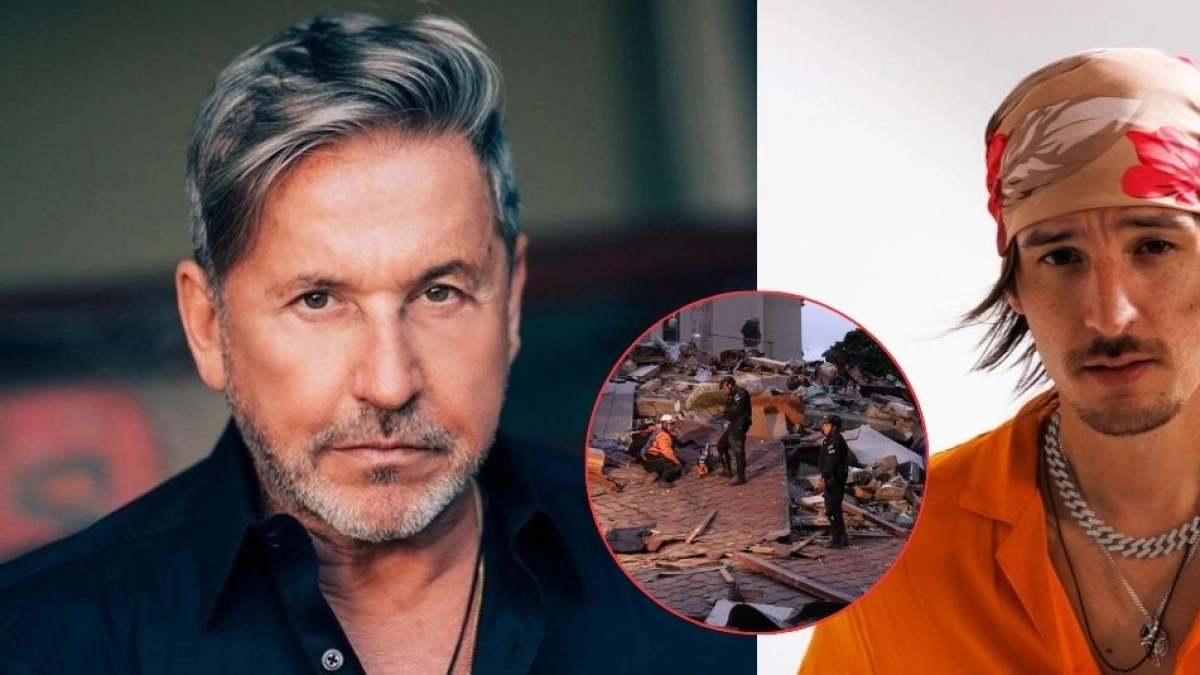
National and international entertainment personalities sent messages of solidarity after the complex seismic event in the neighboring country.
Delcy Rodríguez reported that the Maiquetía international airport was closed due to damage caused by the earthquakes.
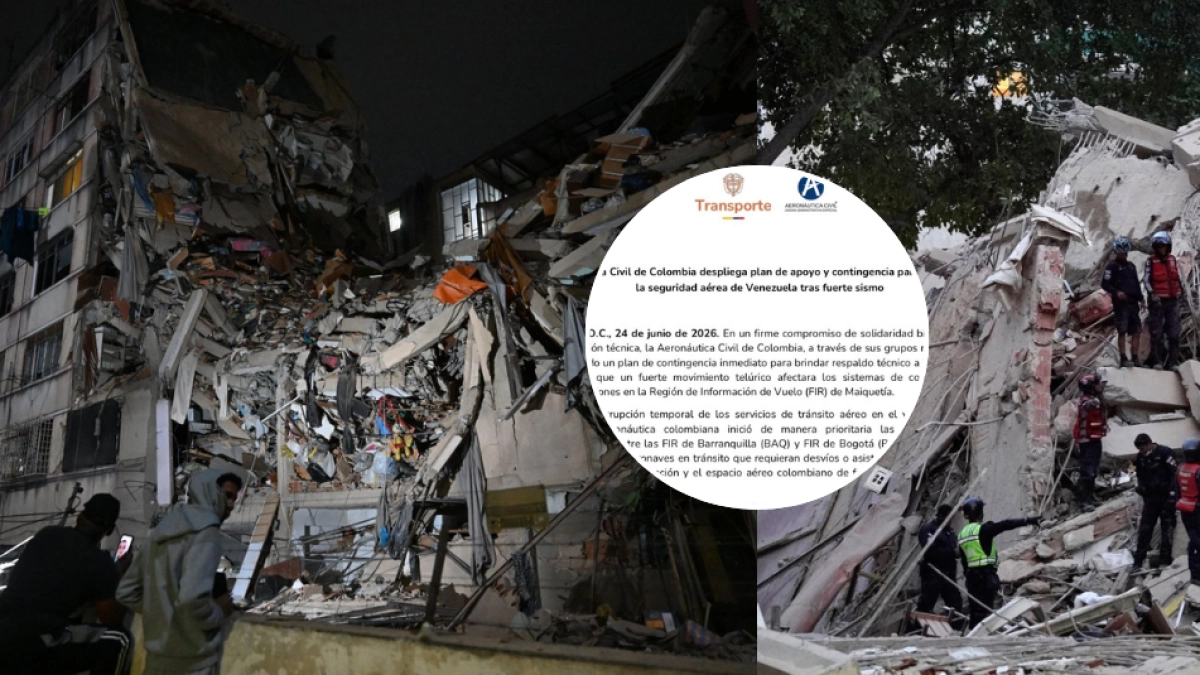
Two strong earthquakes shook Venezuela this Wednesday just 39 seconds apart.

Record of the severe structural damage in various cities after the earthquake on Wednesday, June 24.

The main tremor was a magnitude 7.5 earthquake. Follow the minute by minute of the emergency.
The earthquake occurred at 6:04 p.m. m.

The deadly one-two punch that toppled buildings in Venezuela's capital and beyond was a doublet earthquake, a pair of similar-sized quakes close in location and time.