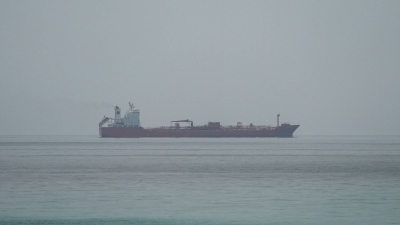
UN pauses Strait of Hormuz evacuation plan after cargo ship attacked
The ship was reportedly struck by an "unknown projectile" near Oman but no casualties were reported.

A vessel attack in the Gulf of Oman has halted UN-led evacuation of hundreds of stranded ships through the Strait of Hormuz, threatening global oil flows and reigniting fears of broader conflict as Iran and...
Al Jazeera Arabic argues international law prohibits Iran charging passage fees; Times of Israel frames IRGC route threats as illegal escalation; The National frames corridor instability as an inflation risk requiring Gulf collective response. These three outlets apply fundamentally different legal and strategic interpretive lenses to the same incident.
La Repubblica reports Italian government anger at NATO Secretary Rutte for 'imprudent' remarks about Italy's role, a friction angle entirely absent from Straits Times and BBC coverage. Yahoo Japan and CNA foreground Asian energy supply-chain institutional exposure and shipping logistics, while Italian and Israeli sources prioritise military confrontation framing with Iran. The Hindu reports the UN evacuation pause and IRGC route warnings without engaging the legal or geopolitical interpretation layer.
UN pauses Strait of Hormuz evacuation plan after attack
attack on ship in Hormuz leads UN to halt evacuation
plan to withdraw ships from Hormuz suspended after attack
Iran UK navy reports cargo vessel hit in Strait of Hormuz
The identity of who attacked the cargo ship, whether it was Iran-directed or a proxy actor, and whether the vessel sustained casualties remain unconfirmed in available summaries.
No source in this cycle covers the perspective of the stranded seafarers themselves — their conditions, nationalities, or the human cost of months-long vessel detention in Gulf waters, despite Deutsche Welle earlier covering an Indian sailor killed in a US strike.
BBC leads with the UN pause in ship evacuation following the cargo vessel attack, maintaining institutional framing — what the attack means for UKMTO-reported maritime safety protocols.
The Hindu covers the IAEA chief's call for 'very strong' nuclear verification post-war alongside the IMO evacuation pause, and separately tracks IRGC warnings against ships using non-Iran-designated routes — framing India's strategic autonomy exposure.
Deutsche Welle reports the UK navy cargo vessel attack and frames the Hormuz crisis through energy infrastructure shock to German economic sustainability.
La Repubblica covers Italy's minehunter deployment details ('Operation Hormuz'), the Iran-Italy diplomatic spat over 'accomplice' accusations, and Meloni's friction with NATO Secretary Rutte over unilateral remarks.
The National focuses on the economic consequence — charging transit fees 'could drive global inflation surge' — and Saudi Aramco's restart of oil loading at Ras Tanura, framing Gulf energy resilience.
Straits Times reports the Montenegro-FBI arrest of an Iranian hacker as a separate but adjacent Iran security story, while also covering the ship attack's IMO pause.
Yahoo Japan highlights both the ship attack and US/Gulf state refusal of strait passage fees, framing Hormuz through Asian energy security institutional exposure.
Al Jazeera Arabic presents a legal analysis arguing international law prohibits Iran from charging transit fees, framing Iranian demands as violations of customary maritime law.
Times of Israel covers IRGC threats against ships using the new non-Iran route and EU aviation authority warnings to avoid Iranian airspace, framing Iranian actions as escalatory and dangerous.
Daily Sabah covers Iran-Oman discussions on Hormuz administration, framing Turkey's energy security interest through institutional decision-making interrogation.
Daily Maverick uses Reuters wire to report the UN escort halt after the vessel attack, without additional regional framing.
SCMP covers the IMO halt after the Singapore-flagged vessel attack, framing the crisis through structural maritime vulnerability and supply-chain coherence risk.
Folha de S.Paulo reports the evacuation plan suspension after the Gulf of Oman attack, without additional political framing.
This page maps the coverage. The 28 articles below are the original reports the comparison is drawn from — open them for each publisher's full reporting.
The ship was reportedly struck by an "unknown projectile" near Oman but no casualties were reported.
Signs that traffic through the key Strait of Hormuz shipping route is gradually resuming has helped to push the oil price down.

Attack on ship in Hormuz leads UN to halt evacuation plan for trapped sailors
The head of the International Maritime Organization said the plan to move stranded ships out of the Persian Gulf through the strait will be on hold until the agency can confirm safety guarantees for the ships on the…

Even if shipping traffic resumes through the Strait of Hormuz, hundreds of vessels that have spent weeks or months waiting at anchor must first overcome a range of technical, operational and human challenges before…

Naval Force of IRGC warns vessels transiting the strait must use only routes officially designated by Iran

The plan to withdraw ships from the Strait of Hormuz was suspended this Thursday (25) after an attack, in the Gulf of Oman, against a ship that had crossed the sea route, announced the Maritime Organization…
The reported attack has caused the UN maritime agency to halt its evacuations of seafarers stranded in the Gulf. Meanwhile, US Secretary of State Marco Rubio is finishing up his Mideast tour.
After a US strike on a commercial vessel in the Gulf of Oman killed an Indian sailor, there are urgent questions about seafarer safety, accountability and India's response. DW spoke with the sailor's family.
Iran and Oman are set to discuss the future administration and maritime services in Hormuz, Iranian Foreign Minister Abbas Araghchi said Thursday, while the Strait saw a sharp upti...
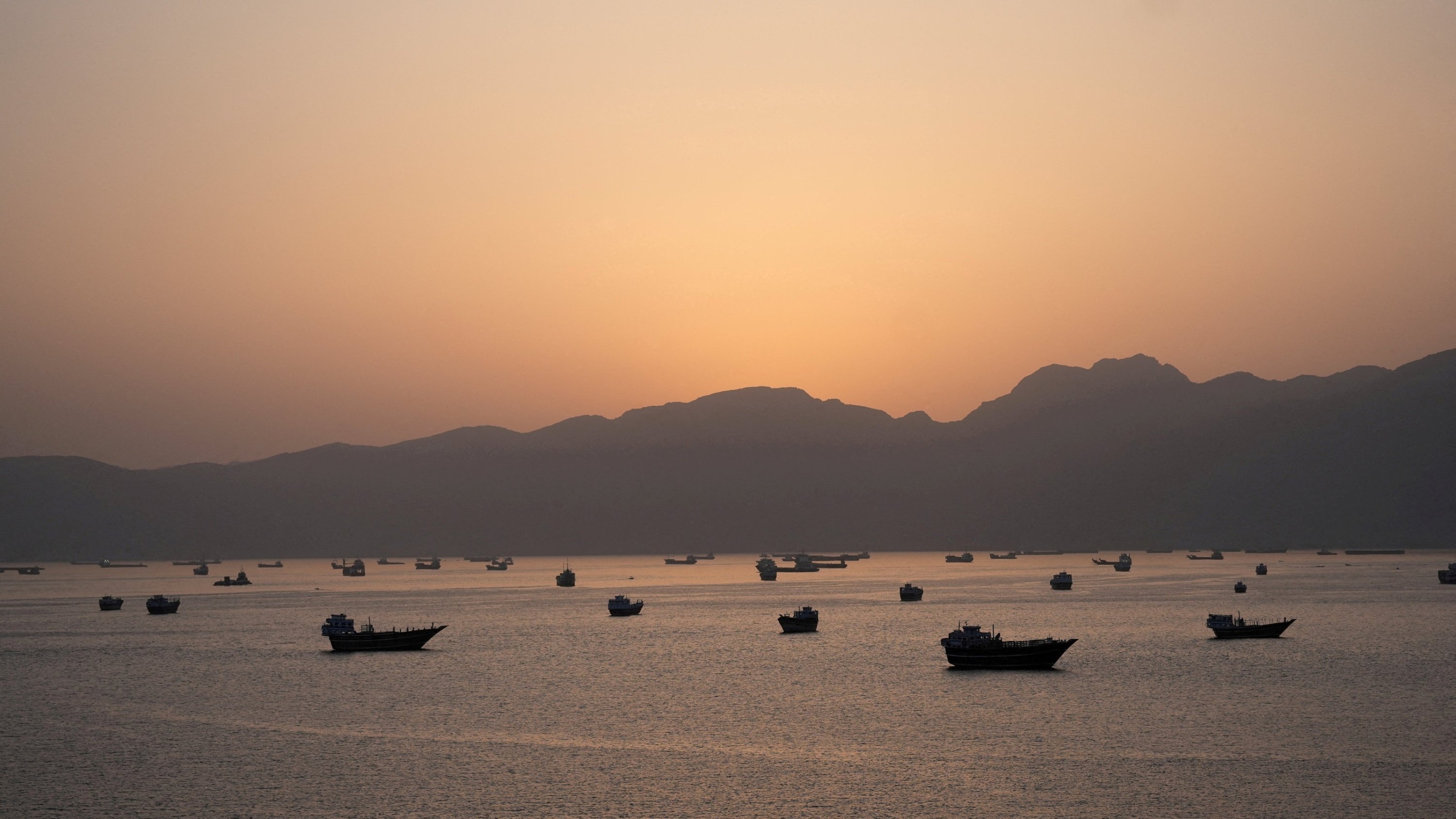
The UN’s International Maritime Organization paused its operation to escort ships through the Strait of Hormuz on Thursday after a vessel reported an attack, reigniting concerns about whether a preliminary deal to end…

Iranians against. A freighter hit in the Strait near the new route.
The UN International Maritime Organization paused its operation to escort ships through the Strait of Hormuz on Thursday after a vessel reported an attack, reigniting concerns about whether a preliminary deal to end the…

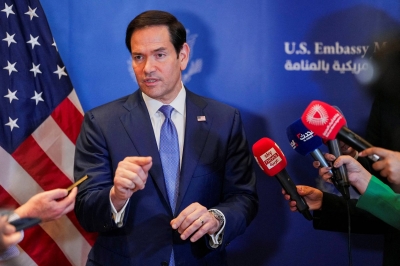
US Secretary of State Marco Rubio told Gulf allies on Thursday that any deal with Iran would take their interests into account, as he wrapped up a Middle East trip aimed at winning over regional partners with deep…


IRGC threatens to target ships using new Hormuz route that forgoes Iran coordination The Times of Israel
Director General of the International Atomic Energy Agency, Rafael Grossi, said that he hopes that IAEA experts will return to work soon to inspect Iranian nuclear facilities.
The law of the sea, along with well-established customary international law, prohibits Iran from demanding payments for crossing the Strait, with regard to the issue of “fees.” The reason seems simple: it is like forcing the shipowner to pay for transit.
US President Donald Trump stressed that Iran will not possess a nuclear weapon, while Secretary of State Marco Rubio refused to impose fees on passage through the Strait of Hormuz in any agreement with Tehran.
Statements by the vice-president and secretary of state have at times diverged over the past week.
Dubai enlisting businesses to help keep it a tourism and finance hub after Iran war The Times of Israel

Marco Rubio's comments came after Iran and Oman said earlier in the week that they were working toward an agreement to jointly administer the Strait of Hormuz.
The unidentified cargo ship was hit on its side and sustained damage to the bridge while it was sailing to the southeast of Oman, U.K. Maritime Trade Operations said.