How the world covered it

US-Iran War Escalates After Ceasefire Collapse

Active US-Iran military exchanges after ceasefire collapse risk broader regional conflagration, threaten global energy supplies through the Strait of Hormuz, and force Gulf states to choose sides while Iran...

Editorial comparison

Coverage splits between security-focused (terrorism, nuclear threats) and economic framings (energy markets, Gulf stability) of ceasefire collapse.

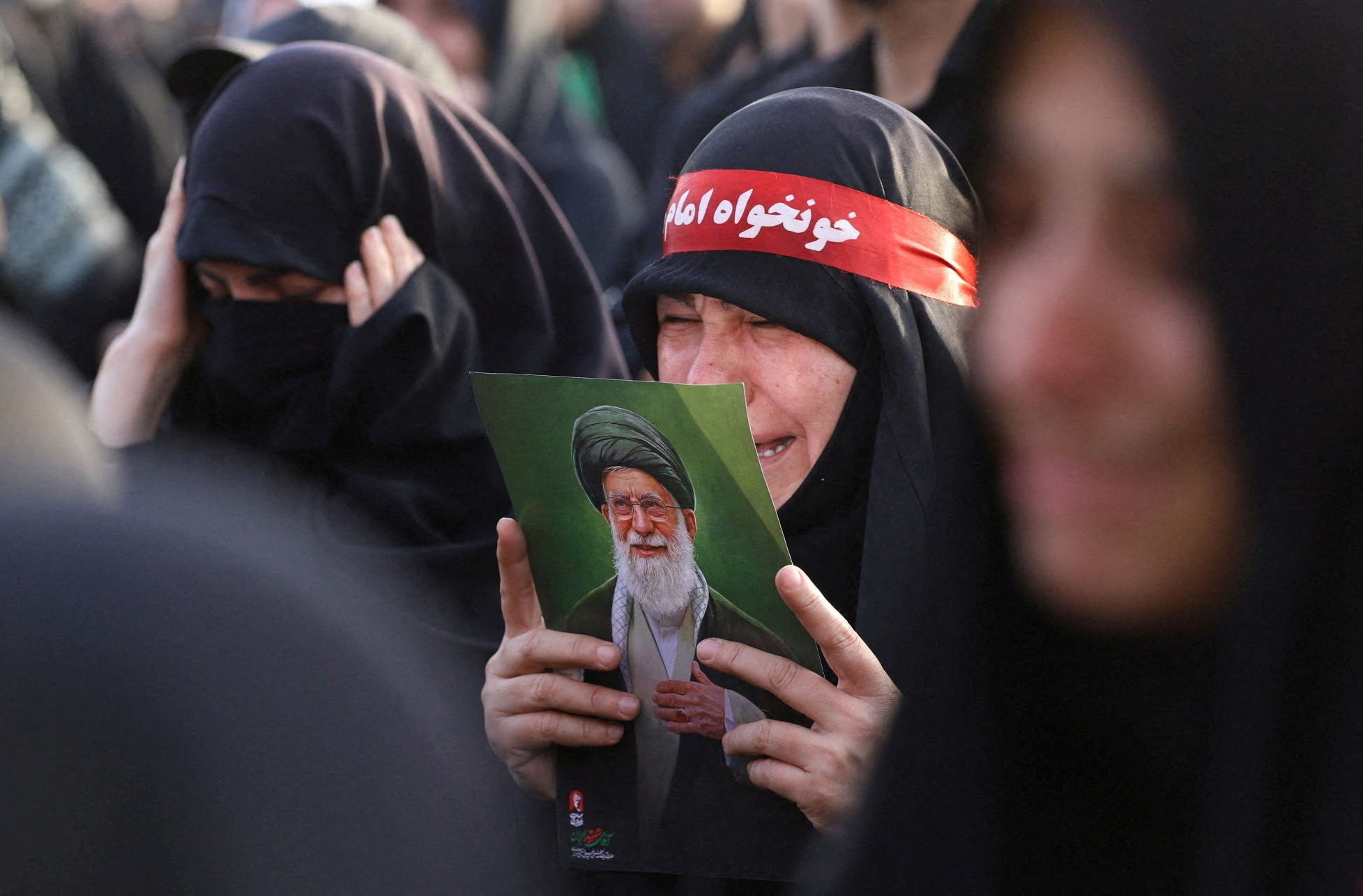
The Hindu, Folha de S.Paulo, and Al Jazeera Arabic center the immediate military exchanges and Khamenei's funeral as the dominant news hook, reporting explosions, attacks on US bases, and the burial ceremony itself. Deutsche Welle emphasizes Iran's leverage over the Strait of Hormuz as a strategic economic weapon, asking whether Tehran's disruption capacity remains credible. Al Jazeera Arabic uniquely foregrounds the role of regional mediators racing to prevent further escalation, suggesting diplomatic channels remain active even as military strikes continue.

The outlets diverge on interpretation of Iranian state strength. Folha de S.Paulo characterizes the funeral as a state demonstration, while The Hindu presents it as a factual event without interpretive framing. Al Jazeera Arabic's coverage of mediation efforts implies a fragile, reversible situation rather than an entrenched conflict, contrasting with Deutsche Welle's presentation of Iran as a durable strategic actor.

How each outlet opened the story
The Hindu India

Iran buries Khamenei as fighting with US erupts

Daily Maverick South Africa

Slain Iranian leader buried as successor remains out of sight

Iran records explosions for third consecutive day

Regional mediators race against time to avoid escalation

Deutsche Welle Germany

Is the Strait of Hormuz still Iran's trump card

Coverage map

What coverage agrees on, contests, or leaves unclear.

Broadly agreed
  • All covering sources confirm that Ayatollah Ali Khamenei was buried at the Imam Reza shrine in Mashhad after a large public funeral procession.
  • Sources across regions agree that fresh US-Iran military exchanges occurred after the ceasefire memorandum collapsed, with Iran retaliating by striking US bases in Gulf states.
  • Multiple sources confirm ship traffic through the Strait of Hormuz declined significantly following the new strikes.
Contested framing
  • Times of Israel and Israeli sources frame Iran as an existential aggressor plotting to kill Trump and requiring military readiness; TASS and Russian sources frame the funeral as a demonstration of Iranian popular strength and state legitimacy.
  • CNN asks whether the war had a point given Trump's denuclearization claim; Al Jazeera Arabic highlights Iranian domestic opposition to any deal with Washington, suggesting internal fracture rather than unified hostility.
  • SCMP and Emirati outlets frame the crisis primarily as an economic and Gulf security problem; Israeli and American sources frame it as a terrorism and nuclear security problem.
Still unclear

The exact terms of the collapsed ceasefire memorandum, the status of Iran's nuclear program following US strikes, and who will consolidate power as Iran's new supreme leader remain publicly unconfirmed.

Notable omissions

People's Daily and Gazeta.uz are entirely absent from coverage of the US-Iran conflict, reflecting their state-aligned editorial priorities; Russian TASS covers the funeral's scale but omits any analysis of Iran's retaliatory capacity or the ceasefire's collapse.

Regional framing

How different outlets describe the same story.

British

BBC frames the burial as a massive public mourning event and reports a sharp decline in ship traffic through the Strait of Hormuz after new strikes, emphasizing civilian and institutional consequences.

Indian

The Hindu runs a live blog treating the conflict as a West Asia war, covering both Khamenei's burial and fresh fighting simultaneously, framing India's position through a non-aligned strategic autonomy lens with Modi and Albanese calling for restraint.

Brazilian

Folha de S.Paulo emphasizes the human dimension — explosions for a third consecutive day and Iran's burial of Khamenei — framing the US as an aggressor whose aid to Venezuela is dwarfed by oil profits, suggesting moral inconsistency.

Qatari

Al Jazeera Arabic covers Iranian street slogans in Mashhad and Tehran calling leaders 'traitors' for negotiating with Washington, highlighting internal Iranian political fracture over whether to pursue a deal.

Russian

TASS reports Iran's state TV claim that over 40 million people attended Khamenei's farewell — the largest procession ever — framing the funeral as a demonstration of Iranian state strength and popular solidarity.

Israeli

Times of Israel highlights 'We will kill Trump' banners at Khamenei's funeral, IDF chief's warning that the fight is 'not over,' and Israeli intelligence sharing about an alleged new Iranian plot to assassinate Trump, framing Iran as irredeemably hostile.

German

Deutsche Welle asks whether the Strait of Hormuz remains Iran's trump card, using endurance framing — how long can Iran sustain disruptions — rather than military capability analysis.

Singaporean

SCMP analyzes the ceasefire collapse as a revival of global inflation risks, noting China's call for both sides to stick to peace, and framing the conflict through supply-chain and economic vulnerability.

Emirati

The National reports Iran targeted sites in Kuwait, Qatar, and Bahrain in response to US strikes, framing this as a Gulf collective security threat requiring regional strategic response.

Japanese

Yahoo Japan reports US military completed additional attacks with Iran retaliating, Trump denying restarting the war, and rising tensions, framing the conflict primarily through the lens of regional stability affecting Japan.

South African

Daily Maverick republishes a Reuters dispatch on Khamenei's burial with minimal editorial framing, treating it as a straight news relay rather than analytical commentary.

Singaporean

CNA reports Israel shared intelligence about an Iranian plot to kill Trump and that North Korea vowed to boost nuclear buildup in this context, linking regional security threats.

Singaporean

Straits Times reports Israel shared intel about a 'new' Iran plot to kill Trump, framing it through regional security implications.

Source trail

Original reporting behind this perspective.

This page maps the coverage. The 35 articles below are the original reports the comparison is drawn from — open them for each publisher's full reporting.

Show 35 source articles
Perspective link copied