Trump suggests new talks with Iran to begin on Monday
Tehran has not responded to the suggestion that new talks are imminent. Trump has previously said a negotiated end to the war is close, only for strikes to resume.

Trump's suspension of planned large-scale strikes on Iran and initiation of nuclear/Hormuz talks could determine whether the US-Iran war escalates or reaches a negotiated settlement affecting global oil...
BBC News, Dawn, The Hindu, Le Monde, SCMP, and Straits Times all report Trump's announcement of negotiations beginning Monday with Iran, treating the announcement as the central fact. However, they diverge on what happens next: The Hindu and Le Monde note that Iranian media via IRNA reported ongoing Hormuz negotiations with Oman, while BBC News notes that 'Tehran has not responded' to Trump's suggestion. Le Monde emphasizes Trump's reversal from his prior statement about 'losing faith' in negotiations, framing this as another turnabout in policy. SCMP and Straits Times provide the most minimal detail, with Straits Times explicitly noting Trump 'did not provide further details of the venue of the talks or the participants.'
Trump suggests new talks with Iran to begin on Monday
Trump says new Iran talks set to start today after calling
Trump says Iran talks to take place today, sets no deadline
US and Iran will meet on Monday for negotiation Trump says
Trump says new talks with Iran set to begin after calling
Trump says new Iran talks set to start after calling off
Whether Iran's government has formally agreed to any deal on Hormuz or nuclear terms remains publicly unconfirmed, with Iranian state media denying a deal even as Trump and some Gulf sources claim parameters exist.
People's Daily and TASS provide no substantive coverage of the diplomatic content or stakes of the US-Iran talks, with TASS covering only Saudi Arabia's warning to the US without engaging with the broader negotiation framework.
BBC frames Trump's cancellation of strikes as a policy reversal pending a 'rapidly' reached deal, emphasizing uncertainty over Tehran's response and what Trump's endgame actually is.
CNN centers the story on Trump administration political calculation, military contingency planning including 'creative and unconventional' punishment ideas, and the absence of a clear strategic endgame.
Le Monde covers Trump's announcement live, noting Iran and Oman are negotiating a new Hormuz route, framing the pause as conditional and fragile pending rapid agreement.
Times of Israel emphasizes Israeli officials were left in the dark about the cancelled attack and do not know Trump's endgame, raising Israeli security concerns about being sidelined.
Daily Sabah frames the US-Iran pause through Turkey's institutional lens, questioning whether Ukraine was 'bargained' into opening a new front and treating the ceasefire as potentially illusory.
The Hindu covers the development factually, noting Saudi Arabia's intervention through MBS dissuaded Trump, and that Gulf leaders' input weighed heavily in the decision.
Straits Times and CNA report tightly on oil price movements and shipping route implications, framing the talks through supply-chain and energy infrastructure impact.
The National focuses on oil price falls on deal hopes and how ADNOC is building gas strategy beyond the Strait of Hormuz, reflecting UAE's direct economic stake.
Yahoo Japan and Japan Times report factually that Trump announced talks on August 3rd, with emphasis on crude oil supply vulnerability and energy security implications for Asian importers.
Folha de S.Paulo covers Trump's suspension of attacks and search for a quick deal, framing it through US executive decision-making accountability.
El Tiempo reports Trump announcing negotiations after pausing attacks while Tehran seeks a new route in Hormuz, positioning it as US institutional decision-making accountability.
Daily Maverick reports Trump setting no deadline for a deal and talks happening Monday, using a neutral Reuters-sourced framing without institutional critique.
Al Jazeera Arabic covers Trump's announcement with Iranian President Pezeshkian noting the MOU with America will be Iran's focus, framing Iran as an active negotiating party.
This page maps the coverage. The 28 articles below are the original reports the comparison is drawn from — open them for each publisher's full reporting.
Tehran has not responded to the suggestion that new talks are imminent. Trump has previously said a negotiated end to the war is close, only for strikes to resume.
US President Donald Trump said that new negotiations with Iran will begin on Monday after he decided to hold off on striking the country to pursue a deal to end the war entering its sixth month. Trump told reporters on…
The official Iranian news agency IRNA reported earlier that negotiations between Tehran and Oman over the Strait of Hormuz were in their final stages, citing Iran's Foreign Minister Abbas Araghchi
It was another turnabout for Mr. Trump, who a day earlier said he is "losing faith" in negotiations with Iran and offered the ominous warning that the U.S.

After having declared, the day before, that he had renounced further strikes on Iran on the condition that an agreement was quickly reached, the American president affirmed, on Sunday, that talks with Tehran were...
US President Donald Trump said that new negotiations with Iran would begin on Monday after he decided to hold off on striking the Islamic republic to pursue a deal to end the war entering its sixth month. Trump told…

He did not provide further details of the venue of the talks or the participants.
ABOARD AIR FORCE ONE/CAIRO, Aug 3 - U.S. President Donald Trump said talks with Iran will happen on Monday but declined to set a deadline for an agreement after earlier saying he had called off an imminent attack in…
Iran said it was close to reaching a deal with Oman on a new route that “respects the sovereign rights of both sides”.


Trump says talks with Iran will start Monday on deal to reopen Hormuz The Times of Israel
Iranian media denies deal on opening Hormuz; outlets mock Trump’s climbdown The Times of Israel
Iran’s Araghchi agreed to deal opening Hormuz, leading Trump to cancel attack — report The Times of Israel
Israel said to assess that Iran will fire missiles at it even if it doesn't initially join Trump's threatened new offensive The Times of Israel
US embassies in Israel and other Mideast states urge citizens to leave or be ready to leave amid Iran tensions The Times of Israel
U.S. President Donald Trump suggested a deal on reopening the Strait of Hormuz may be close and said he would also continue to pursue a path to end Iran's nuclear program.
According to the president, US allies

President Donald Trump said late Saturday that the United States has suspended new attacks on Iran in pursuit of a quick deal to halt Tehran's nuclear ambitions and reopen the Strait of Hormuz. Read more…
Iranian President Masoud Pezeshkian announced that the memorandum of understanding with America will be the focus of Iran's foreign relations in the future. Tehran also spoke of talks being held with the Sultanate of Oman to open a new transit route in the Strait of Hormuz.
US President Donald Trump announced that new negotiations will begin with Iran - today, Monday - after he suspended strikes on Tehran, stipulating that a quick agreement be reached.
President Donald Trump said Saturday that the United States and Israel have agreed to suspend new strikes on Iran if a deal to end the monthslong conflict is reached quickly. Fear...
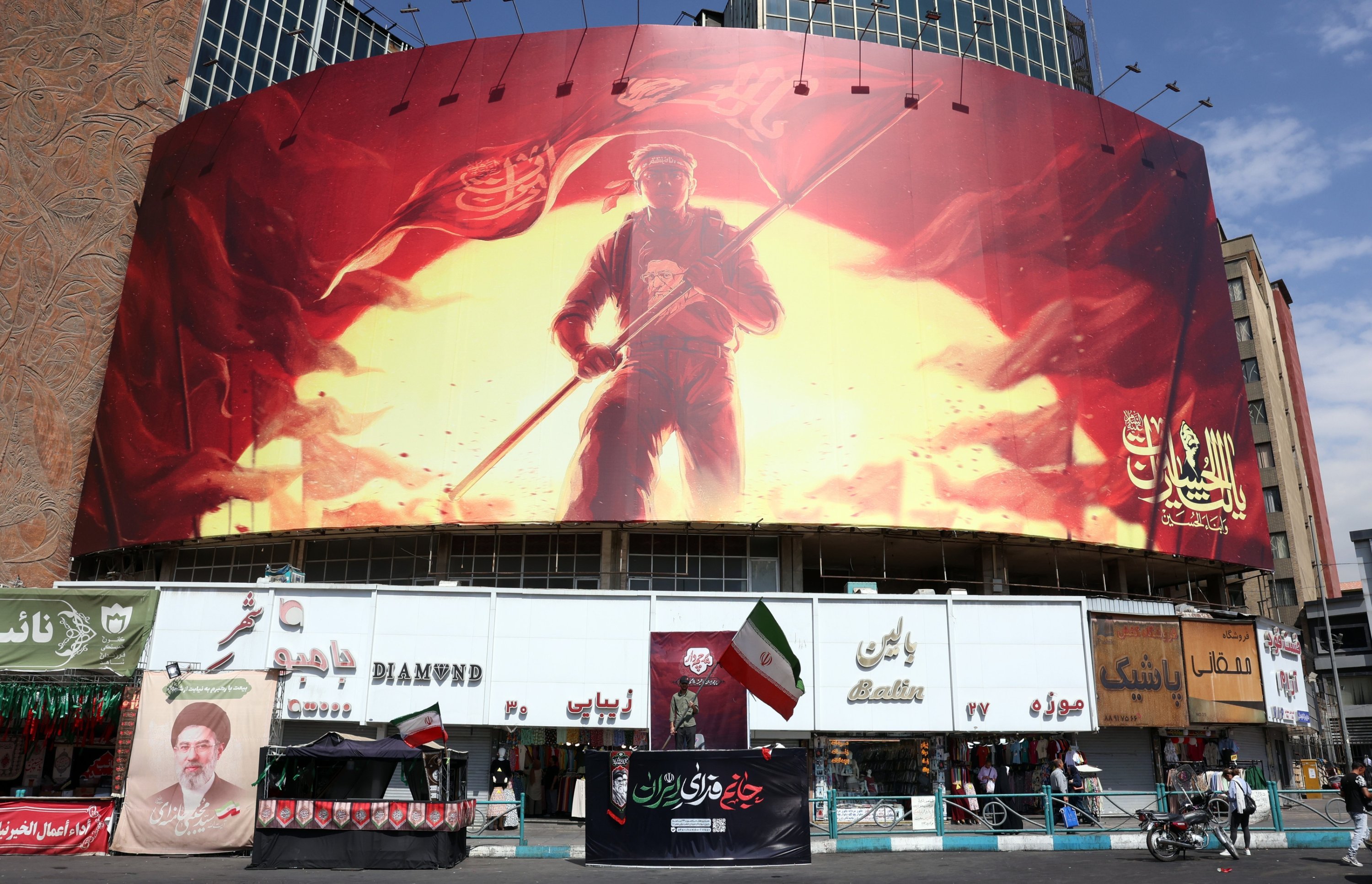
ABOARD AIR FORCE ONE/CAIRO, Aug 3 (Reuters) - U.S. President Donald Trump said talks with Iran will happen on Monday but declined to set a deadline for an agreement after earlier saying he had called off an imminent…

On Sunday, August 2, OPEC+ approved an oil production quota increase of around 188,000 barrels per day from September, the producer group said, in a move that completes the unwinding of a layer of voluntary output…

US President Donald Trump in a Saturday evening social media post claimed that Middle Eastern allies had reached the parameters of a deal to end the Iran war and said that he would hold off on ordering new strikes in…

Call from the Saudi prince to the White House: "Make every effort for the truce". Iran: never again free Hormuz
Exclusive: US military asks troops for ‘creative and unconventional’ ideas to punish Iran CNN