Moscow residents complain of black rain after largest Ukrainian attack hits oil refinery
A refinery and a shopping centre burned after almost 200 Ukrainian drones struck an area to the south-east of the Russian capital.

Ukraine's largest drone attack in two years struck Moscow's oil refinery infrastructure and disrupted commercial aviation, escalating the economic pressure campaign on Russia's war-financing capacity at a...
BBC News leads with Moscow residents' eyewitness accounts of "black rain" after almost 200 drones struck an oil refinery area, while Japan Times frames the same attack as part of "a wider Ukrainian campaign to cripple the oil industry whose revenues finance Russia's war effort." Both establish the economic targeting logic, but Japan Times makes the strategic rationale explicit in the lede.
La Repubblica emphasises the psychological and symbolic dimensions, reporting that "two hundred unmanned vehicles attack infrastructure" in Moscow and framing the event as proof that "Moscow's strength linked to the immense size of its territory has become its weakness." This nationalist reversal narrative differs from the technical focus on oil revenues in BBC and Japan Times coverage. Folha de S.Paulo describes it as Ukraine's "biggest drone attack in two years," establishing scale without assigning strategic interpretation.
Moscow residents report black rain after 200 Ukrainian drones hit refinery
Ukraine launches biggest drone attack in two years against Moscow
Ukraine hits Moscow oil refinery and disrupts commercial flights in major attack
Ukraine brings war to Moscow, huge blasts shake refinery as part of oil-targeting campaign
Two hundred drones attack Moscow, war comes to capital, residents criticise weak defences
Ukraine launches largest drone attack on Moscow in years, sparks fires at refinery
The full extent of damage to the Moscow refinery and whether it will have measurable impact on Russian oil export capacity has not been confirmed in the available summaries.
TASS consistently avoids framing Ukrainian drone strikes on Moscow as strategically successful, instead focusing on border region UAV warnings and civilian casualties from Ukrainian attacks, inverting the story's narrative direction.
BBC reports Moscow residents complaining of black rain after the refinery fire, emphasising civilian consequence documentation and the psychological impact of war reaching the Russian capital.
Folha de S.Paulo frames the attack as Ukraine's biggest in two years, documenting fires at the refinery and disruption to commercial flights, with structural accountability emphasis.
Khaosod English describes the attack in factual terms, noting the refinery was hit for a second time in a week, consistent with its avoidance of deep geopolitical analysis.
Japan Times frames the drone strikes as part of Ukraine's wider campaign to cripple oil industry revenues financing Russia's war effort, consistent with its supply-chain and energy infrastructure analytical lens.
La Repubblica frames the attack as proof that 'vastness no longer protects Russia', arguing Moscow's territorial depth has become a strategic weakness rather than a strength.
Dawn reports the attack factually as Ukraine setting Moscow ablaze in its biggest strike in years, without strategic analysis.
This page maps the coverage. The 10 articles below are the original reports the comparison is drawn from — open them for each publisher's full reporting.
A refinery and a shopping centre burned after almost 200 Ukrainian drones struck an area to the south-east of the Russian capital.
This Thursday (18), Ukraine carried out the biggest drone attack in the last two years against Moscow, which caused fires in the Russian capital and its surroundings and interrupted the operations of the main…
Ukraine hit a major Moscow oil refinery for a second time in a week and disrupted commercial flights at Moscow airports in one of its biggest drone attacks since Russia’s all-out invasion of its neighbor more than four…
The attacks are part of a wider Ukrainian campaign to cripple the oil industry whose revenues finance Russia's war effort.
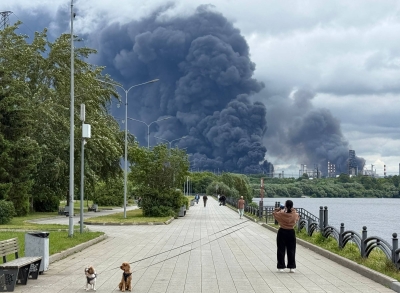
Two hundred unmanned vehicles attack infrastructure and condominiums in the capital. Criticism from residents for the weakness of anti-aircraft fire and fears of smog
Moscow's strength linked to the immense size of its territory has become its weakness because the Kremlin is unable to protect vital infrastructures scattered throughout the country. But you don't have to…
Ukraine on Thursday launched its largest drone attack on Moscow in years, sparking fires, hitting a major oil refinery and forcing evacuations at the country’s largest airport. Russia vowed to retaliate for the attack…
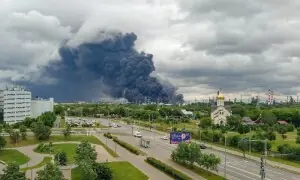
The attack comes as President Vladimir Putin is in Kazan, 700 km east of Moscow, hosting leaders of the Association of Southeast Asian Nations as Russia seeks to bolster business and other ties

The representatives of the 27 unanimously condemn Moscow's attacks against the capital's UNESCO sites. We are trying to open a channel with Kiev, for many Costa is the "natural representative".