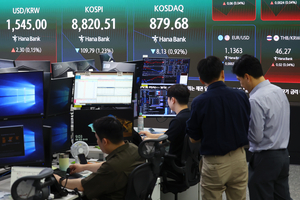
South Korean stocks triggered a marketwide circuit breaker on Friday after the Kospi plunged more than 8 percent in intraday trading, capping a volatile week marked by sharp swings in chip-heavy shares. The Korea…
How the world covered this
Read the editorial comparison
Prose synthesis of how each outlet framed the story, with side-by-side outlet quotes and divergence notes.
7 articles from 2 sources
01

02
Seoul will offer up to 3 million won ($1,940) to couples who hold weddings at selected public venues, as the city seeks to ease competition for conventional wedding halls and help alleviate the financial burden on…

03
South Korea's National Pension Service could sell as much as 74 trillion won ($47.9 billion) of domestic equities if the Kospi rises above 9,000, according to estimates from South Korea's financial investment…

04
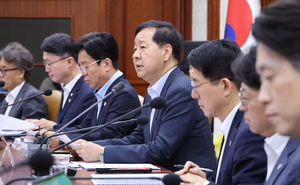
South Korea will deploy 1 trillion won ($647 million) to ease the burden of high living costs, while lowering fuel price caps and freezing major public utility rates in the second half of the year. "We will inject…
05
Hyundai Motor has unveiled a fully redesigned Avante compact sedan, bringing more cabin space and its latest software and artificial intelligence features to one of South Korea’s best-known passenger cars. The…

06
South Korea's bourse operator on Friday activated a circuit breaker for the benchmark Korea Composite Stock Price Index as stocks crashed due to a slump in tech heavyweights. Trading of KOSPI-listed shares was…
07
Asian tech stocks also sank on Friday as the rollercoaster ride that has characterised the week continued into the weekend, while crude prices edged back down after a brief rally sparked by news of an attack on a ship…

AI read
What the coverage agrees on, and where it splits
This view is generated from the clustered articles, so it is best read as a map of coverage rather than a replacement for the source reporting.
Broadly agreed
- All covering sources confirm the KOSPI triggered a circuit breaker after falling more than 8% intraday on June 26.
- Korea Herald and CNA both link the crash to broader Asian tech stock declines driven by AI-related valuation concerns.
Contested framing
- Korea Herald frames the government's 1 trillion won relief package as a proactive institutional stabilisation response; Irish Times and CNA focus on the market mechanism failure without covering government counter-response.
Still unclear
Whether the KOSPI circuit breaker was triggered by domestic or foreign institutional selling, and the extent of NPS intervention, remain unconfirmed.
Notable omissions
No source covers the impact of the KOSPI crash on South Korean retail investors or pension savers, despite Korea Herald noting NPS could sell up to 74 trillion won in equities if the index recovers to 9,000.
Quality check
8% intraday plunge and circuit breaker are confirmed; underlying causes and extent of government/institutional response remain unclear.
- Circuit breaker trigger confirmed, but source of selling pressure unconfirmed — domestic vs. foreign institutional selling distinction unclear
- NPS (National Pension Service) intervention extent unconfirmed; Korea Herald notes 74 trillion won potential selling authority if index recovers to 9,000, but actual intervention unclear
- Omission: no coverage of impact on South Korean retail investors or pension savers despite Korea Herald flagging this systemic exposure
Review confidence: 82%
Signal strength
2/5
Narrative divergence
2
Sources compared
1
Days in coverage
How each outlet frames this story
Divergence
2/5
Narrative Divergence
How differently the sources covering this story frame it — measured by tone, emphasis, and what each outlet chooses to highlight or omit.
1 — Sources frame the story almost identically
2 — Minor differences in tone or emphasis
3 — Noticeable differences; some outlets highlight what others omit
4 — Stark contrasts; conflicting narratives
5 — Sources tell fundamentally different stories
South Korean
Korea Herald provides detailed institutional analysis — circuit breaker activation mechanism, National Pension Service potential sell-off thresholds, and government's 1 trillion won cost-of-living relief package — framing the crash through domestic institutional resilience management.