Tsunami alert issued after powerful magnitude 7.1 quake strikes Kumamoto
The quake registered up to shindo 7, the highest level on the Japanese seismic intensity scale.
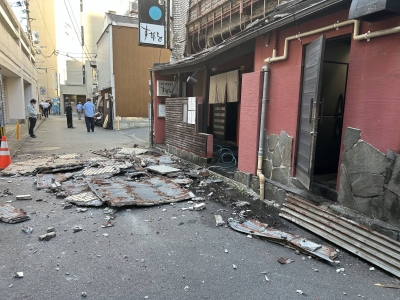
A magnitude-7.1 earthquake striking Japan's Kyushu island—reaching the highest level on Japan's seismic intensity scale—triggered tsunami warnings and represents a major natural disaster threat to one of the...
Japan Times, ABC Australia, CNA, and The Hindu all lead with identical or near-identical factual reporting: a magnitude-7.1 earthquake struck Kyushu; it reached shindo 7 (Japan's highest seismic intensity scale); tsunami warnings were issued for waves measuring 1 metre. The coverage is straightforward breaking news with no interpretive divergence or contested framing.
All sources treat this as a natural disaster requiring rapid factual reporting without attributing responsibility, making policy critiques, or offering causal explanations beyond the geological event itself. The consistency reflects the event's status as breaking news requiring immediate accuracy rather than interpretive journalism.
Tsunami alert issued after powerful magnitude 7.1 quake strikes Kumamoto
Breaking: Magnitude-7.1 quake hits Japan, sparks tsunami warnings
Magnitude 7.1 earthquake hits Japan's Kyushu region with tsunami warning
Magnitude 7.1 earthquake hits Japan's Kyushu region, tsunami advisory issued
The extent of structural damage, casualties, and whether the tsunami warning was subsequently downgraded or confirmed as a wave materialised remain unverified from available summaries.
No source provides analysis of whether Japan's nuclear facilities near Kyushu were affected or placed on alert status following the earthquake.
Japan Times leads with the tsunami alert issued after the quake registered shindo 7, the highest level on Japan's seismic intensity scale, framing the story through established disaster preparedness institutional protocols.
ABC Australia frames the story as breaking news emphasising two strong earthquakes within an hour on Kyushu island sparking tsunami wave warnings, foregrounding the sequential nature of the seismic events.
CNA provides terse factual reporting—1-metre tsunami warning issued by Japan Meteorological Agency—consistent with its facts-first supply-chain consequence framing for regional disasters.
The Hindu reports the 1-metre tsunami warning alongside the quake's magnitude, framing it through South Asian regional seismic monitoring awareness without deeper institutional analysis.
This page maps the coverage. The 4 articles below are the original reports the comparison is drawn from — open them for each publisher's full reporting.
The quake registered up to shindo 7, the highest level on the Japanese seismic intensity scale.
Japan's south-western Kyushu island has been struck by two strong earthquakes within an hour, sparking warnings of a tsunami wave of up to 1 metre.
A tsunami warning for a wave measuring 1m was issued after the earthquake, the Japan Meteorological Agency said.

A tsunami warning for a wave measuring 1 metre (3.28 ft) was issued after the earthquake
