South Korean retail investors snapped up more than 1 trillion won ($661 million) worth of SpaceX shares on the company's stock market debut, underscoring the intense local appetite for the Elon Musk-led space firm.…
How the world covered this
Read the editorial comparison
Prose synthesis of how each outlet framed the story, with side-by-side outlet quotes and divergence notes.
9 articles from 2 sources
01

02
Hyosung Group said Wednesday it has launched its first AI data center in Seoul with Singapore-based ST Telemedia Global Data Centres, targeting Korea’s rapidly growing data center market — projected to reach 20 trillion…

03
South Korea's land-use restrictions near the inter-Korean border are to be eased, opening up as much as 260 square kilometers for civilian use and development, the Ministry of National Defense said Wednesday. The…

04
President Lee Jae Myung held a brief exchange with US President Donald Trump on the sidelines of the Group of Seven summit Tuesday, during which Lee asked Trump to help lead efforts toward a peaceful resolution of North…

05
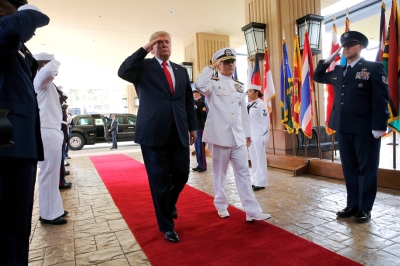
The command's vast area of responsibility "remains exactly the same," the Pentagon said, with the move coming amid soured U.S.-India ties.
06
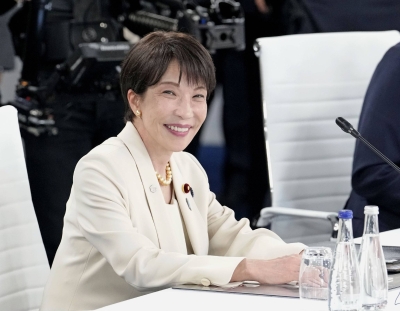
The meeting came as the grouping reaffirmed its opposition to unilateral attempts to change the status quo in the East and South China Seas and across the Taiwan Strait.
07
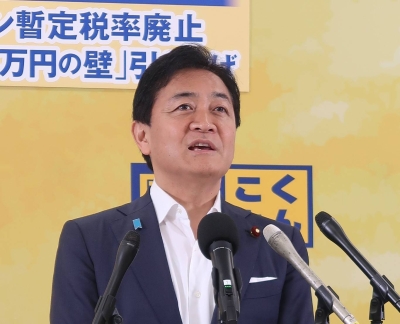
Backing from the opposition Democratic Party for the People paves the way for the bill's passage through the Upper House, where the ruling bloc is a minority force.
08
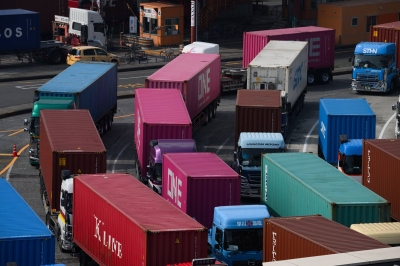
The deficit suggests trade may weigh on growth in the second quarter, when economists largely expect a slowdown due to the impact of the war in Iran.
09
Developers think feeding first-person footage, called "egocentric data," into specialized AI models will help robots copy humans.
AI read
What the coverage agrees on, and where it splits
This view is generated from the clustered articles, so it is best read as a map of coverage rather than a replacement for the source reporting.
Broadly agreed
- Korea Herald confirms significant South Korean retail investment in SpaceX on debut and the opening of new AI data center infrastructure.
- Japan Times confirms Japan's trade balance moved to deficit as yen-inflated import costs rose.
Contested framing
- Korea Herald frames the economic data as reflecting investor confidence and alliance-aligned growth; Japan Times frames the trade deficit and fast-tracked power plants as structural vulnerabilities requiring scrutiny — different risk assessments of the same regional economic moment.
Still unclear
Whether South Korea's inter-Korean border land release will face North Korean countermeasures or protests, and whether Japan's trade deficit will deepen in Q2, remain publicly unresolved.
Notable omissions
No source addresses how the Iran conflict's energy price disruption has specifically affected South Korean and Japanese corporate earnings in the period before the deal.
Quality check
South Korea shows economic confidence while Japan shows caution; both perspectives reflect real data but different analytical horizons.
- SpaceX investment and AI data center developments are real but Korea Herald framing as 'confidence' may anthropomorphize retail investor behavior
- Japan's trade deficit is real but Journal Times framing of 'structural vulnerabilities' depends on Q2 trajectory—single-quarter data may be noise
- Risk assessments (confidence vs. vulnerability) are genuinely different analytical frames for same data—both defensible
- Inter-Korean border land release's geopolitical implications are noted as unknown but timing relative to US-Iran deal not contextualized
Review confidence: 71%
Signal strength
1/5
Narrative divergence
2
Sources compared
1
Days in coverage
How each outlet frames this story
Divergence
1/5
Narrative Divergence
How differently the sources covering this story frame it — measured by tone, emphasis, and what each outlet chooses to highlight or omit.
1 — Sources frame the story almost identically
2 — Minor differences in tone or emphasis
3 — Noticeable differences; some outlets highlight what others omit
4 — Stark contrasts; conflicting narratives
5 — Sources tell fundamentally different stories
South Korean
Korea Herald foregrounds Korean retail investors snapping up over $661 million in SpaceX shares, Hyosung opening an AI data center with Singapore's STT GDC, Samyang winning the Buldak trademark, and stock bonuses tripling at top companies — painting an economy in confident investment expansion mode.
South Korean
Korea Herald separately covers Seoul easing military restrictions near the inter-Korean border, opening 260 square kilometres of land, President Lee's G7 sideline meeting with Trump on North Korea, and juvenile delinquency policy — reflecting active domestic governance alongside economic activity.
Japanese
Japan Times foregrounds Japan's trade balance swinging to a deficit as yen inflates imports, the Pentagon renaming Indo-Pacific Command, Takaichi meeting Trump at G7, and fast-tracked power plants fuelling AI demand without public scrutiny — framing Japan as managing structural vulnerability while expanding tech capacity.
Japanese
Yahoo Japan covers the G7 outcome document creating unity and Japanese-related ships damaged in the Persian Gulf as the primary prism through which to understand the Iran deal's economic consequences.