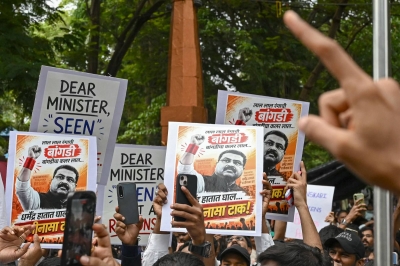
India cockroach protests: Videos show officers firing 'pellet guns'
Thousands of people have taken to the streets in Delhi as part of the cockroach protests, calling for educational reforms.

Mass student protests across India — branded the 'cockroach protests' after students called the system rotten — over exam paper leaks and educational corruption have reached Delhi and are now directly...
BBC News emphasizes state violence, reporting videos showing officers firing 'pellet guns' at thousands of protesters in Delhi during the cockroach protests calling for educational reforms. BBC's framing centers police response and weaponry. Le Monde frames the government as 'struggling to defuse' a movement it initially tried to ignore, with the Prime Minister Narendra Modi now targeted—emphasizing executive institutional failure to respond. Le Monde's framing prioritizes political crisis over violence.
The Hindu reports institutional accountability failure without focusing on violence, citing South Asians for Human Rights' concern over government 'failure' in responding to the NEET crisis and lack of accountability undermining public confidence. Japan Times foregrounds the human cost through victim testimony, treating the leak as a systemic betrayal of students rather than violence or political failure.
India cockroach protests show officers firing pellet guns
India government struggling defuse protest movement targeting Modi
Betrayal young victims India exam leak scandal
South Asians Human Rights voices concern government failure NEET
The full scope of the exam leak — how many students were affected and how many officials are implicated — is not established in the available summaries.
No source in the sample covers the Indian government's official position or any proposed remedies to the NEET corruption; People's Daily and TASS are silent on this story.
BBC documents videos showing police firing pellet guns at student protesters in Delhi, foregrounding the violent state response as an institutional accountability failure.
Le Monde reports the government has tried to ignore the student mobilisation and is 'struggling to defuse' the protest movement now targeting Narendra Modi directly.
Japan Times profiles the 'young victims of India's exam leak scandal,' foregrounding the personal consequence of systemic educational corruption through individual stories.
The Hindu covers the South Asians for Human Rights organisation expressing concern over the government's 'failure' to respond to the NEET crisis, framing it as an institutional accountability deficit.
This page maps the coverage. The 4 articles below are the original reports the comparison is drawn from — open them for each publisher's full reporting.
Thousands of people have taken to the streets in Delhi as part of the cockroach protests, calling for educational reforms.
After trying to ignore the student mobilization of “cockroaches” denouncing the corruption of the education system, the Prime Minister, Narendra Modi, finds himself increasingly called into question, while the parties…
The exam paper leak has fueled nationwide protests and public anger over an education system many students say is stacked against them.
Lack of accountability has undermined public confidence, says South Asians for Human Rights (SAHR)
