Heatwave breaks records in Germany, Denmark and Czech Republic
An estimated 150 million people are now experiencing temperatures of over 35C across Europe.

Record temperatures shattering all-time highs across Germany, Denmark, Czech Republic and Italy are causing deaths, infrastructure failures, and Alpine glacier melt at alarming rates, with 190 million people...
The Guardian frames the heatwave through explicit climate change institutional failure and socioeconomic inequality, arguing government plans fall 'far short of what is needed.' Deutsche Welle focuses on factual record documentation—temperatures exceeding 35C for 150 million people—without foregrounding systemic climate critique.
Le Monde emphasizes government departmental alert management as a competent institutional response, reporting the transition from red to orange alert status. BBC News and The Hindu present the records and infrastructure pressure neutrally. The Guardian uniquely connects Alpine glacier melt to heatwave dynamics and flags inadequate governmental preparation.
Heatwave breaks records in Germany, Denmark and Czech Republic
Germany, Denmark gripped by record temperatures as heatwave moves east
Germany and Italy swelter in heatwave as records tumble across Europe
Live coverage: heatwave with only two departments still on red alert
The final death toll attributable to the heatwave across Europe remains uncounted and unverified in available summaries.
People's Daily, TASS, and Al Jazeera Arabic are absent from heatwave coverage; the Singaporean outlets cover it analytically but do not document Southeast Asian or Global South climate comparison.
BBC and The Guardian emphasise institutional failure — government plans to protect people fall 'far short of what is needed' — and document socioeconomic inequality, with low-income families and women bearing the brunt.
Deutsche Welle reports Germany breaking its all-time temperature record for the second consecutive day, covering heat exhaustion, infrastructure pressure, and the heatwave's interaction with Germany's economic vulnerabilities.
Le Monde provides live departmental alert tracking as France moves from red to orange vigilance, covering emergency department overload in Metz-Thionville with a 20% increase in visits, framing through expert institutional response.
La Repubblica reports record tropical nights, open churches and shelters across 18 Italian cities on red alert, and documents specific heat-related deaths — framing through immediate human health danger.
Japan Times covers Japan's government plan to reduce heatstroke deaths below 1,000 annually, connecting European heatwave context to Japan's own extreme heat policy challenge.
Korea Herald reports record temperatures smashed from Switzerland to Czech Republic and Denmark, framing through factual temperature documentation without institutional critique.
Straits Times analyses why Europe is warming twice as fast as the global average, providing structural climate science explanation.
El Tiempo reports 190 million people facing temperatures above 35°C as the wave moves northeast, emphasising scale and humanitarian exposure.
This page maps the coverage. The 21 articles below are the original reports the comparison is drawn from — open them for each publisher's full reporting.
An estimated 150 million people are now experiencing temperatures of over 35C across Europe.
Soaring temperatures put pressure on public infrastructure and dozens of deaths linked to heat

Denmark experiences highest temperature on record on Saturday as weather system spreads eastward Europe heatwave – latest updates Germany and Italy endured sweltering conditions on Saturday as a heatwave linked to…
Accumulation on Switzerland’s glaciers from last winter expected to all be gone by Monday amid ‘enormous’ melt rates across Alps Europe heatwave: latest updates Swiss glaciers are set to lose an enormous amount of ice…
Plans to protect people fall ‘far short of what is needed’, government told, as MP warns of heatwave deaths UK politics live – latest updates The UK government is facing increasingly urgent calls for action to protect…
From 6 a.m., Paris, all of Île-de-France as well as fourteen other departments will leave red vigilance and switch to orange. The last two departments still affected by the maximum alert are…
According to the 2026 national classification, forest areas are exposed to the risk of fire in 52 departments. Firefighters have learned lessons from the major fires of 2025 and have strengthened their firefighting strategies…
For three days, emergency visits at the Metz-Thionville regional hospital center have increased by 20% and calls to the control center by 40%.
As Europe's heatwave rages, Germany breaks all-time temperature record for the second day in a row. Elsewhere, politicians bicker over reforms and industry blames train operator DB for billions in losses.
Europe's heat wave is expected to move east after causing record temperatures in several countries. But Germany still has a couple of torrid days ahead.
Europe's heat wave is expected to move east after causing record temperatures in several countries. But Germany still has a couple of torrid days ahead.
The suffocating wave is now moving towards the northeast of the continent, but the maximum alert also remains in force in Switzerland, Germany, Austria and Hungary.
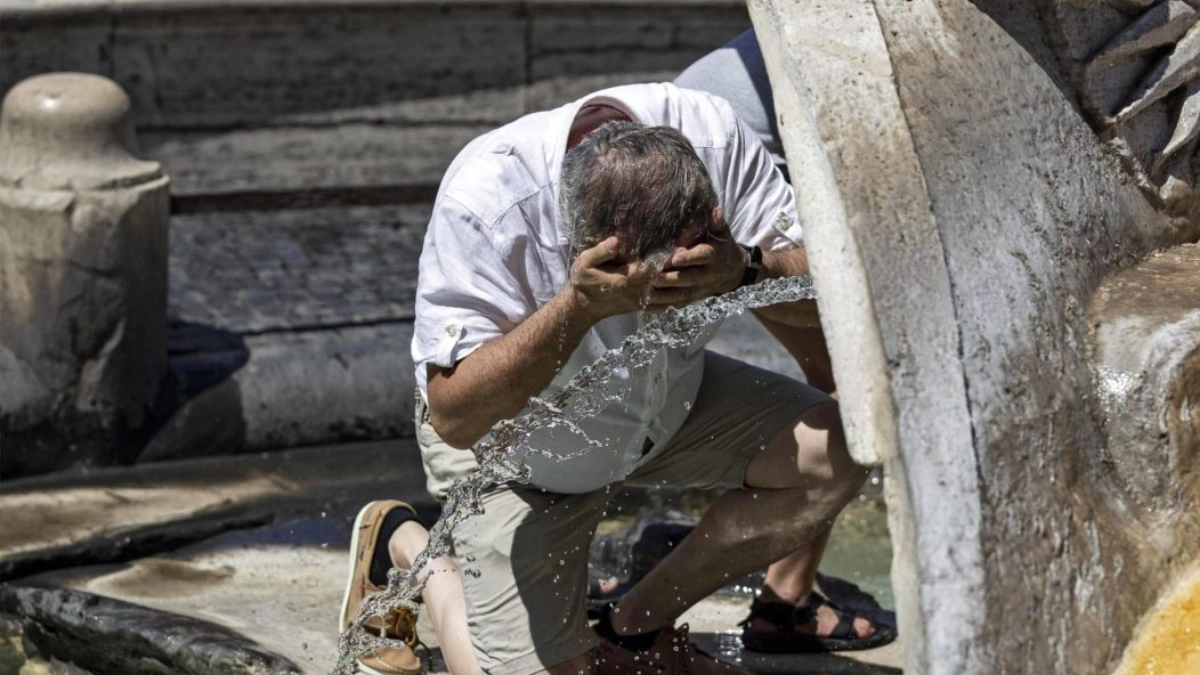
Many records have fallen, even after sunset: "Sleeping at high temperatures can be as lethal as heat stroke"
The culmination of the wave of extreme heat in Italy is expected tomorrow. Today, a red sticker in eighteen cities, measures for the elderly and frail
From Paris to Berlin, from London and Budapest: canceled events, delayed flights, glaciers at risk and hospitals in trouble
The government plans to reduce annual heatstroke deaths to below 1,000 as extreme heat pushes the five-year average above 1,500.

Preliminary all-time temperature records were set on Saturday in Germany, Denmark and the Czech Republic, and a new mark for the month of June in Switzerland.
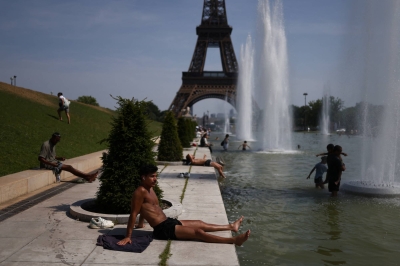
BERLIN (AP) — Temperatures soared to record highs from Switzerland to the Czech Republic and Denmark Saturday, as a heat wave that baked western European countries this week moved to central and eastern parts of the…

All-time temperature records were set on June 27 in Germany, Denmark and the Czech Republic.