How the world covered it

Europe Heatwave Emergency

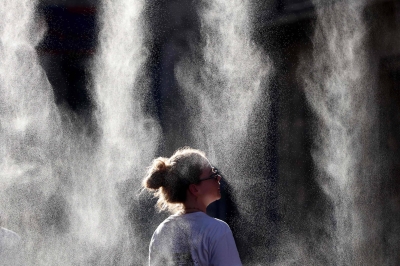
A 'heat dome' pushing temperatures above 40°C across Europe is closing schools, cancelling trains, banning alcohol at public events, and activating national heatwave emergency plans — with scientists...

Editorial comparison

Guardian explicitly attributes heatwave to fossil fuels and frames systemic inequality; Le Monde emphasizes cultural resilience with minimal climate attribution language.

The Guardian frames the heatwave as a systemic inequality crisis explicitly caused by fossil fuel burning, connecting immediate temperature impacts to carbon emissions and drawing lines to public health emergency response. The Hindu similarly attributes recurring heatwaves to coal, oil, and gas burning, treating climate science as foundational to the story.

Le Monde frames the Fête de la Musique continuing despite heat waves through cultural resilience—Parisians coping at festivals with minimal attribution language about causation. Deutsche Welle and Japan Times emphasize urban infrastructure and logistics problems: school closures, train cancellations, and disruption management. The Guardian and The Hindu prioritize climate justice and public health framing, while Deutsche Welle treats the event primarily as an adaptation and urban planning challenge without explicit climate attribution.

How each outlet opened the story
Le Monde France

French suffered new heat wave on June 21

The Hindu India

Europe sweats through new heatwave, with worse to come

Deutsche Welle Germany

Severe heat wave sweeps Europe, triggering alerts and disruptions

Japan Times Japan

Schools closed, trains canceled as Europe heat wave intensifies

Europe sizzles in heatwave as temperatures crack 40 degrees

Straits Times Singapore

Europe heatwave: How different countries are affected

Coverage map

What coverage agrees on, contests, or leaves unclear.

Broadly agreed
  • All covering sources confirm temperatures are exceeding 39-40°C across multiple European countries including France, Netherlands, Germany, and Spain.
  • Multiple sources confirm that schools have closed, trains have been cancelled, and national heatwave emergency plans have been activated.
Contested framing
  • The Guardian explicitly attributes the heatwave to fossil fuel burning and frames it as a systemic inequality crisis; Le Monde frames the same event through cultural resilience (Parisians coping at festivals) with minimal attribution language.
  • Deutsche Welle and Japan Times frame the heatwave primarily as an urban infrastructure and logistics problem; The Guardian and The Hindu frame it as a climate justice and public health emergency.
Still unclear

Whether the current event will match or exceed the 2003 death toll is not confirmed in available summaries; mortality projections are not cited.

Notable omissions

The economic cost of heatwave disruption to European businesses and agriculture is largely absent from coverage, which focuses on public safety and climate attribution rather than economic impact.

Regional framing

How different outlets describe the same story.

German

Deutsche Welle reports authorities warning of temperatures exceeding 39-40°C across Europe and cities racing to cool streets, framing heatwaves as an urban infrastructure adaptation challenge with structural vulnerability emphasis.

French

Le Monde covers the Fête de la Musique proceeding despite the heatwave with humanistic depth — quoting Parisians coping — and publishes temperature visualisation tools, treating the event through cultural resilience rather than crisis framing.

Indian

The Hindu reports the European heatwave explicitly as a marker of global warming caused by burning coal and oil, framing it as a climate science accountability story consistent with its non-aligned scientific emphasis.

British

The Guardian reports how Dutch citizens are adapting to heat with mobile jungles and shadow art, and separately covers how India's heatwaves are pushing women out of the workforce — connecting European and Global South climate vulnerability through systemic inequality analysis.

Singaporean

Straits Times maps how different European countries are affected, maintaining terse facts-first operational framing about disruptions to infrastructure across the continent.

Japanese

Japan Times reports schools closing and trains cancelled as the heatwave intensifies, framing European heat infrastructure disruption through an economic consequence lens consistent with Japanese corporate resilience analysis.

Irish

Irish Times forecasts a hot spell of up to 30 degrees in Ireland this week as part of the broader European heatwave, grounding the global climate story in highly localised Irish weather impact.

Chinese

SCMP reports Europe sizzling above 40°C with some areas preparing for intensification, applying its structural vulnerability institutional analysis to the continent's infrastructure resilience.

Source trail

Original reporting behind this perspective.

This page maps the coverage. The 10 articles below are the original reports the comparison is drawn from — open them for each publisher's full reporting.

Show 10 source articles
Perspective link copied