How disinformation in Congo is worsening Ebola epidemic
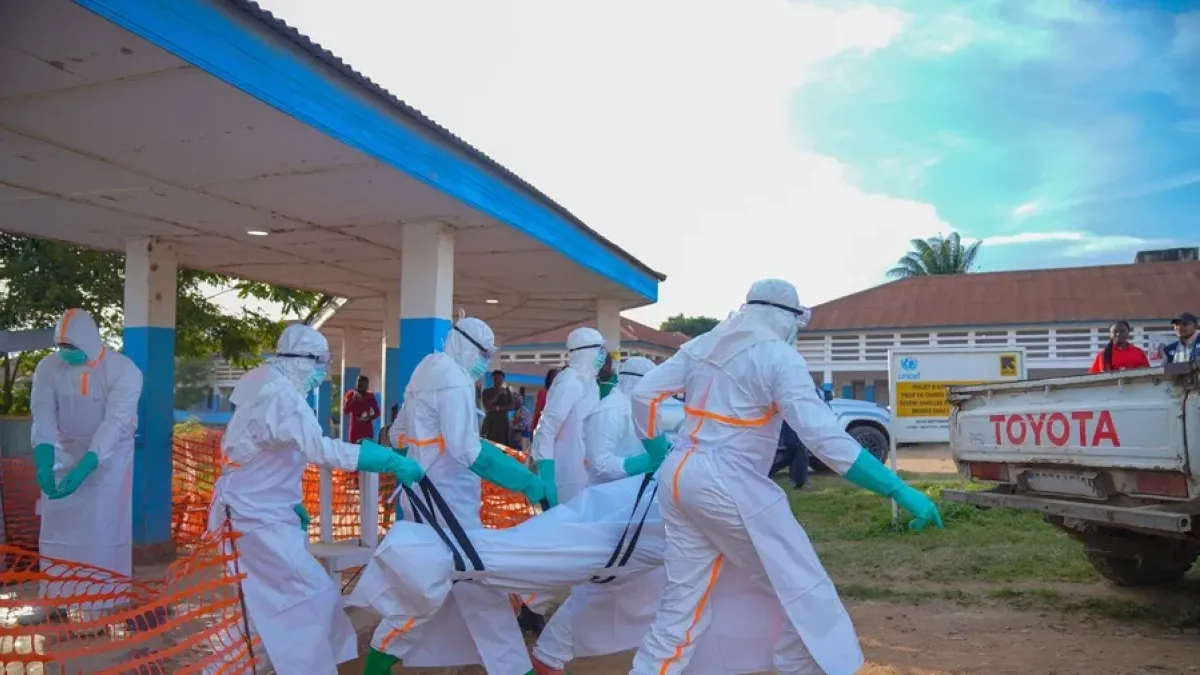
The deadly Ebola variant isn't the only thing causing concern for health workers in Congo. Rumors and disinformation are hindering efforts to contain the virus.
US authorities warn the current Congo Ebola outbreak could reach the catastrophic scale of the 2014 West Africa epidemic that killed over 11,000 people, with 71 new cases confirmed in a single day and...
Deutsche Welle emphasizes disinformation and public trust governance failure as the primary impediment to an effective health response, framing rumors and mistrust as active obstacles to containment. The Guardian's framing diverges by attributing the outbreak's structural vulnerability to mining-driven deforestation and inequality—a systemic inequality narrative absent from Deutsche Welle's focus on information management.
El Tiempo, Straits Times, and The Hindu foreground the epidemiological scale and response capacity—CDC warnings, WHO funding, containment numbers—without attributing blame to systemic causes, mining practices, or governance failures. Japan Times uniquely emphasizes the role of traditional healers in frontline response, focusing on community integration rather than either disinformation dynamics or structural inequality. African outlet coverage (via Premium Times on Nigeria) centers preparedness activities rather than Congo's outbreak causation, a notable absence of the root-cause framings visible in Western media.
How disinformation in Congo worsens Ebola epidemic
US authorities warn Ebola outbreak could match 2014 scale
US adds $38 million for Ebola response as CDC warns
WHO announces $518 million six-month plan to fight Ebola
Congo's traditional healers on frontline of Ebola fight
How Ebola is linked to smartphone in your pocket
Whether the $518 million WHO response plan will be fully funded and deployed before the outbreak reaches community transmission thresholds comparable to the 2014 crisis is not confirmed in available summaries.
People's Daily and TASS are entirely absent from Ebola coverage; Chinese and Russian state media's silence on a major global health emergency is a consistent pattern.
Deutsche Welle focuses on how disinformation and rumours are as dangerous as the virus itself in Congo, framing the outbreak as a governance and public trust failure compounding the biological threat.
El Tiempo emphasises CDC epidemiological models showing a real risk of expansion to 2014-scale, foregrounding expert scientific authority and the scale of potential catastrophe.
Straits Times reports Congo warning of rapid community spread with 71 new confirmed cases in one day—one of the highest single-day totals—and the US adding $38 million for the response.
The Hindu covers WHO's $518 million six-month response plan and confirms 381 confirmed cases and 62 confirmed deaths in Congo to date.
Japan Times covers Congo's traditional healers as front-line responders, emphasising community integration and cultural practices as essential to an effective Ebola response.
Premium Times reports Nigeria's NCDC raising importation risk while confirming the country remains case-free, reflecting the West African regional anxiety about cross-border spread.
The Guardian connects the Ebola outbreak to deforestation driven by mining for cobalt and gold for smartphones, framing it as a systemic inequality and environmental destruction problem.
This page maps the coverage. The 8 articles below are the original reports the comparison is drawn from — open them for each publisher's full reporting.
The deadly Ebola variant isn't the only thing causing concern for health workers in Congo. Rumors and disinformation are hindering efforts to contain the virus.
Experts from the Centers for Disease Control and Prevention pointed out that epidemiological models show a real risk of expansion
It published 3 official scientific reports on the outbreak on June 5.
The daily total of 71 new cases is one of the biggest during the outbreak - the 17th in Congo’s history.
So far there have been 381 confirmed cases in Congo and 62 confirmed deaths, according to Africa CDC.

In a region where health workers are shunned, an effective response to Ebola relies on integrating communities and "their rites," the World Health Organization says.
Mr Idris said that since confirmation of the outbreaks in the region, the NCDC had intensified preparedness activities nationwide to ensure Nigeria remained ready to rapidly detect, investigate, contain and respond to…
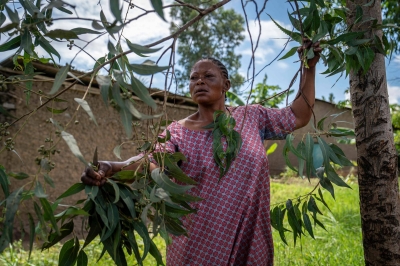
As demand for cobalt, gold and other minerals grows, mining is accelerating deforestation in the Congo basin – and increasing the risk of deadly Ebola outbreaks For decades after the discovery of Ebolavirus in 1976,…