Climate models become more precise even as political attacks sharpen
Climate researchers have operated under political duress for decades, but improved resources and understanding in recent years have made findings more useful to policymakers.
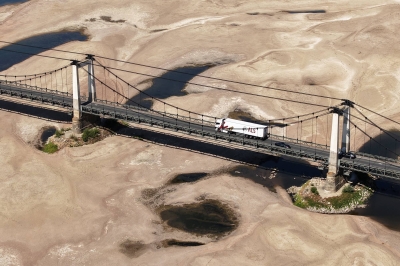
Climate models are becoming more precise even as political attacks on climate science sharpen under the Trump administration, while a Nobel laureate's move to China to lead an AI institute signals that US...
Japan Times frames climate science as resilient: "Climate researchers have operated under political duress for decades, but improved resources and understanding in recent years have made [models] more precise." This suggests institutional momentum and technical progress can overcome political interference. Straits Times reports Omar Yaghi's move to China to lead an AI institute, framing it as a consequence of "Trump administration's disruptions of US science funding," suggesting talent exodus as real damage.
SCMP critiques Trump's climate rhetoric directly: "Trump's climate jibes at China and EU just make him look out of date," treating his positions as factually incorrect and strategically misguided regarding China's renewable energy achievements. Japan Times emphasizes scientific autonomy despite political environment. The outlets diverge on Trump's effects: Straits Times treats the funding disruptions as material (talent flight), Japan Times treats politics as noise to scientific progress, and SCMP treats Trump's claims as outdated rather than influential.
Climate models become more precise even as political attacks sharpen
Nobel-winning US chemist will move to China to lead AI institute
Trump's climate jibes at China and EU just make him look out of date
The full scope of US scientific talent migration to China and its long-term impact on US research capacity remain publicly unquantified.
No source addresses the European response to US science funding cuts — whether EU research programs are absorbing displaced US-funded researchers.
Japan Times frames climate model improvement as a resilience story — researchers operating under political duress for decades but improving their work through better resources — treating scientific progress as distinct from political pressure.
Straits Times reports Nobel-winning US chemist Omar Yaghi will move to China to lead an AI institute, explicitly attributing his move to 'the Trump administration's disruptions of US science funding' — framing it as a talent flight consequence of political interference.
SCMP frames Trump's negative portrayal of China's renewable energy achievements as making him 'look out of date,' positioning Chinese science as advancing while US political leadership misrepresents the data.
This page maps the coverage. The 3 articles below are the original reports the comparison is drawn from — open them for each publisher's full reporting.
Climate researchers have operated under political duress for decades, but improved resources and understanding in recent years have made findings more useful to policymakers.
Omar Yaghi's move comes amid the Trump administration’s disruptions of US science funding.
US President Donald Trump’s negative portrayal of China’s achievements in renewable energy began at a White House meeting with oil executives on January 9 and was amplified at the World Economic Forum later that month.…
