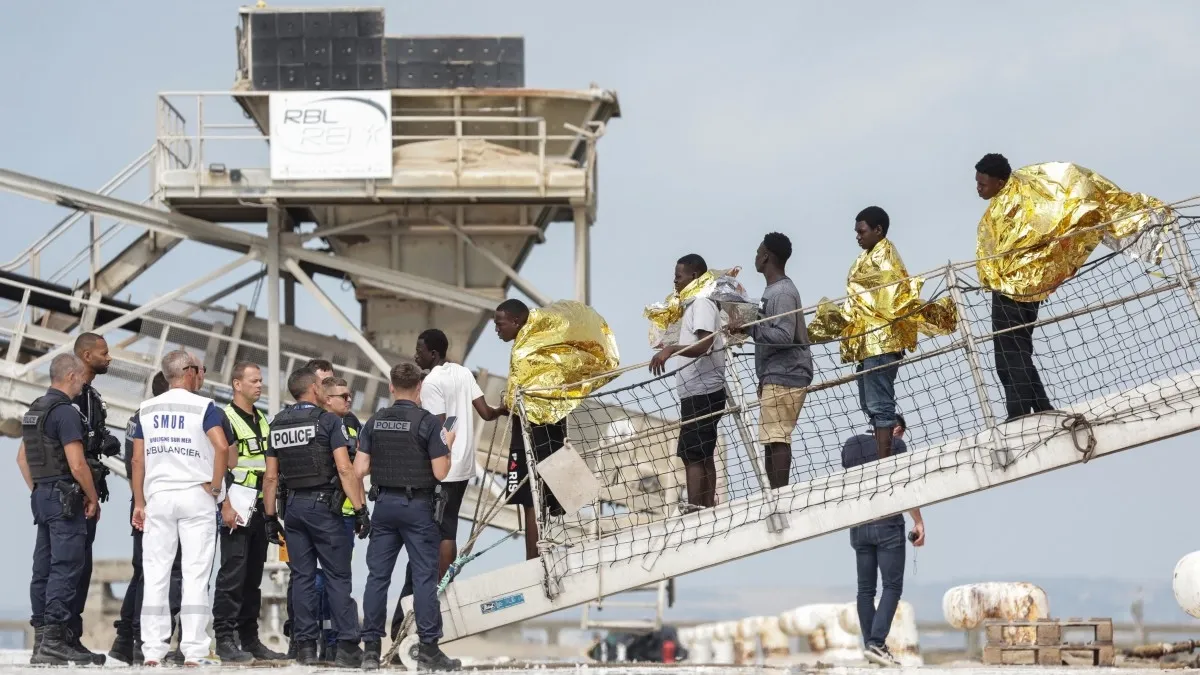
EU commends Spain's 'swift response' to Ceuta migrant crisis
About 70,000 of the 72,000 people who came to Ceuta illegally last week have been returned to Morocco, Spain says.

The arrival of over 72,000 migrants in Spain's Ceuta enclave in a single week—driven by social media misinformation—has exposed deep EU divisions on migration policy, tested the Schengen system's integrity...
Folha de S.Paulo frames the crisis through historical accountability, arguing that colonialism and its consequences 'do not come from where one expects,' situating the migrant surge within longer patterns of European responsibility. BBC News and Deutsche Welle emphasize border management competence and EU solidarity mechanisms, with Deutsche Welle asking 'Who is responsible' in institutional rather than historical terms. BBC reports Spain's return of 70,000 migrants and EU commendation of the response as successful crisis management.
Al Jazeera Arabic introduces a geopolitical framing, suggesting Trump and Putin benefit from European divisions, connecting the crisis to broader international competition. Le Monde and The Hindu focus on internal EU procedural divisions—emergency videoconferences, policy disputes over regularization programs—without the same geopolitical interpretation.
Folha de S.Paulo reports that European leaders praised Spain while calling regularization 'not a good sign,' and that the crisis challenges Spanish Prime Minister's 'open borders' image. Le Monde includes Morocco's position blaming EU development policies, adding a third-country perspective absent from other outlets.
EU commends Spain's swift response to Ceuta migrant crisis
EU sends border aid to Spain after Ceuta talks conclude
Europe praises Spain but questions regularization program impact
Ceuta crisis reveals deep European Union migration policy divisions
The specific diplomatic arrangements between Spain and Morocco that enabled the rapid mass return, and whether any formal EU-Morocco agreement was reached to prevent recurrence, are not confirmed in available summaries.
People's Daily and TASS provide no coverage of the Ceuta crisis; the perspective of the migrants themselves—their countries of origin, reasons for crossing, and conditions in Morocco—is largely absent from Western institutional framing.
BBC News reports that Spain returned approximately 70,000 of 72,000 illegal arrivals to Morocco and that the EU commended Spain's 'swift response,' focusing on institutional procedural efficiency.
Deutsche Welle frames responsibility for the crisis through expert institutional analysis, interviewing two experts on who is accountable, and separately reports EU border aid sent to Spain, maintaining de-escalatory framing.
Le Monde focuses on the EU emergency meeting revealing divisions among member states and Morocco's demands that Europe not 'handicap' its development, using elite institutional competence analysis.
Folha de S.Paulo frames the crisis through a colonial lens, noting that nearly a hundred young people died attempting to cross the maritime border, and contextualizing Spain's exclave within a historical critique of colonialism.
Al Jazeera Arabic covers immigration chaos in Ceuta, noting Trump and Putin are pleased with Europe's divisions, and separately reports 17 migrants dying off the Spanish Balearic Islands, emphasizing humanitarian consequences.
Times of Israel reports hundreds of underage migrants stranded in Ceuta after the border breach and separately notes Morocco blamed misinformation while Israel conspiracy theories spread among some commentators.
El Tiempo covers the heartbreaking moment of a migrant child in Ceuta who asked not to be returned to Morocco with military intervention stopping his repatriation, emphasizing individual humanitarian consequences.
SCMP reports the crisis was sparked by runaway online rumours starting with Instagram posts, framing the event through social media misinformation and institutional border management vulnerability.
The Hindu reports Spanish PM Sanchez facing blistering EU criticism over Ceuta, with leaders rallying for new border checks, framed through regional institutional competence analysis.
This page maps the coverage. The 18 articles below are the original reports the comparison is drawn from — open them for each publisher's full reporting.
About 70,000 of the 72,000 people who came to Ceuta illegally last week have been returned to Morocco, Spain says.
Tens of thousands of migrants crossed into the Spanish exclave of Ceuta several days ago. DW interviewed two experts to understand what may have caused the incident.
The Schengen Area was "in no way" compromised during the Ceuta incursion, Spanish Interior Minister Fernando Grande-Marlaska said after a video conference with his EU colleagues.
The emergency meeting of European Union member countries on the crisis in Ceuta was supposed to end with a message of solidarity with Spain, this Tuesday (4). She came, but with a message about…
After more than 50,000 migrants crossed from Morocco to the Spanish territory of Ceuta, in North Africa, leaders of all political persuasions blamed the crisis on Pedro's pro-immigration policies.
Hundreds of migrants remained, this Monday (3), in improvised camps on beaches in Ceuta. The Spanish exclave that borders Morocco was the scene of a mass entry of people last week…
The Moroccan Ministry of the Interior and that of Foreign Affairs spoke on Sunday and Monday, blaming the migration crisis on the government of Pedro Sanchez.
The interior ministers of the Twenty-Seven are summoned for a videoconference on Tuesday, in order to learn lessons from the arrival of nearly 50,000 migrants from Morocco in the Spanish enclave on July 30.
Many blamed the incident on his government's progressive policies and publicly rallied for new border checks at sea, air and land ports of entry

Five other people had been rescued from the same boat a few hours earlier by coastguards.
17 migrants were killed while trying to reach the Spanish Balearic Islands after a 15-day sea voyage, in a new tragedy of irregular migration across the Mediterranean.
The iPaper website said that the large influx of migrants witnessed by Ceuta gave opponents of Spanish Prime Minister Pedro Sanchez an opportunity to attack him, especially because of his different positions from the European conservative movement on immigration and defense issues.
Hundreds of underage migrants stuck in Ceuta after border breach The Times of Israel
Morocco blames misinformation for Ceuta migrant rush; Israel conspiracy theories spread The Times of Israel
Viral messages and a misinterpretation of a court ruling led thousands of people to believe they could cross the border.
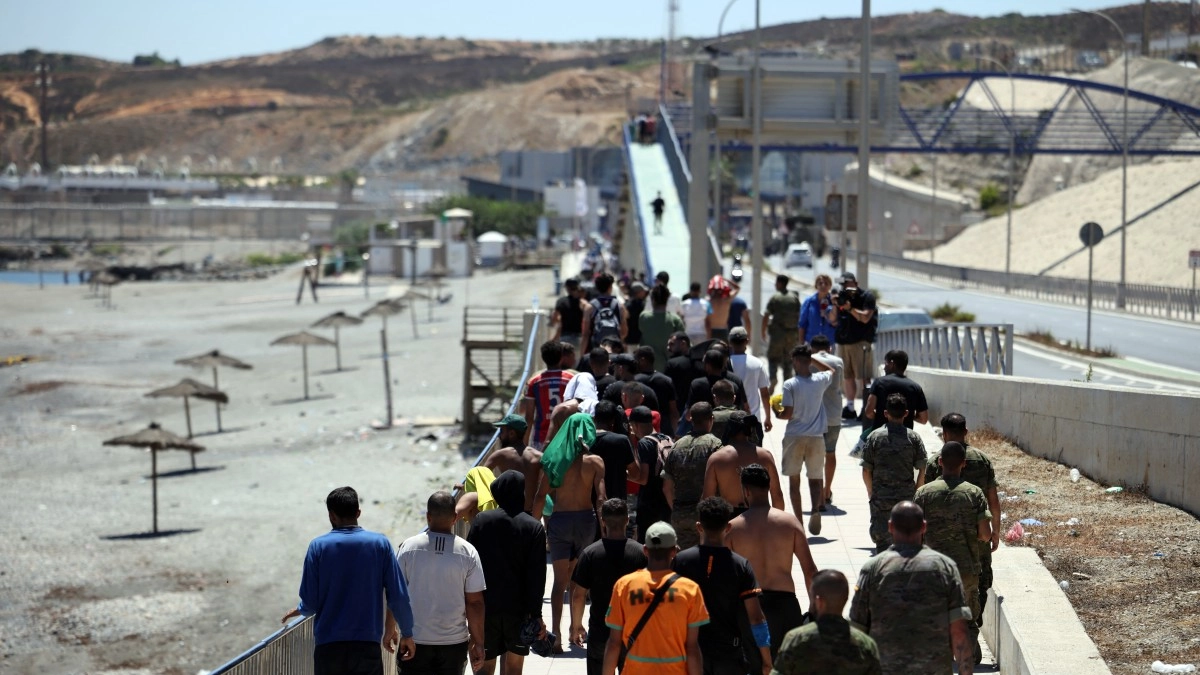
The minor was located among the people who crossed the border irregularly and his case activated an international protection protocol.
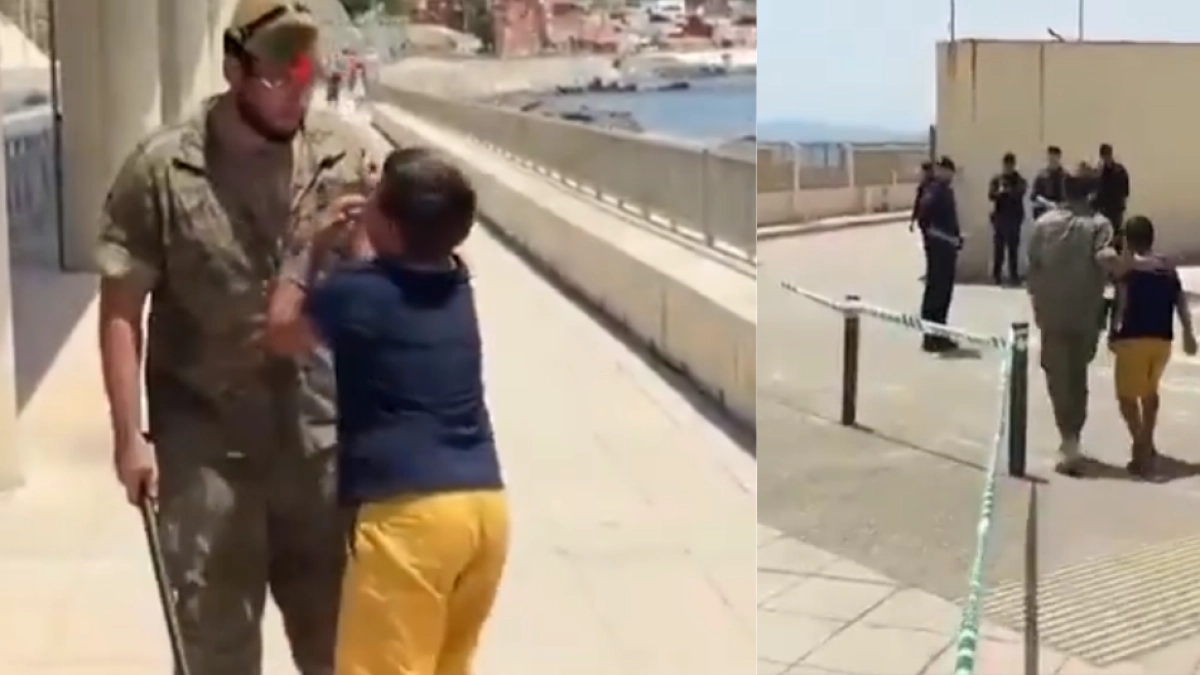
It started with Instagram posts that suggested Spain’s border with Morocco was opening up. Then came Facebook users tracking coastguard patrols and TikTok videos showing where to swim.

At least 15 people have died during clandestine crossings of the English Channel so far in 2026.