Oleksandr Syrskyi is dismissed after backlash over the removal of popular Defence Minister Mykhailo Fedorov.
How the world covered this
Read the editorial comparison
Prose synthesis of how each outlet framed the story, with side-by-side outlet quotes and divergence notes.
9 articles from 8 sources
01

02
KYIV, July 21 (Reuters) - President Volodymyr Zelenskiy on Tuesday named a young major general, Mykhailo Drapatyi, as the commander-in-chief of Ukraine’s military after days of street protests, marking the biggest…

03
Mass protests in recent days in Kyiv and other Ukrainian cities had called for the removal of commander-in-chief Oleksandr Syrskyi. Volodymyr Zelenskyy has named Mykhailo Drapatyi as the army's new chief.
04
Protestos contra Zelenski derrubam chefe das Forças Armadas da Ucrânia
After six days of protests, the President of Ukraine, Volodimir Zelenski, was forced to dismiss the unpopular head of the country's Armed Forces this Tuesday (21). Read more (07/21/2026 - 08:42)
05
Ukrainian President Volodymyr Zelensky said on Tuesday that he was dismissing Oleksandr Syrsky, commander-in-chief of Ukraine’s army, amid an ongoing political crisis triggered by the removal of a popular defence…

06
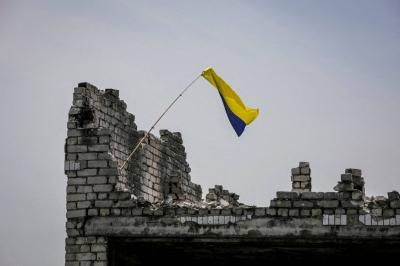
Following days of street protests sparked by a surprise governmental reshuffle that ousted a popular defense minister, the change also reflects tensions within Ukraine.
07
Zelensky ci ripensa e cede alle proteste, via il capo dell’esercito
Ukraine, General Syrsky dismissed after demonstrations following the dismissal of his rival Fedorov. Appointed Drapatyi
08
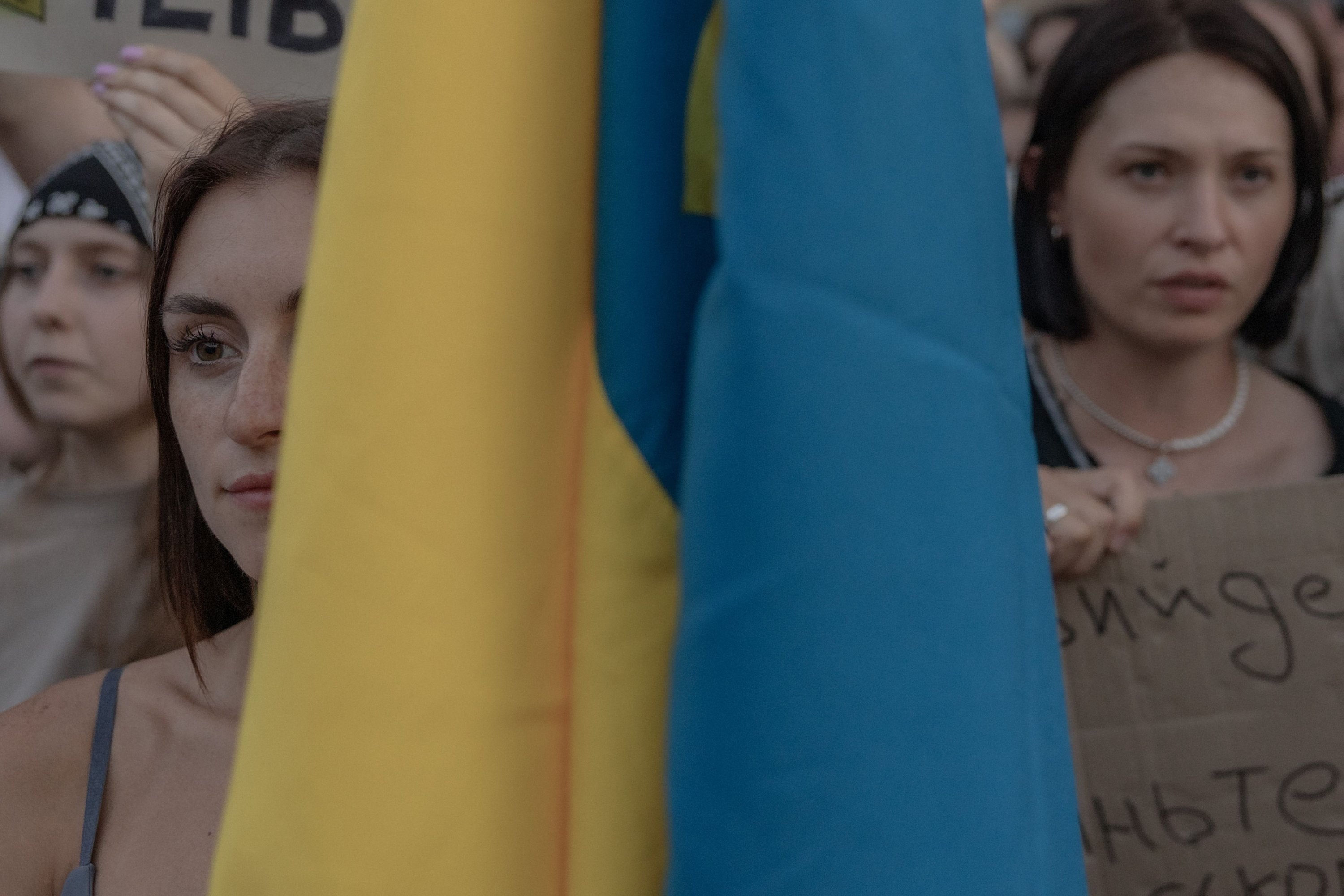
Ukrainian President Volodymyr Zelenskyy faced a major political crisis as protesters rallied again on Tuesday against the ousting of the country's reformist defense minister a...
09
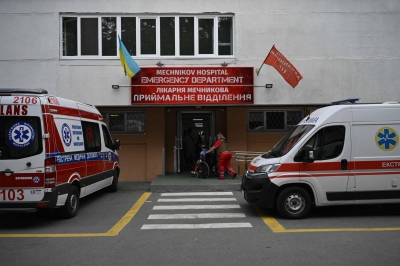
Multiple trauma victims are the norm at Dnipro's central hospital — the center for those wounded across east and southern Ukraine — with some needing up to 20 operations a week.
AI read
What the coverage agrees on, and where it splits
This view is generated from the clustered articles, so it is best read as a map of coverage rather than a replacement for the source reporting.
Broadly agreed
- All covering sources confirm Zelensky dismissed Syrskyi following days of public protests triggered by Fedorov's removal.
- Sources agree that Mykhailo Drapatyi, described as a young major general, was named as Syrskyi's replacement.
Contested framing
- BBC frames the dismissal as driven by institutional backlash over protocol violation; Folha de S.Paulo frames Zelensky as having been 'forced' by street pressure, implying a loss of political agency.
- Japan Times emphasises poor communication and mistrust as governance causes; La Repubblica frames it as Zelensky yielding to protests, suggesting reactive rather than strategic decision-making.
Still unclear
Whether Drapatyi's appointment will stabilise Ukrainian military command or whether internal governance tensions within the Zelensky administration will persist is not confirmed by any source.
Notable omissions
TASS coverage focuses entirely on Russian military operations against Ukraine with no coverage of the Zelensky leadership crisis, consistent with its domestic morale-building framing pattern.
Quality check
Core facts are well-sourced, but the political meaning of the dismissal—whether strategic or reactive—remains contested across outlets.
- The institutional cause is contested between 'protocol violation' and 'street pressure forcing his hand'—frames differ on whether Zelensky retained agency
- Drapatyi's stabilizing effect is explicitly unconfirmed; this is presented as context without evidence
- TASS absence on Ukrainian domestic leadership creates one-sided Western framing of what happened and why
Review confidence: 80%
Signal strength
3/5
Narrative divergence
8
Sources compared
1
Days in coverage
How each outlet frames this story
Divergence
3/5
Narrative Divergence
How differently the sources covering this story frame it — measured by tone, emphasis, and what each outlet chooses to highlight or omit.
1 — Sources frame the story almost identically
2 — Minor differences in tone or emphasis
3 — Noticeable differences; some outlets highlight what others omit
4 — Stark contrasts; conflicting narratives
5 — Sources tell fundamentally different stories
British
BBC foregrounds the institutional protocol breach—Zelensky sacking Syrskyi after public backlash over Fedorov's removal—and examines the credibility of the appointment of young Major General Drapatyi.
German
Deutsche Welle frames the dismissal as a consequence of mass protests in Kyiv and other cities, emphasising the political pressure dimension rather than military capability implications.
Brazilian
Folha de S.Paulo positions the dismissal as Zelensky being 'forced' by six days of protests, integrating individual protest voices with structural institutional accountability analysis.
Chinese
SCMP reports factually on Zelensky dismissing Syrskyi amid backlash over Fedorov firing, framing it as a supply-chain of command disruption rather than a political legitimacy question.
Japanese
Japan Times frames the leadership change as reflecting poor communication, mistrust, and governance problems causing parliamentary chaos and an extended session.
Italian
La Repubblica presents it as Zelensky having 'second thoughts' and yielding to protests, appointing Drapatyi as replacement, emphasising the political concession dimension.
Japanese
Yahoo Japan focuses on background scene-setting within the Trump administration and what the commander dismissal reveals about internal US-Ukraine dynamics.