Ukraine's president tells the Russian leader that only "direct engagement" between the two countries could end the war, with the US focused on Iran.
How the world covered this
Read the editorial comparison
Prose synthesis of how each outlet framed the story, with side-by-side outlet quotes and divergence notes.
10 articles from 9 sources
01

02
Ukraine proposes ending this war through direct engagement between us — and you. I am proposing a meeting, says Ukraine's Volodymyr Zelenskyy

03
Are civilian targets becoming central to battlefield strategy? Could the Ukraine war trigger a wider global crisis?

04
Em carta aberta, Zelenski propõe reunião com Putin e cessar-fogo; Kremlin diz que ucraniano pode ir a Moscou
Ukrainian President Volodimir Zelenski proposed this Thursday (4) a meeting with his Russian counterpart, Vladimir Putin, in an open letter in which he also offered a "total ceasefire" during the…
05
The leaders of Russia and Ukraine have both signaled confidence, and willingness to talk. Putin shows no sign of backing off from his demands, while Zelenskyy said Ukraine would keep fighting for "survival."
06
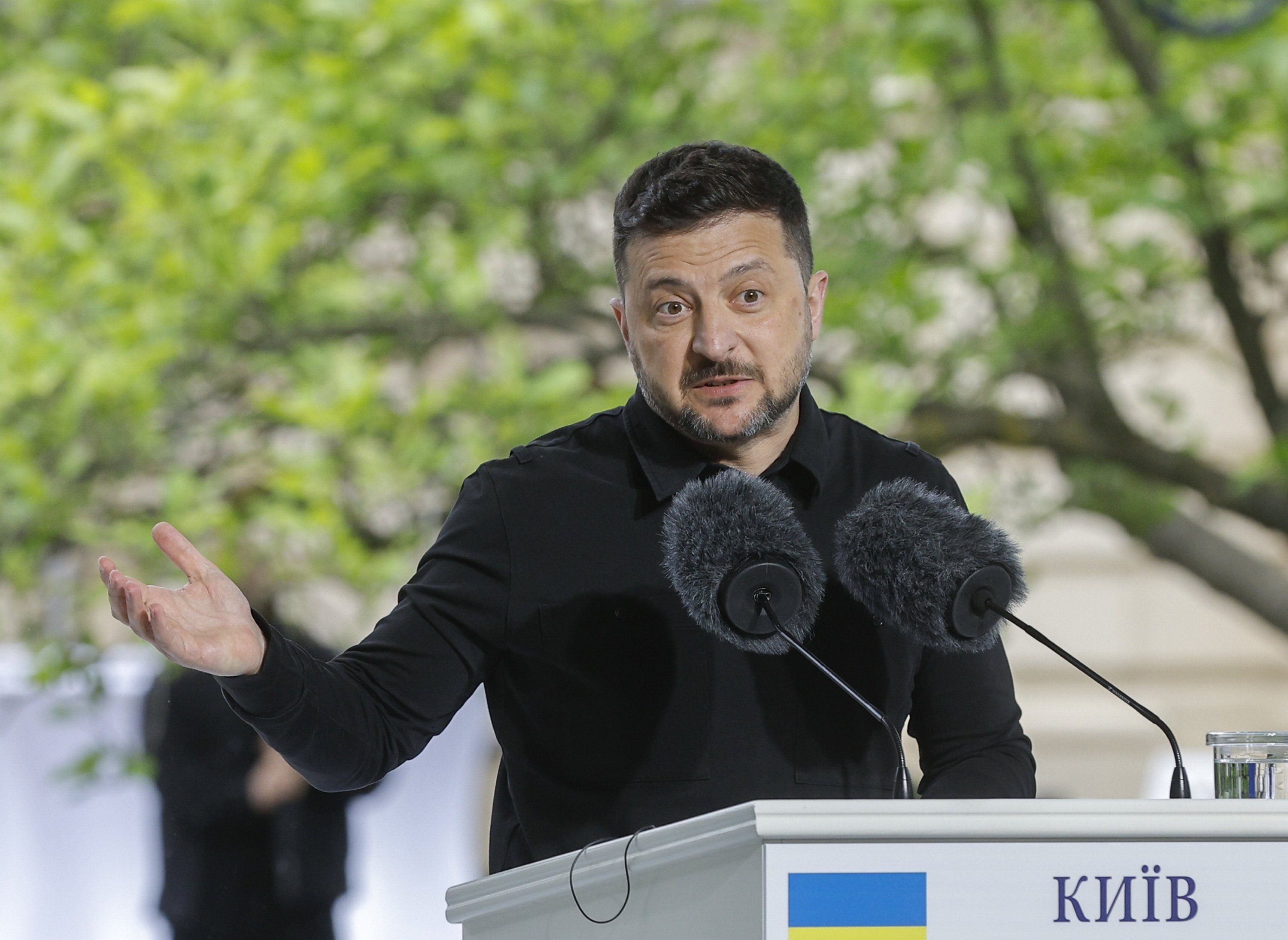
Ukrainian President Volodymyr Zelenskyy on Thursday called for face-to-face negotiations in a public letter addressed directly to Russian President Vladimir Putin. The letter, the...
07
Carta completa enviada por el presidente de Ucrania, Volodimir Zelenski, a su homólogo de Rusia, Vladimir Putin, para poner fin a la guerra
The conflict is now entering its fifth year with no signs of a solution. Zelensky proposes a face-to-face summit with Putin.

08
Trump says it ‘would be great’ if the Ukrainian and Russian presidents met

09
President Vladimir Putin said on Thursday that US President Donald Trump’s proposals for peace in Ukraine could end the fighting, but said Kyiv needed to compromise – and that he saw no signs of that, so was ready to…


AI read
What the coverage agrees on, and where it splits
This view is generated from the clustered articles, so it is best read as a map of coverage rather than a replacement for the source reporting.
Broadly agreed
- All covering sources confirm Zelensky published an open letter to Putin proposing a direct face-to-face meeting and ceasefire.
- Sources broadly agree the Kremlin responded that Zelensky could travel to Moscow, stopping short of accepting the specific format proposed.
- The US House vote to aid Ukraine and sanction Russia is confirmed across multiple sources as passing against Trump's wishes.
Contested framing
- SCMP and Russian-adjacent framing (via SCMP citing Putin) presents Trump's ideas as the basis for peace with Kyiv needing to compromise; BBC and Deutsche Welle present Zelensky's direct engagement offer as the primary diplomatic initiative.
- CNN focuses on the congressional rebuke of Trump as the more significant development; Brazilian and Colombian outlets treat Zelensky's letter as the central story.
- Le Monde's report of the Orechnik missile misfiring on Russian territory implies Russian military vulnerability; TASS does not cover this incident in available articles.
Still unclear
Whether Putin will agree to any direct meeting format proposed by Zelensky, and under what conditions, remains publicly unconfirmed.
Notable omissions
TASS covers none of the diplomatic peace proposals in available articles, consistent with its pattern of avoiding analysis that could imply Russian military or diplomatic pressure.
Quality check
Core facts well-sourced; diplomatic significance claims exceed what consensus confirms.
- Overstatement: 'most direct diplomatic overture in years' is unsupported comparison; consensus only confirms this specific letter's content
- Missing caveat: Kremlin response was conditional ('could travel to Moscow') not acceptance; framed as partial openness without caveating limits
- Source concentration: Congress voting aid vs peace talks are separate stories collapsed into one narrative
Review confidence: 78%
Signal strength
4/5
Narrative divergence
9
Sources compared
1
Days in coverage
How each outlet frames this story
Divergence
4/5
Narrative Divergence
How differently the sources covering this story frame it — measured by tone, emphasis, and what each outlet chooses to highlight or omit.
1 — Sources frame the story almost identically
2 — Minor differences in tone or emphasis
3 — Noticeable differences; some outlets highlight what others omit
4 — Stark contrasts; conflicting narratives
5 — Sources tell fundamentally different stories
British
BBC presents Zelensky's letter as a call for direct engagement as the only path to ending the war, interrogating whether Putin will respond substantively.
Indian
The Hindu covers the open letter as a diplomatic signal while contextualising Ukraine war escalation risks, including whether civilian targets are becoming central to battlefield strategy.
Brazilian
Folha de S.Paulo reproduces the full letter content, notes the Kremlin's response that Zelensky could come to Moscow, framing it as a humanistic peace initiative within a grinding institutional conflict.
German
Deutsche Welle frames Zelensky's proposal through a de-escalatory institutional lens, noting Putin shows no sign of backing down from his conditions while both sides signal confidence.
Turkish
Daily Sabah reports the open letter as a direct call for face-to-face negotiations, consistent with its pattern of positioning diplomatic processes as institutional accountability venues.
Colombian
El Tiempo publishes the complete text of Zelensky's letter and frames the initiative as a last diplomatic attempt after five years of conflict with no resolution in sight.
Irish
Irish Times notes Trump called a potential meeting 'great,' framing the story through US executive endorsement rather than deep geopolitical analysis.
Chinese
SCMP reports Putin saying Trump's ideas could bring peace and urging Kyiv to compromise, positioning China-adjacent framing that avoids direct advocacy for either party.
German
Deutsche Welle separately covers the Ukraine Support Act passage through the US House, emphasising structural institutional vulnerability in the US-Ukraine relationship.