Hernán Gil was trapped under a collapsed multi-storey car park.
How the world covered this
Read the editorial comparison
Prose synthesis of how each outlet framed the story, with side-by-side outlet quotes and divergence notes.
21 articles from 9 sources
01

02
Sobe para 2.595 o número de mortes confirmadas em terremotos na Venezuela
Eight days after the twin earthquakes that devastated regions in Venezuela, the country's regime reported this Thursday (2) that the number of confirmed deaths as a result of the earthquakes had increased to 2,595. There wasn't, until...
03
Vigilante é resgatado com vida após 8 dias dos terremotos na Venezuela
In a chaotic scene of destruction, hundreds of people gather in front of a building in rubble. It is a sign that some thread of hope has appeared amid the despair of La Guaira, in Venezuela: a…
04
Prédios marcados com 'D' simbolizam mortes após terremotos na Venezuela; veja vídeo
A "D" painted with spray paint appears on the facade of one of the buildings destroyed by the two earthquakes that hit Venezuela more than a week ago. The lyrics bury the hopes of finding survivors beneath the...
05
Quanto tempo uma pessoa pode sobreviver sob os escombros após um terremoto?
Eight days ago, on June 24, two earthquakes measuring 7.2 and 7.5 struck Venezuela just a minute apart. The second was the strongest to hit the country since 1900.
06
Brasileiro mobiliza ajuda para encontrar pai sob escombros na Venezuela
Through social media, the family of Félix Tovar, 70, is trying to mobilize donations of tools to help volunteers excavate the rubble of the bakery where he is believed to have been a week ago, at the time of the earthquakes...
07
Voluntários deixam trabalho e família no Brasil para ajudar em buscas de desaparecidos na Venezuela
Veterinary doctor Izanagi Lindase Monteiro Ferreira, 50, left his work and family in Saquarema (RJ) with the aim of arriving in Venezuela. He is part of a group of volunteer rescuers, CK9 Kalmon, who…
08
Sem detectar sinais vitais, equipe brasileira encerra buscas em prédio na Venezuela
Brazilian rescue teams ended work this Thursday (2) to remove two people who were under the rubble of a building in La Guaira, in northern Venezuela, one of the most devastated areas…

10
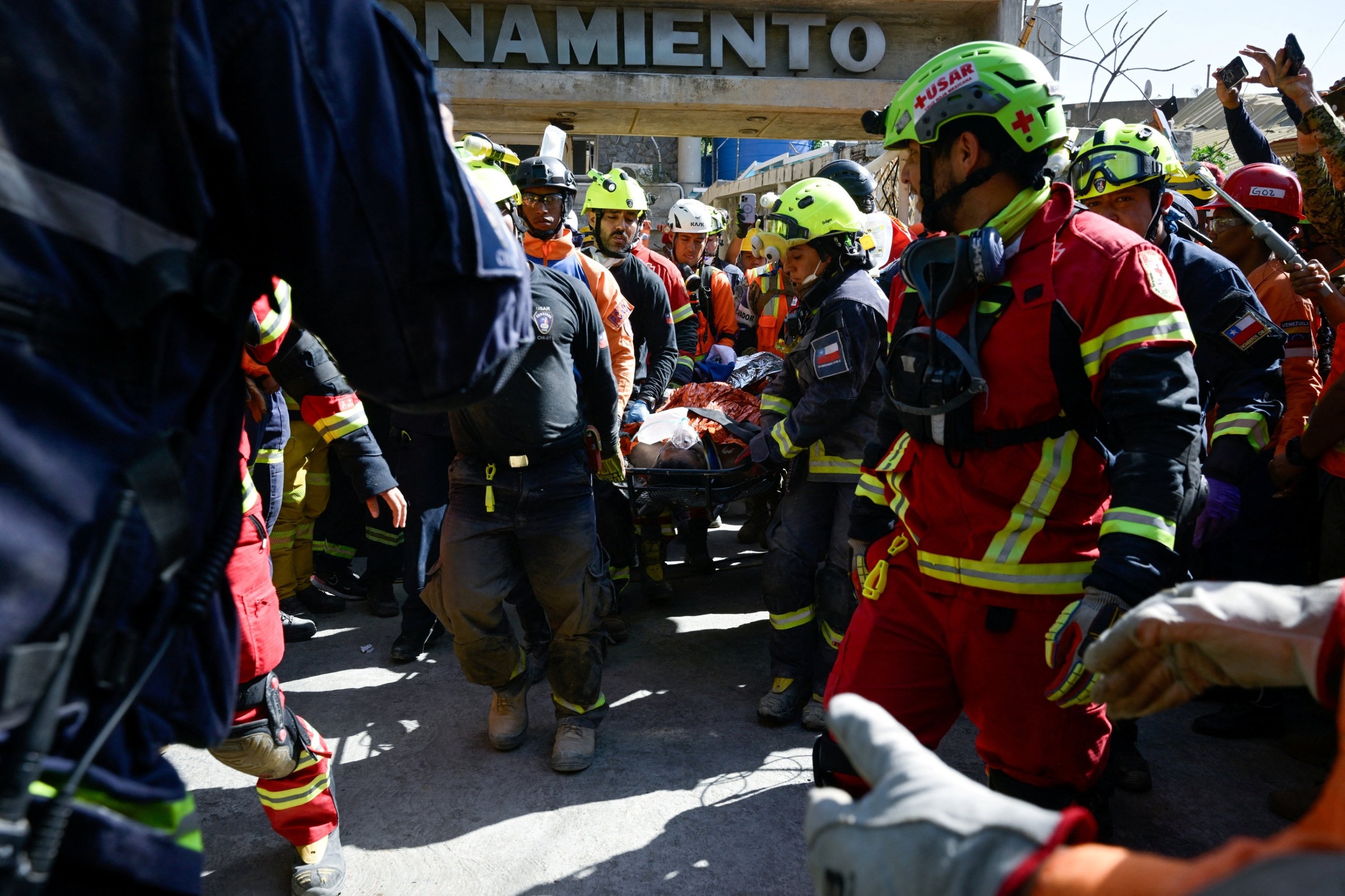
Rescuers worked around the clock for three days to free security guard Hernan Gil from the rubble of the building where he worked.
11
Acting President Delcy Rodríguez has slammed critics for saying her government was slow to respond to the disaster. She said the criticism was "manufactured in propaganda laboratories."
12
Hundreds of rescuers in Venezuela cheered and embraced Thursday after pulling a 43-year-old man alive from the ruins of a collapsed building eight days after deadly twin earthquake...
13
Hundreds of rescuers in Venezuela cheered and embraced Thursday after pulling a 43-year-old man alive from the ruins of a collapsed building eight days after deadly twin earthquakes. The official death toll has risen to…

14
We have selected seven of the most interesting and important news stories covering Latin American relations from the past few weeks. If you would like to see more of our reporting, please consider subscribing.

15
Delcy Rodríguez reveló que tiene un problema de salud y aseguró que eso no le impedirá afrontar la catástrofe por el doble terremoto en Venezuela
The statements were made this Thursday, July 2, during a press conference in which he presented an assessment of the emergency in the country.

16
Delcy Rodríguez asegura que continúa la fase de rescate en Venezuela mientras se activa fondo de 200 millones de dólares del FMI para reconstrucción
The person in charge of Venezuela denied that her government's response to the double earthquake of June 24 has been slow, as citizens denounce.

17
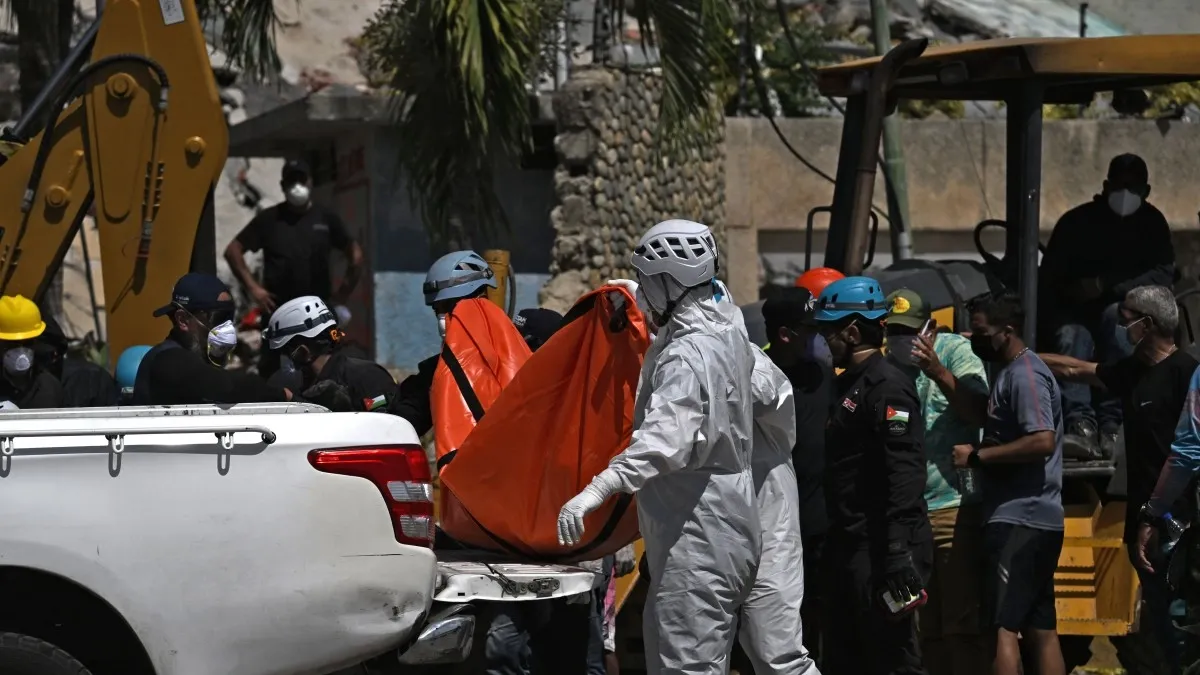
Rodríguez decreta 7 días de luto en Venezuela mientras crecen denuncias por trabas en la entrega de cuerpos y ayudas: 'El cadáver no era de mi madre'
The official toll rose to 2,295 dead and more than 11,000 injured. After a week of the double earthquake, they also accuse police of looting.
18
ベネズエラ地震1週間 死者2千人超
19
ベネズエラ地震 6日後に3歳救出
20
Man pulled from rubble in ‘miraculous’ rescue 8 days after devastating Venezuela earthquakes CNN
21
WhatsApp se convierte en la esperanza de miles de familias que buscan desaparecidos en Venezuela; otras plataformas ya localizaron a 78.000 personas
In the absence of efficient official channels, WhatsApp and other initiatives became the tools to report missing people.

AI read
What the coverage agrees on, and where it splits
This view is generated from the clustered articles, so it is best read as a map of coverage rather than a replacement for the source reporting.
Broadly agreed
- All covering sources confirm a 43-year-old man (Hernán Gil) was rescued alive from rubble eight days after the earthquakes, described as miraculous.
- Sources agree the confirmed death toll has risen to at least 2,295–2,595, making this one of the deadliest natural disasters in recent Venezuelan history.
- Multiple sources confirm international rescue teams from multiple countries are operating in Venezuela.
Contested framing
- Deutsche Welle and El Tiempo report Rodríguez defending the government's response as swift; Folha de S.Paulo and Colombian sources emphasise institutional failures and growing complaints about aid obstruction.
- El Tiempo reports US Congress members calling for capture of Diosdado Cabello for allegedly hindering rescues; Venezuelan government sources (via El Universal and El Tiempo) deny obstruction of aid.
- Brazilian Folha de S.Paulo emphasises individual suffering and systemic inequality as analytical frames; People's Daily and TASS are silent on the disaster, omitting two major global powers' perspectives.
Still unclear
The full scope of missing persons, the accuracy of the official death toll versus actual casualties, and whether political interference affected rescue operations remain disputed and unverified.
Notable omissions
TASS and People's Daily carry no coverage of the Venezuela earthquake despite it being among the most-covered global stories, entirely omitting their perspectives; the long-term reconstruction capacity of Venezuela's transitional government is not addressed by any source.
Quality check
Death toll and government obstruction allegations remain disputed; read as humanitarian emergency with unresolved governance questions.
- Death toll range (2,295–2,595) undefined; Consensus claims both endpoints but they differ by 300 people
- Disputed allegations of aid obstruction by named government officials (Diosdado Cabello) lack independent verification
- TASS and People's Daily silence noted but not analyzed; removes major powers' perspectives on reconstruction
- Long-term reconstruction capacity of transitional government entirely unaddressed across all sources
Review confidence: 70%
Signal strength
3/5
Narrative divergence
9
Sources compared
1
Days in coverage
How each outlet frames this story
Divergence
3/5
Narrative Divergence
How differently the sources covering this story frame it — measured by tone, emphasis, and what each outlet chooses to highlight or omit.
1 — Sources frame the story almost identically
2 — Minor differences in tone or emphasis
3 — Noticeable differences; some outlets highlight what others omit
4 — Stark contrasts; conflicting narratives
5 — Sources tell fundamentally different stories
British
BBC leads with the human survival story—Hernán Gil pulled alive after eight days—foregrounding the individual miracle within the institutional rescue governance context.
American
CNN frames the rescue as 'miraculous,' emphasising the emotional and human-interest dimension of the survival story alongside the broader devastation figure.
Brazilian
Folha de S.Paulo integrates personal testimony—Brazilian families mobilising to find relatives, volunteers leaving jobs—with systemic critique of Venezuela's institutional rescue failures and the rising confirmed death toll of 2,595.
German
Deutsche Welle reports Acting President Delcy Rodríguez rejecting criticism of her government's slow response, framing it as a humanitarian governance challenge with de-escalatory emphasis on rescue window sustainability.
Colombian
El Tiempo focuses on Rodríguez's health disclosure and her insistence on continuing rescue operations, plus analysis of Venezuela's six months without Maduro and the democratic opposition's crossroads.
Turkish
Daily Sabah reports the rescue alongside growing hunger, framing the dual crisis of physical rescue and food access as intertwined humanitarian failures.
Japanese
Yahoo Japan reports Venezuela earthquake deaths exceeding 2,000 in one week and a 3-year-old rescued six days after the quake, using brief factual summaries.