Tanker struck near Strait of Hormuz as Trump heads to NATO summit CNN
How the world covered this
Read the editorial comparison
Prose synthesis of how each outlet framed the story, with side-by-side outlet quotes and divergence notes.
13 articles from 9 sources
01
02
July 6 (Reuters) - Iran’s Revolutionary Guards fired at least two missiles at commercial ships transiting through the Strait of Hormuz on Monday night, Axios reported, citing two U.S. officials.


04
An “unknown projectile” struck and caused a fire on an oil tanker off the coast of Oman near the Strait of Hormuz on Monday, British maritime security agency UKMTO said. The incident occurred near one of the world’s…

05
Two commercial ships suffered significant damage but had no casualties.
07
The tanker set ablaze after being hit by a projectile hit near Limah, Oman, in the strait, said the United Kingdom Maritime Trade Operations Centre
08
The United Kingdom Maritime Trade Operations Centre said the tanker had been hit near Limah, Oman, in the strait

09
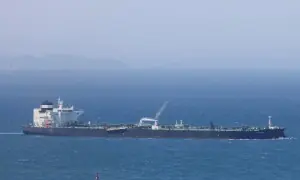
An “unknown projectile” struck and caused a fire on an oil tanker off the coast of Oman near the Strait of Hormuz on Monday, British maritime security agency United Kingdom Maritime Trade Operations (UKMTO) said. The…
10
The incident occurred east of Limah, Oman. A projectile struck a tanker and caused a fire while it was traveling southbound, with no casualties reported.
11
إصابة ناقلتين في مضيق هرمز ومسؤول أمريكي يتهم الحرس الثوري
An oil tanker was hit by a projectile off the coast of the Sultanate of Oman in the Strait of Hormuz, according to the British Maritime Trade Operations Authority. Meanwhile, an American official accused the Iranian Revolutionary Guard of firing two missiles at two commercial ships.
12
Indirect U.S.-Iran talks ended last week without any public sign of headway toward a lasting peace

AI read
What the coverage agrees on, and where it splits
This view is generated from the clustered articles, so it is best read as a map of coverage rather than a replacement for the source reporting.
Broadly agreed
- All covering sources confirm a tanker was struck by a projectile near the Strait of Hormuz off Oman's coast, causing a fire, with no reported casualties.
- Multiple sources confirm Khamenei's funeral in Tehran drew massive crowds and featured explicit revenge rhetoric directed at the US and Israel.
- Sources broadly agree that US-Iran indirect talks ended last week without a confirmed breakthrough or final agreement.
Contested framing
- Daily Maverick and Straits Times attribute the missile strikes to Iran's Revolutionary Guards citing US officials and Axios; Al Jazeera Arabic presents US attribution as an allegation, not established fact.
- BBC frames Khamenei's funeral primarily as a political spectacle designed for external messaging; Folha de S.Paulo focuses on Iranian critics questioning the lavish spending amid economic hardship.
- Times of Israel emphasizes Trump's claim that Iran made concessions; The Hindu and Straits Times note Trump then walked back those claims, highlighting the absence of a final agreement.
Still unclear
It remains unconfirmed whether the tanker strikes constitute a deliberate escalatory policy shift by Iran's new leadership or are actions by the Revolutionary Guards operating semi-autonomously.
Notable omissions
People's Daily and TASS provide no coverage of the tanker strikes or the broader US-Iran conflict trajectory, while Russian state media's omission of Iran escalation is particularly notable given Russia's documented return of staff to Iran's Bushehr nuclear plant.
Quality check
Core facts about tanker strike and funeral are solid; Iranian attribution and escalation intent claims require reading with awareness of attribution source limitations.
- Attribution of missile strikes to Iran's Revolutionary Guards relies on US officials and Axios; Al Jazeera Arabic treats this as allegation not established fact—source divergence on evidentiary standard
- Whether tanker strikes constitute deliberate policy shift by Iran's new leadership vs. semi-autonomous Revolutionary Guard action remains unconfirmed
- Omission of coverage by People's Daily and TASS limits non-Western perspectives, particularly significant given Russia's documented nuclear cooperation with Iran
Review confidence: 72%
Signal strength
5/5
Narrative divergence
9
Sources compared
2
Days in coverage
→ stable
How each outlet frames this story
Divergence
5/5
Narrative Divergence
How differently the sources covering this story frame it — measured by tone, emphasis, and what each outlet chooses to highlight or omit.
1 — Sources frame the story almost identically
2 — Minor differences in tone or emphasis
3 — Noticeable differences; some outlets highlight what others omit
4 — Stark contrasts; conflicting narratives
5 — Sources tell fundamentally different stories
American
CNN frames the tanker strike as a direct escalation timed to Trump's NATO summit departure, centering U.S. strategic response and alliance signaling.
South African
Daily Maverick reports Iran's Revolutionary Guards fired at least two missiles at commercial ships, citing Axios and Reuters without editorial framing, treating it as a hard news bulletin.
Pakistani
Dawn reports the tanker was hit by an 'unknown projectile' per the maritime agency, maintaining ambiguity about Iranian attribution and noting elevated transport costs in Karachi linked to the Iran-US war.
German
Deutsche Welle focuses on the confirmed physical facts — a projectile struck a tanker east of Limah causing fire — emphasizing infrastructure disruption framing consistent with its de-escalatory analytical pattern.
Indian
The Hindu covers the tanker attack and quotes Iran state TV saying the vessel 'ignored warnings,' also tracking Araqchi's statement that final-agreement negotiations will not begin while US threats continue.
Singaporean
Straits Times reports Iran fired missiles at two commercial ships with significant damage but no casualties, also covering how the Iran war ignited a Trump-Saudi Crown Prince clash, emphasizing regional energy and supply-chain consequences.
Emirati
The National reports Iran fired missiles at two commercial ships in the Strait of Hormuz, framing it through Gulf regional stability and energy security without antagonistic language toward Iran.
Qatari
Al Jazeera Arabic reports two tankers were injured in the Strait of Hormuz and an American official accused the Revolutionary Guard, presenting the US attribution as an allegation rather than fact.