US Secretary of State Marco Rubio warned Iran that no country can charge fees for ships to travel through the strait.
How the world covered this
Read the editorial comparison
Prose synthesis of how each outlet framed the story, with side-by-side outlet quotes and divergence notes.
27 articles from 14 sources
01

02
Traffic in the waterway has risen since the US and Iran signed a deal aimed at ending the war, including 42 ships on Saturday alone.

03
Iran's foreign ministry says it made "no new commitments" on nuclear inspections after talks in Switzerland.

04
Marco Rubio is in the UAE to ease concerns over tentative Iran deal; U.S. Senate approves War Powers resolution
05
A spokesperson for the Iranian Foreign Ministry, Esmail Baghaei, said any agricultural purchases would be based on "prices and quality," not terms dictated by Washington

06
It was the 10th time the Senate has tried to stop the war, and the outcome, on a vote of 50-48, was a stunning turnaround from past efforts

07
Mr. Rubio arrived in Abu Dhabi late on Tuesday (June 23, 2026) following a two-day flurry of diplomatic activity between the U.S.

08
EUA e Irã brigam por inspeção nuclear, e Teerã diz que controlará Hormuz em acordo
The President of the United States, Donald Trump, stated this Tuesday (23) that Iran has agreed to allow permanent nuclear inspections, but Tehran denied the existence of any agreement in this regard,…
09
US top diplomat Rubio said Washington will not accept tolls on shipping in the Strait of Hormuz. But Iran has said they want to charge "maritime service fees." And Israel and Lebanon are set for talks in the US.
10
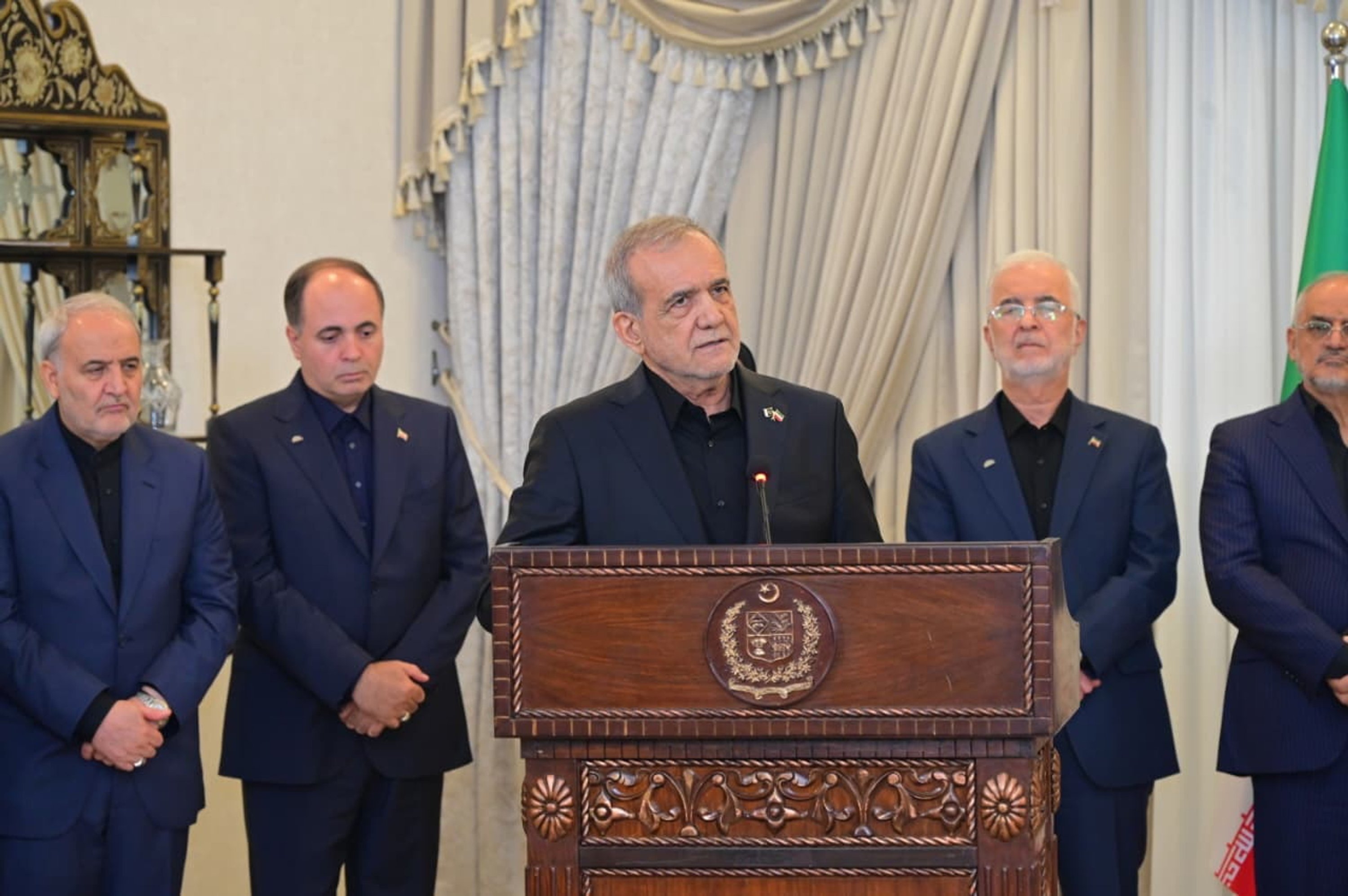
Iranian President Masoud Pezeshkian said on Tuesday that Iran's missile program is non-negotiable, arguing that the country would have ended up 'just like Gaza' without its ba...
11
US President Donald Trump on Tuesday insisted that Iran has agreed to “highest level” nuclear inspections even as Iranian officials disputed his claim, exposing how much remains contested even with a tentative agreement…

12
Iran and Oman say they’ll examine charging fees to pass through Hormuz The Times of Israel
13
Iran’s lead negotiator insists Strait of Hormuz will be managed by Iran The Times of Israel
14
رئيس وزراء قطر يتحدث عن تفاهمات هرمز ولبنان وصندوق الاستثمار في إيران
Qatari Prime Minister and Foreign Minister Sheikh Mohammed bin Abdul Rahman Al Thani told the Financial Times newspaper: The Strait of Hormuz is still open, confirming that Doha has received assurances that an order to close it will not be issued.
15
روايات متضاربة بشأن التفتيش النووي في إيران و"الشيوخ الأمريكي" يؤيد قرارا لوقف الحرب
Washington and Tehran, which held a first round of negotiations in Switzerland that ended on Monday, presented conflicting narratives about Iran's financial incentives, control of the Strait of Hormuz, and the parallel war waged by Israel in Lebanon.
16
L’Iran contraddice gli Usa sugli ispettori nucleari dell’Aiea. Sbloccati 12 miliardi di asset
The United States says the thawed goods will be used to buy American goods, but Tehran denies this. Negotiations on Lebanon continue in Washington
17
The expert: “Strict controls are needed on Iranian nuclear sites or an agreement will be impossible”
L’esperta: “Sui siti atomici iraniani servono controlli severi o sarà impossibile un accordo”
Arms Control Association head Kelsey Davenport: “The IAEA must have broad access to sites to quickly identify deviations from agreed limits and inspect undeclared facilities”
18
A operação secreta que tirou 13 kg de urânio enriquecido da Venezuela e levou aos EUA
One night at the end of April, a Venezuelan military convoy discreetly traveled the 160 km between the headquarters of the Venezuelan Institute for Scientific Research (Ivic, by its Spanish acronym), on the outskirts of Caracas, and the…
19
Trump colocou seus interesses acima de tudo no acordo com o Irã
Certainly something about this preliminary agreement between the United States and Iran must have seemed familiar to the American real estate mogul president. After all, it reads like a real estate bankruptcy filing - an act…
20
ABU DHABI, June 24 - U.S. Secretary of State Marco Rubio begins a Middle East tour in earnest on Wednesday, seeking to reassure Gulf allies who view concessions in President Donald Trump’s Iran deal that include a…
21
Both sides appear to be in conflict over major aspects of the framework deal they recently signed.
22
EN DIRECT, guerre au Moyen-Orient : « L’Iran administrera le détroit d’Ormuz » à l’issue du conflit, affirme le négociateur iranien
Mohammad Bagher Ghalibaf considers that Iran has obtained “great successes” in negotiations with the United States.
23
Ingorgo Hormuz, al via l’operazione Onu per evacuare 11mila marittimi
There are already queues to stock up on oil and other precious goods at ports and terminals in the region. While many evacuate, others wait to enter.
24
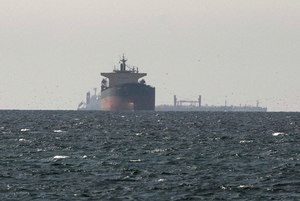
Oil prices fell more than 1 percent on Wednesday, extending this week's losses and trading near four-month lows, on signs that more oil tankers stranded in the Gulf are set to move out of the Strait of Hormuz.…
25
Vicepresidente de Estados Unidos, JD Vance, advierte que los fondos congelados de Irán no se liberarán si no hay más avances en el diálogo
Vance denied feeling "belittled" by the Iranians during the talks in Geneva.

26
米との協議 イラン代表団が退席
27
米イラン レバノン停戦巡り合意
AI read
What the coverage agrees on, and where it splits
This view is generated from the clustered articles, so it is best read as a map of coverage rather than a replacement for the source reporting.
Broadly agreed
- All covering sources confirm the US Senate passed a War Powers resolution directing Trump to halt military action against Iran, with a 50-48 vote.
- All sources confirm the US and Iran are publicly contradicting each other on the terms of nuclear inspections and control of the Strait of Hormuz.
- Multiple sources confirm the IAEA chief has signaled that inspectors will visit Iranian nuclear sites.
Contested framing
- BBC and CNN frame the inspection dispute as a US credibility problem with Trump claiming concessions Iran denies; TASS is largely silent on this, while The National frames it as Iran needing to demonstrate transparency.
- Daily Sabah frames Iran's missile program as legitimate self-defense analogous to Gaza's vulnerability; Times of Israel frames Israeli military independence from the US as the strategic priority in the same context.
- Folha de S.Paulo and Le Monde emphasize Iran's autonomous framing of Hormuz management as a sovereign right; CNA and Straits Times frame it as an infrastructure logistics and supply-chain risk.
Still unclear
Whether Iran has formally agreed to any specific inspection regime or whether the US-Iran framework deal contains binding commitments on nuclear access remains publicly unconfirmed by both governments simultaneously.
Notable omissions
People's Daily provides no coverage of the US-Iran deal or Hormuz standoff; TASS does not analyze the War Powers resolution's implications for US military posture in the region.
Quality check
Treat as emerging crisis with significant framing disagreement; core deal terms unconfirmed by official sources.
- Core claim about 'framework deal' remains unconfirmed by both governments simultaneously—labeled as 'Unknown' in consensus
- Hormuz 'fees' framing varies sharply by outlet (sovereign right vs. supply-chain risk); no ground truth established
- Major regional players (China, Russia) absent from coverage; People's Daily silence is notable gap
- War Powers resolution framed as binding but is 'largely symbolic'—caveat needed on enforcement likelihood
Review confidence: 65%
Signal strength
5/5
Narrative divergence
14
Sources compared
1
Days in coverage
How each outlet frames this story
Divergence
5/5
Narrative Divergence
How differently the sources covering this story frame it — measured by tone, emphasis, and what each outlet chooses to highlight or omit.
1 — Sources frame the story almost identically
2 — Minor differences in tone or emphasis
3 — Noticeable differences; some outlets highlight what others omit
4 — Stark contrasts; conflicting narratives
5 — Sources tell fundamentally different stories
British
BBC interrogates the credibility of both sides' claims, noting Iran says it made no new nuclear commitments while the US insists on 'highest level' inspections, and documents the IAEA chief's signal that inspections will happen.
French
Le Monde covers Iranian negotiator Ghalibaf's claim that Iran will administer Hormuz post-conflict and has won 'great successes,' emphasizing elite institutional framing of Iranian strategic positioning.
Indian
The Hindu maintains a non-aligned frame, covering IAEA inspection signals, the Senate War Powers vote, Rubio's UAE visit, and US-Iran disputes over frozen assets without aligning with either Washington or Tehran.
Brazilian
Folha de S.Paulo emphasizes Iranian President Pezeshkian's assertion that Iran's missile program is indispensable—framing it through humanistic consequence analysis of what devastation without missiles would mean.
Qatari
Al Jazeera Arabic covers Qatar's PM discussing Hormuz understandings and Lebanon in an FT interview, and conflicting accounts over nuclear inspections, positioning Qatar as a diplomatic interlocutor.
German
Deutsche Welle frames the Hormuz dispute through US-Iran conflicting claims on fees, emphasizing institutional endurance rather than military escalation risk.
Turkish
Daily Sabah positions Iran's missile program as non-negotiable self-defense, frames Netanyahu as sidelined by the US-Iran understanding, and interrogates institutional decision-making accountability.
Singaporean
Straits Times covers US-Iran contradictions over nuclear inspections and frozen assets in terse facts-first framing, emphasizing deal fragility as an operational risk.
Israeli
Times of Israel covers Iran and Oman examining Hormuz fees, Iran's lead negotiator insisting Iran will manage the strait, and Netanyahu's call for Israel to break free of US arms dependency.
Japanese
Yahoo Japan covers US-Iran nuclear inspection differences and the implications of the framework deal for regional stability, noting Israeli public anxiety.
Italian
La Repubblica covers the UN operation to evacuate 11,000 stranded seafarers from Hormuz and Iran's contradiction of the US on IAEA inspectors, emphasizing humanitarian and institutional dimensions.
Colombian
El Tiempo reports the US Senate vote to stop the Iran war, emphasizing deep Republican divisions and internal US political accountability.