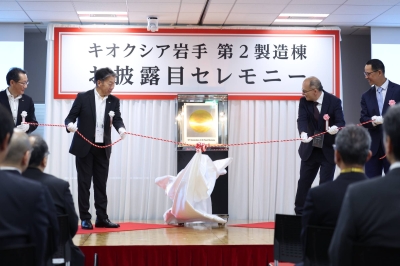
The Tokyo-based chipmaker's latest high-density 3D flash memory chips aim to better meet AI data center needs with better efficiency and transmission speeds.
How the world covered this
Read the editorial comparison
Prose synthesis of how each outlet framed the story, with side-by-side outlet quotes and divergence notes.
8 articles from 5 sources
01
02
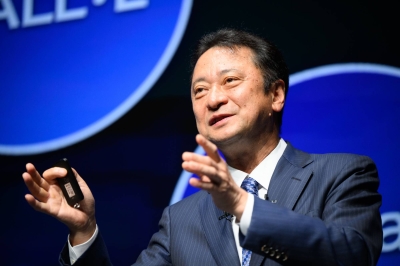
The mobile carrier operator and group company will set up the new venture this month, aiming to supply data center capacity at a scale of 10 gigawatts by around 2030.
03
Anthropic is in talks with Samsung Electronics to produce advanced artificial intelligence chips using the Korean chipmaker’s next-generation foundry and packaging technologies, according to a report, in a potential…


06
China told the European Union that it is open to exploring ways to cut its massive trade surplus with the bloc during talks in Brussels this week, according to multiple people briefed on the discussion. Chinese Commerce…

07
China is trying to “infiltrate” the US-Mexico-Canada trade agreement via Mexican automotive investments, a US manufacturing trade group said, as Washington indicated it would not renew the agreement that comes up for…


AI read
What the coverage agrees on, and where it splits
This view is generated from the clustered articles, so it is best read as a map of coverage rather than a replacement for the source reporting.
Broadly agreed
- Multiple sources confirm Samsung is in talks to produce Anthropic's advanced AI chips, representing a deepening of US-Korea tech cooperation.
- Sources confirm SoftBank plans a 10-gigawatt scale AI compute venture in the US, representing a major Japanese investment in American AI infrastructure.
- CNA and SCMP confirm China has signalled openness to reducing its EU trade surplus while Brussels has simultaneously toughened its trade stance.
Contested framing
- SCMP frames China's EU trade signal as a strategic vulnerability management move under pressure; the EU framing (via Deutsche Welle's EU tariff coverage) positions it as a response to legitimate Brussels enforcement.
- Korea Herald frames Samsung-Anthropic talks as alliance-strengthening; SCMP frames the same US-Asian tech investment landscape through structural competition dynamics rather than alliance framing.
Still unclear
The specific terms of Samsung's potential Anthropic chip production agreement and the timeline for SoftBank's compute infrastructure venture have not been confirmed in available summaries.
Notable omissions
Chinese domestic semiconductor industry perspectives on the Samsung-Anthropic partnership and US export control implications of the tech competition are absent from all covering sources.
Quality check
Corporate negotiations confirmed; specific terms, implications, and Chinese industry response unavailable.
- Samsung-Anthropic chip production terms and timeline unconfirmed
- SoftBank's 10-gigawatt compute venture timeline and specific terms unconfirmed
- Chinese semiconductor industry perspective on Samsung-Anthropic partnership absent
- US export control implications of tech competition not analyzed
Review confidence: 75%
Signal strength
3/5
Narrative divergence
5
Sources compared
1
Days in coverage
How each outlet frames this story
Divergence
3/5
Narrative Divergence
How differently the sources covering this story frame it — measured by tone, emphasis, and what each outlet chooses to highlight or omit.
1 — Sources frame the story almost identically
2 — Minor differences in tone or emphasis
3 — Noticeable differences; some outlets highlight what others omit
4 — Stark contrasts; conflicting narratives
5 — Sources tell fundamentally different stories
Japanese
Japan Times frames Kioxia's new flash memory as meeting AI data centre needs and SoftBank's compute rental plan as a supply-chain infrastructure initiative, treating tech competition as a logistics and corporate resilience problem.
South Korean
Korea Herald frames Samsung's Anthropic chip talks as an alliance-deepening tech-economic partnership, consistent with its pattern of framing US-Korea tech relationships as strategically positive.
Singaporean
CNA frames India's decision to allow four Chinese-linked power equipment firms to bid for government projects as a pragmatic infrastructure decision with geopolitical implications, and HCLTech's $1.14 billion European deal as supply-chain coherence.
Chinese
SCMP frames China signalling openness to reducing the EU trade surplus as a structural institutional vulnerability management move amid Brussels toughening its stance, and China's attempt to 'infiltrate' USMCA via Mexican automotive investments as a strategic competition dynamic.
Emirati
The National covers companies at the core of the US push to break China's rare-earth grip in a legal dispute, framing it through Gulf strategic interest in mineral supply chain security.
South Korean
CNA reports Samsung Group's $90 billion investment plan in South Korea's central region, framing it as a domestic tech infrastructure commitment with alliance implications.