Ukrainian President Volodymyr Zelensky says the target is key infrastructure "that generates revenue for Russia's war".
How the world covered this
Read the editorial comparison
Prose synthesis of how each outlet framed the story, with side-by-side outlet quotes and divergence notes.
20 articles from 12 sources
01

02
The long-range strikes are the latest salvo in Ukraine’s expanding campaign to inflict economic damage on Russia and hinder its war machine.
03
Ucrania ataca con decenas de drones una terminal petrolera en San Petersburgo, mientras niega haber perdido el control de Kostiantinivka
The Ukrainian offensive came after a Russian attack on kyiv that killed 30 people this week.
04
A Ukrainian drone strike hit an oil terminal in St. Petersburg on Saturday, Russian officials said, as Kyiv intensified its campaign against Russia's energy infrastructure.
05
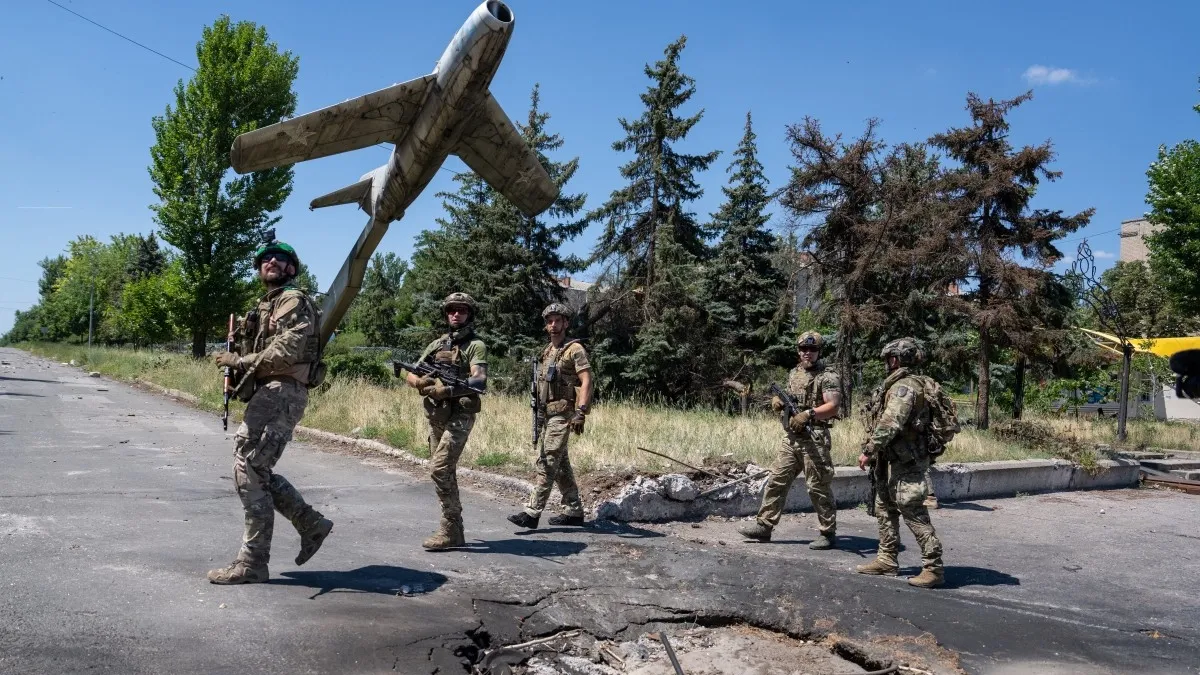
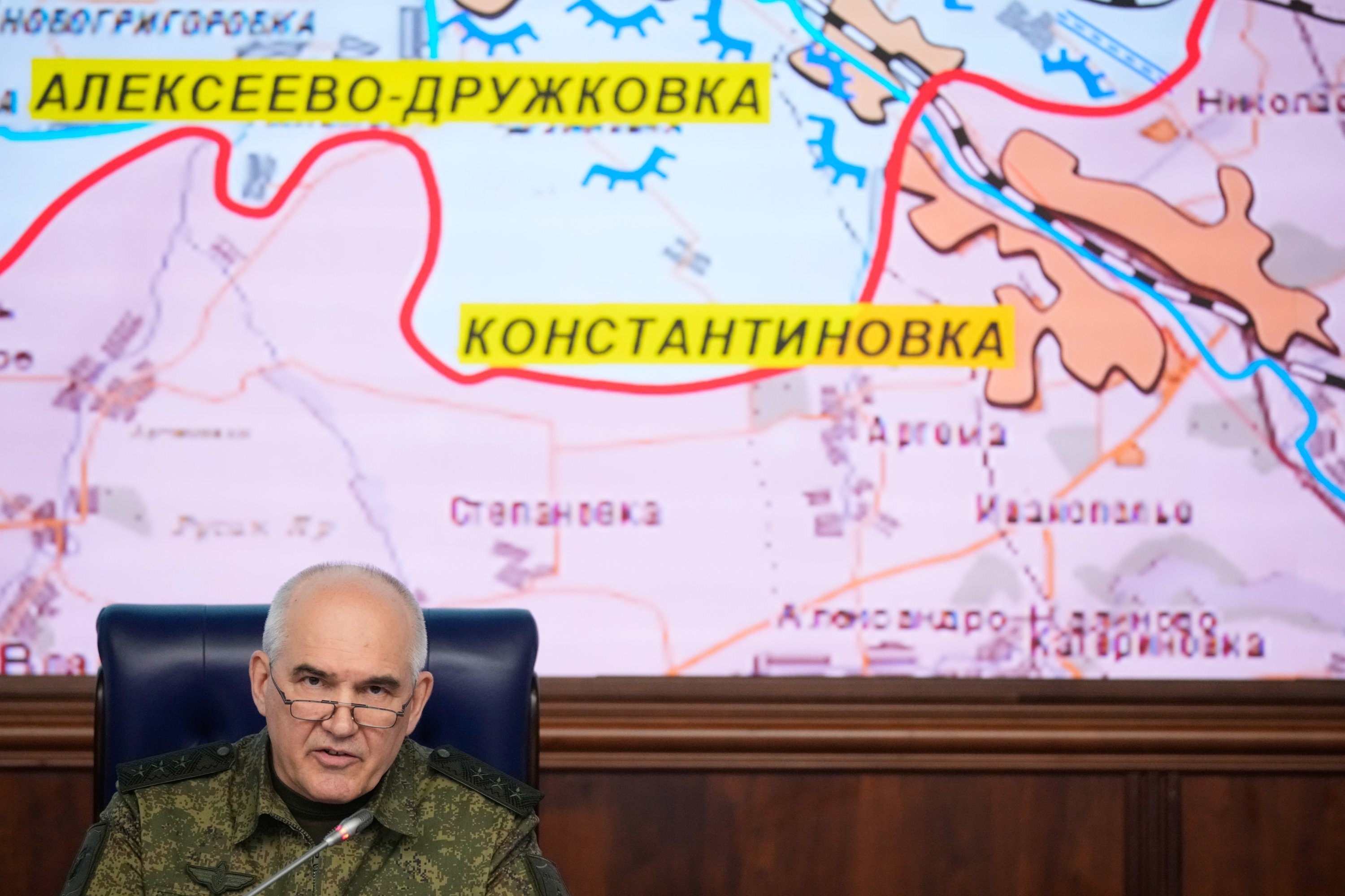
Ukraine still controls the strategically important eastern city of Kostiantynivka, President Volodymyr Zelensky and the General Staff said on Saturday, rejecting Russian claims that it has been captured. Russia’s…

06
Attacco ucraino in Russia, paura a San Pietroburgo. E Putin sente Trump
Once again the inhabitants of Putin's hometown were forced to stay indoors. Kiev's pressure on Crimea intensifies.
07
The General Staff also said Kostiantynivka remained under the control of Ukrainian forces

08
Zelenski nega captura russa de cidade-chave no leste da Ucrânia e desafia Putin
Ukraine still controls the strategic city of Konstantinovka, in the east of the country, President Volodimir Zelenski said on Saturday (4), rejecting Russian claims that it had been captured. Read more…
09
Putin conversa ao telefone com Trump sobre Ucrânia, diz Kremlin
The President of Russia, Vladimir Putin, spoke by telephone with the American President, Donald Trump, this Saturday (4), on the occasion of the 250th anniversary of the independence of the United States, according to the Kremlin. Read more…
10
Rússia recorre a estudantes para repor crescentes baixas na Ucrânia
"He studied drones for three months - and yet they threw him in a frontal attack, straight into the meat grinder," said Oksana Afanasyeva, Valery Averin's adoptive mother. Read more (04/07/2026 - 4:35 pm)
11
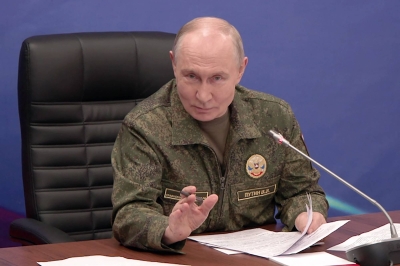
Russian President Vladimir Putin and US President Donald Trump discussed Ukraine and the coming Nato summit in Turkey in a phone call on Saturday. Putin congratulated Trump on the 250th anniversary of US independence in…

12
Kremlin aide Yuri Ushakov said Trump made the offer in the context of his participation next week at the NATO summit in Turkey.
13
Zelensky said he discussed the situation on the front line with his US counterpart.
14
Ukrainian President Volodymyr Zelenskyy said he also spoke to U.S. President Donald Trump.
15
В аэропорту Калуги ввели ограничения
Airplanes are not accepted or sent to Grabtsevo
16
В Ростове-на-Дону и четырех районах области сбили БПЛА и ракеты
No one was hurt
17
В Ростовской области объявили беспилотную опасность
The Russian Ministry of Emergency Situations warned about this
18
В Северной Осетии сняли беспилотную опасность
The operational headquarters works around the clock
19
В РФ разрабатывается дрон для применения против беспилотной авиации ВСУ
We are talking about modernizing the racing-type Izdeliye-98/7 drone
⚑ 1 language note
"Armed Forces of Ukraine" — Standard military designation, but context here frames Ukrainian military only as target of Russian weapons development—neutral in isolation
20
AI read
What the coverage agrees on, and where it splits
This view is generated from the clustered articles, so it is best read as a map of coverage rather than a replacement for the source reporting.
Broadly agreed
- All covering sources confirm Ukraine conducted a drone strike on an oil terminal near St. Petersburg on July 4-5.
- Multiple sources confirm Trump spoke with both Putin and Zelensky by phone, with Trump reportedly offering to help find a deal.
- Sources broadly confirm Russia and Ukraine are trading competing claims over control of Kostiantynivka.
Contested framing
- BBC News frames the St. Petersburg strike as legitimate economic warfare targeting war revenue; TASS frames Russian air defense operations as effectively managing drone threats, without acknowledging the terminal strike's success.
- Zelensky says Kostiantynivka remains under Ukrainian control; Russia claims capture — no independent verification is available in the summaries.
- Kremlin aide Ushakov says Trump offered to help Putin find a deal; Zelensky's account of his own Trump call emphasizes 'American resolve' — the two sides characterize the same diplomatic moment differently.
Still unclear
The actual military control status of Kostiantynivka remains publicly unverified, with Ukraine and Russia making directly contradictory claims without independent confirmation in the available summaries.
Notable omissions
TASS makes no mention of the St. Petersburg oil terminal strike's success or strategic impact; Russian state media frames all drone activity through interception and defensive success narratives, omitting damage assessments.
Quality check
Consensus on strike and phone calls is solid; military control claims remain unverified.
- St. Petersburg oil terminal strike success is reported by Western sources but TASS omission of damage is characterized as evidence of bias rather than gap
- Kostiantynivka control claims are directly contradictory with no independent verification available
- 'Trump offered to help Putin find deal' vs. 'American resolve' represents framing difference, not factual contradiction
- 'Simultaneous Trump-Putin and Trump-Zelensky phone calls' reported but whether they were coordinated or contradictory is unclear
Review confidence: 76%
Signal strength
5/5
Narrative divergence
12
Sources compared
0
Days in coverage
How each outlet frames this story
Divergence
5/5
Narrative Divergence
How differently the sources covering this story frame it — measured by tone, emphasis, and what each outlet chooses to highlight or omit.
1 — Sources frame the story almost identically
2 — Minor differences in tone or emphasis
3 — Noticeable differences; some outlets highlight what others omit
4 — Stark contrasts; conflicting narratives
5 — Sources tell fundamentally different stories
British
BBC News frames the St. Petersburg oil terminal strike as targeting 'key infrastructure that generates revenue for Russia's war,' directly quoting Zelensky and treating the strike as legitimate economic warfare.
German
Deutsche Welle describes the long-range strikes as 'the latest salvo in Ukraine's expanding campaign to inflict economic damage on Russia,' using neutral institutional language without escalation framing.
Turkish
Daily Sabah reports the strike as 'Ukraine brings war to St. Petersburg,' framing it through geographic escalation significance rather than Ukrainian strategic rationale.
Colombian
El Tiempo covers the St. Petersburg drone attack alongside Russia's denial of having lost Kostiantynivka, framing the conflict through bilateral claim-and-counter-claim dynamics.
Russian
TASS reports drone dangers being removed in North Ossetia and Rostov regions, missile interceptions, and airport restrictions — framing Russian air defense as effective and the war through defensive capability narrative.
Italian
La Repubblica covers the St. Petersburg attack causing fear among residents and Putin's phone call with Trump, emphasizing the human dimension of the attack on Putin's hometown.
Japanese
Yahoo Japan reports Russia's proposal to stop shelling key strategic positions in eastern Ukraine and the Trump-Putin phone call, framing diplomacy as the primary news angle.
Brazilian
Folha de S.Paulo covers Russia turning to students to replace mounting casualties, using personal testimony to examine systemic human cost of the war on Russian society.
Chinese
SCMP reports Putin and Trump discussing Ukraine and Iran in the Independence Day phone call, framing the conversation through strategic competition dynamics and supply-chain consequences.
Singaporean
Straits Times reports Trump offered over phone to help Putin find a deal with Ukraine, framing the call as a potential diplomatic opening within the NATO summit context.
Indian
The Hindu reports Zelensky denying the Russian capture of Kostiantynivka, maintaining factual documentation without editorial alignment toward either party.