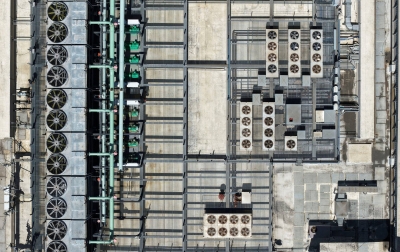
The move aims to prevent Chinese firms from stealing data, installing malware or disrupting service at U.S. data centers.
How the world covered this
Read the editorial comparison
Prose synthesis of how each outlet framed the story, with side-by-side outlet quotes and divergence notes.
3 articles from 1 source
01
02
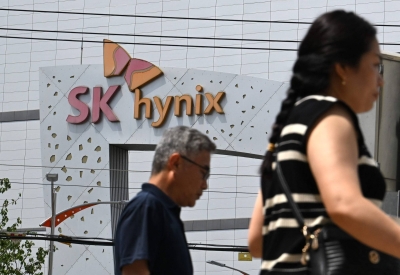
They are wary that future restrictions could extend beyond new equipment to the servicing, repair or replacement of Western tools already installed at their Chinese plants.
03
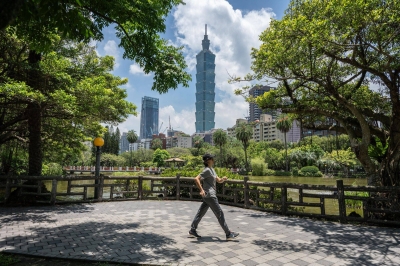
The Taiwan justice ministry's investigation bureau said Chinese companies commonly concealed their identities in their bid to illegally recruit Taiwanese talent.
AI read
What the coverage agrees on, and where it splits
This view is generated from the clustered articles, so it is best read as a map of coverage rather than a replacement for the source reporting.
Broadly agreed
- All covering sources confirm that the US-China technology competition is intensifying, with the Trump administration drafting new restrictions on Chinese technology in sensitive US infrastructure.
- Sources broadly agree that major Asian chipmakers are actively hedging against potential future US restrictions that could affect their manufacturing operations.
Contested framing
- Japan Times frames the Chinese data center ban as a legitimate cybersecurity measure; SCMP frames the US-China AI competition as an ideological contest over international order where middle powers should seek independence from both sides.
- Korea Herald frames Samsung and SK Hynix's Chinese chip tool testing as prudent supply-chain resilience within a US-alliance framework; SCMP contextualizes it as evidence that US restrictions are pushing Asian companies toward Chinese alternatives.
Still unclear
Whether the proposed Chinese data center device ban will be formally implemented and what specific categories of equipment it would cover are not confirmed in available summaries.
Notable omissions
People's Daily provides no coverage of US technology restrictions targeting Chinese firms; European perspectives on technology decoupling and its implications for European digital sovereignty are absent.
Quality check
Ban proposed; implementation scope and actual trigger for Asian hedging behavior remain uncertain.
- Implementation status unclear: Proposed ban not formally confirmed as finalized policy
- Equipment scope undefined: What specific 'categories of equipment' would be covered unspecified
- Competing interpretations: Japan Times frames as cybersecurity; SCMP frames as ideological/supply-chain reorientation—not reconciled
- Hedging vs. decoupling causality confused: Whether Samsung/SK Hynix testing Chinese tools proves US restrictions push toward alternatives or represents prudent diversity unclear
Review confidence: 65%
Signal strength
3/5
Narrative divergence
1
Sources compared
1
Days in coverage
How each outlet frames this story
Divergence
3/5
Narrative Divergence
How differently the sources covering this story frame it — measured by tone, emphasis, and what each outlet chooses to highlight or omit.
1 — Sources frame the story almost identically
2 — Minor differences in tone or emphasis
3 — Noticeable differences; some outlets highlight what others omit
4 — Stark contrasts; conflicting narratives
5 — Sources tell fundamentally different stories
Japanese
Japan Times reports the Trump administration drafting a ban on Chinese data center devices aimed at preventing data theft and malware installation, framing it as a US institutional security decision.