President Lee Jae Myung called on officials to take prompt action as extreme weather conditions became "normal." Authorities extended their first-ever heat wave warning for all of Seoul on Tuesday.
How the world covered this
Read the editorial comparison
Prose synthesis of how each outlet framed the story, with side-by-side outlet quotes and divergence notes.
4 articles from 3 sources
01
02
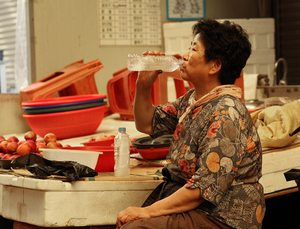
Temperatures have neared or exceeded 40 degrees Celsius across South Korea, prompting local governments to send drones over farmland and refrigerated trucks through city streets to protect residents from the prolonged…
03
Most of the zoo’s 16 lions have struggled to cope with high humidity this summer Three lions from a Tokyo zoo have died from suspected heatstroke and others are undergoing treatment, a spokesperson said on Tuesday, as…
04
The zoo said that 10 of its 16 lions have been ill. Japan has been experiencing an extreme heat wave since late July.
AI read
What the coverage agrees on, and where it splits
This view is generated from the clustered articles, so it is best read as a map of coverage rather than a replacement for the source reporting.
Broadly agreed
- All covering sources confirm that South Korea's heat wave has killed at least 16 people and that Tokyo Zoo suffered the deaths of three lions from suspected heatstroke.
- Sources agree temperatures in both South Korea and Japan have reached extreme levels in the 2026 summer.
Still unclear
The total heat-related mortality across East Asia for the 2026 summer season and the specific temperature thresholds that caused the zoo lion deaths are not confirmed in available summaries.
Notable omissions
The impact of the East Asian heat wave on agricultural production, energy demand, and lower-income communities without access to cooling is largely absent from available coverage.
Quality check
South Korea deaths and zoo lion deaths confirmed; region-wide mortality and vulnerability patterns underdocumented.
- Zoo lion cause speculative: 'Suspected heatstroke' not confirmed by necropsy or veterinary assessment in summaries
- East Asia mortality incomplete: Total heat deaths across region not aggregated; only South Korea and Tokyo zoo documented
- Vulnerability analysis absent: Lower-income communities without cooling access, agricultural impacts, energy demand not addressed
- Source concentration: Only three outlets; no Chinese or broader Asian public health perspective
Review confidence: 85%
Signal strength
1/5
Narrative divergence
3
Sources compared
1
Days in coverage
How each outlet frames this story
Divergence
1/5
Narrative Divergence
How differently the sources covering this story frame it — measured by tone, emphasis, and what each outlet chooses to highlight or omit.
1 — Sources frame the story almost identically
2 — Minor differences in tone or emphasis
3 — Noticeable differences; some outlets highlight what others omit
4 — Stark contrasts; conflicting narratives
5 — Sources tell fundamentally different stories
German
Deutsche Welle reports 16 dead in South Korea amid record heat, with President Lee Jae Myung calling extreme weather 'normal' and urging action, framing it through institutional governance adaptation failure.
South Korean
Korea Herald reports local governments deploying drones and chilled-water trucks to fight extreme heat with temperatures nearing or exceeding 40 degrees Celsius across South Korea, framing it through institutional resilience and adaptive governance.
British
The Guardian reports three lions dying of suspected heatstroke at Tokyo Zoo as Japan swelters, noting most of the zoo's 16 lions have struggled with high humidity, connecting animal welfare to climate institutional adaptation failure.