There have been at least 19 deaths related to the heatwave which has brought the country's hottest day since records began.
How the world covered this
Read the editorial comparison
Prose synthesis of how each outlet framed the story, with side-by-side outlet quotes and divergence notes.
18 articles from 8 sources
01


03
President Lee Jae Myung on Thursday ordered an all-out government response to record-breaking heat and a worsening drought, directing authorities nationwide to mobilize every available resource to protect lives and…

04
Seoul could see temperatures climb to 40 degrees Celsius on Thursday as an intensifying heat wave pushes the capital close to its all-time high. The Korea Meteorological Administration has forecast a daytime high of 39…
05
Giulio Betti: “A Ferragosto ondate di calore e sole. Il caldo del 2026 sarà la nuova normalità”
The interview with the meteorologist and climatologist of the Cnr Biometeorology Institute: "In the next few days thunderstorms over the Alps and Apennines, then the anticyclone again"
06
L’Europa soffoca, ma è solo l’inizio. “Rimpiangeremo questa estate”
From France to Romania, the entire continent is in the grip of the heat. In the coming years the thermometer will rise further
07
Sull’Appennino 41 gradi, l’afa non dà tregua. Allerta fino a Ferragosto
Today 27 cities with a red sticker, tomorrow only Bolzano drops. Record of 48 tropical nights in a row, humidity over 90% in Imperia.
08
L’Europa soffoca, ma è solo l’inizio. “Rimpiangeremo questa estate”
From France to Romania, the entire continent is in the grip of the heat. In the coming years the thermometer will rise further
09
Hungary is feeling the heat. The country's third-largest lake is shrinking, the Danube is running low, and soaring temperatures could force the country's only nuclear power plant to shut down.
10
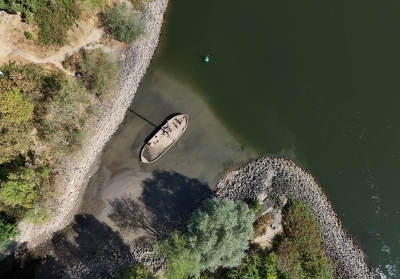
There are believed to be about 200 Nazi ships on the floor of the Danube near Prahovo, Serbia. Ferries, tourist boats, and shipping have also become severely restricted due to the drought.
11
Shallow water is imposing tighter limits on how much ship cargo can float down the river — sending prices up for riverboat freight and heaping pressure on the government to act.
12
The Rhine river handles around 80 per cent of Germany’s inland waterway traffic, according to an economist.
13
More than 3.8 million ha have burned so far in 2026, displacing thousands of people.
14
Most of the zoo’s 16 lions have struggled to cope with high humidity this summer Three lions from a Tokyo zoo have died from suspected heatstroke and others are undergoing treatment, a spokesperson said on Tuesday, as…
15
The UK and Europe have been facing extreme heatwaves – Greenpeace recorded temperatures of up to 53C at one London playground in recent weeks. It’s clear our cities are not equipped to deal with the soaring temperatures…
16
As climate disaster stares us in the face, the radical right says ‘Embrace the Mediterranean life’. Embrace death, more like it Can’t you leftists understand?
17
Droughts that were once a century now happen every year, and the impact on wildlife, industrial output and culture itself is catastrophic Last week, 186 passengers had to be evacuated from the cruise ship Viking Ullur,…
18
Changing paved areas to grass and planting trees can reduce urban heat island effect by as much as 1C, study shows Add together all the UK’s household gardens and they cover an area three times larger than all the…
AI read
What the coverage agrees on, and where it splits
This view is generated from the clustered articles, so it is best read as a map of coverage rather than a replacement for the source reporting.
Broadly agreed
- All covering sources confirm record temperatures across South Korea and Europe with confirmed deaths and major economic consequences including Rhine shipping disruption.
- Multiple sources confirm climate scientists attribute the increased frequency and severity of these events to human-caused climate change.
Contested framing
- The Guardian frames the heatwave through systemic climate policy failure requiring radical structural response; Deutsche Welle and Japan Times frame it primarily as an economic infrastructure and institutional adaptation challenge.
Still unclear
The full economic cost of Rhine shipping restrictions and the final death toll from the South Korean heatwave across this news cycle have not been confirmed.
Notable omissions
No source in this cycle covers the impact of the European heat on agricultural production, food prices, or vulnerable rural communities beyond urban infrastructure framing.
Quality check
Record temperatures and deaths confirmed; economic costs and agricultural impacts remain incompletely reported.
- South Korean final death toll and full European economic cost unconfirmed
- Framing divergence: Guardian emphasizes climate policy failure (structural response); DW/Japan Times emphasize infrastructure adaptation
- No reporting on agricultural production impact, food prices, or vulnerable rural communities in Europe
- Attribution to human-caused warming confirmed by climate scientists, but frequency/severity causation remains probabilistic
Review confidence: 80%
Signal strength
2/5
Narrative divergence
8
Sources compared
1
Days in coverage
How each outlet frames this story
Divergence
2/5
Narrative Divergence
How differently the sources covering this story frame it — measured by tone, emphasis, and what each outlet chooses to highlight or omit.
1 — Sources frame the story almost identically
2 — Minor differences in tone or emphasis
3 — Noticeable differences; some outlets highlight what others omit
4 — Stark contrasts; conflicting narratives
5 — Sources tell fundamentally different stories
British
BBC reports South Korea's record heatwave with temperatures reaching 42.5°C and at least 19 deaths, framing it as a humanitarian crisis requiring institutional emergency response.
Singaporean
CNA reports South Korea's president ordered an all-out government response to the heatwave and drought, framing it as an institutional governance emergency requiring executive mobilisation.
South Korean
Korea Herald reports President Lee ordered an all-out government response to record heat and worsening drought, and separately warns Seoul could reach 40°C, framing through alliance-consistent domestic institutional action.
Italian
La Repubblica frames Europe as suffocating in heat and warns this is 'only the beginning' and that 'we will regret this summer,' integrating cultural alarm with climatological expert analysis.
German
Deutsche Welle reports Hungary's Lake Velence is drying up and the Rhine is running low amid soaring temperatures, framing the drought through institutional economic sustainability analysis.
Japanese
Japan Times reports low water levels on Germany's Rhine are threatening an economic blow with cargo limits and rising riverboat prices, framing through supply-chain institutional vulnerability.