Ukraine has denounced the move, calling it a "strategic mistake" and "disrespectful".
How the world covered this
Read the editorial comparison
Prose synthesis of how each outlet framed the story, with side-by-side outlet quotes and divergence notes.
8 articles from 6 sources
01

02
Karol Nawrocki's decision to strip Volodymyr Zelenskyy of Poland's highest honor is likely to spark a severe diplomatic crisis between Poland and Ukraine.
03
Poland's president has revoked the country's highest state honor awarded to Ukrainian President Volodymyr Zelenskyy, following a dispute over Kyiv's decision to rena...
04
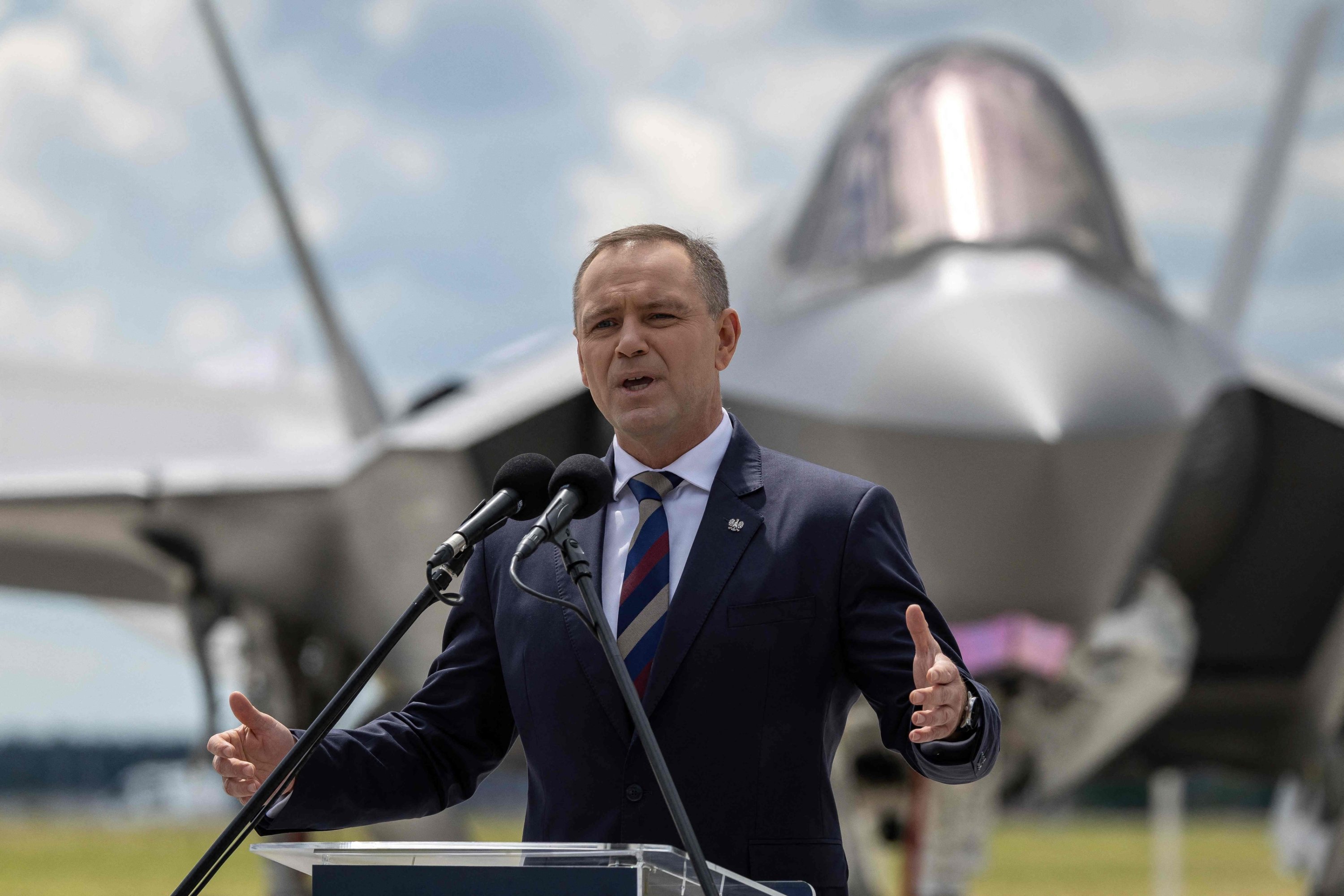
Poland’s nationalist president Karol Nawrocki announced on Friday he was stripping Ukraine’s Volodymyr Zelensky of the country’s top award, escalating a row between the neighbours and allies over World War II massacres.…

05
The Ukrainian President caused outrage by renaming an army unit after a paramilitary group which massacred Poles in WWII.
06
June 19 - Ukrainian President Volodymyr Zelenskiy said on Friday that a week should be enough for Belarusian leader Alexander Lukashenko to remove equipment from his country used by Russia in its attacks on Ukraine,…
07
Ukrainian President Volodymyr Zelensky said on Friday that a week should be enough for Belarusian leader Alexander Lukashenko to remove equipment from his country used by Russia in its attacks on Ukraine, adding a…

08
EN DIRECT, guerre en Ukraine : Volodymyr Zelensky donne une semaine à Alexandre Loukachenko pour démonter des relais radio en Biélorussie
The Ukrainian president accuses the Belarusian regime of harboring Russian and Belarusian repeaters on radio relays “along the two border regions with Ukraine”. “Every day, civilians and children…
AI read
What the coverage agrees on, and where it splits
This view is generated from the clustered articles, so it is best read as a map of coverage rather than a replacement for the source reporting.
Broadly agreed
- All covering sources confirm Poland's president formally revoked Zelensky's highest state honour in response to Ukraine naming a military unit after a group associated with WWII Polish massacres.
- Multiple sources confirm Ukraine's foreign minister publicly condemned the move as reckless and strategically counterproductive.
Contested framing
- Notes from Poland and BBC emphasise Ukraine's view that the move benefits Moscow; Straits Times foregrounds the historical legitimacy of Poland's grievance over the WWII naming without editorial judgement.
- Deutsche Welle frames the decision primarily as a diplomatic crisis risk; SCMP frames it through the lens of nationalist politics without assessing strategic implications.
Still unclear
Whether Poland will take further diplomatic steps beyond the honour revocation, or whether Ukraine will rename the military unit to resolve the dispute, remains unconfirmed.
Notable omissions
No covering source provides the perspective of Polish civil society or historical memory organisations on whether the revocation is proportionate; Russian state media framing of the dispute is absent from this source set.
Quality check
The revocation itself is confirmed; characterizations of strategic damage should be read as analysis, not fact.
- Core facts (honour revoked, Ukraine condemned the move) well-confirmed across six sources
- No Polish civil society or historical memory organization perspective included—only government and Ukrainian official reactions
- Russian state media reaction entirely absent, limiting full picture of geopolitical framing
- Strategic implications ('fracturing NATO alliance') are editorial interpretation, not confirmed by sources
Review confidence: 75%
Signal strength
4/5
Narrative divergence
6
Sources compared
1
Days in coverage
How each outlet frames this story
Divergence
4/5
Narrative Divergence
How differently the sources covering this story frame it — measured by tone, emphasis, and what each outlet chooses to highlight or omit.
1 — Sources frame the story almost identically
2 — Minor differences in tone or emphasis
3 — Noticeable differences; some outlets highlight what others omit
4 — Stark contrasts; conflicting narratives
5 — Sources tell fundamentally different stories
British
BBC reports Ukraine denounced the move as a 'strategic mistake' and 'disrespectful,' focusing on the diplomatic rupture and Ukrainian institutional response.
German
Deutsche Welle frames the decision as likely to spark a severe diplomatic crisis, emphasising institutional consequences over historical grievance.
Chinese
SCMP frames the decision through Poland's nationalist president Karol Nawrocki and the WWII dispute, contextualising it within Eastern European political dynamics without taking sides.
Singaporean
Straits Times notes Zelensky caused outrage by renaming an army unit after a paramilitary group which massacred Poles in WWII, foregrounding the historical trigger.
French
Le Monde's Ukraine live blog covers Zelensky's separate ultimatum to Belarus over radio relays, contextualising the Polish dispute within broader Eastern European tensions.