The tests came after North Korea in late June commissioned its first 5,000-ton destroyer
How the world covered this
Read the editorial comparison
Prose synthesis of how each outlet framed the story, with side-by-side outlet quotes and divergence notes.
3 articles from 3 sources
01

02
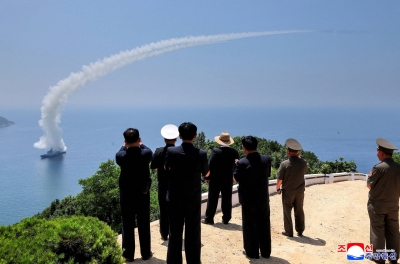
North Korean leader Kim Jong Un oversaw weapons tests last week of the 5,000-ton destroyer Kang Kon, including cruise missile launches and "electronic warfare means," state media reported Sunday.
03
Referring to his recent state visit to Pyongyang, Chinese President Xi Jinping thanked North Korean leader Kim Jong Un for the "enthusiastic and friendly" hospitality during the trip.

AI read
What the coverage agrees on, and where it splits
This view is generated from the clustered articles, so it is best read as a map of coverage rather than a replacement for the source reporting.
Broadly agreed
- Multiple sources confirm Kim Jong Un personally oversaw weapons tests from the Kang Kon destroyer including cruise missile and torpedo trials.
- CNA confirms Xi Jinping expressed readiness to maintain stable China-North Korea ties following his Pyongyang state visit.
Contested framing
- Japan Times frames the destroyer tests through maritime security threat implications for Japan; CNA frames the China-North Korea relationship through managed stability rather than threat escalation — different risk assessments of the same regional dynamic.
Still unclear
The specific range and targeting capabilities demonstrated in the North Korean weapons tests are not publicly disclosed in the available summaries.
Notable omissions
US outlets do not cover North Korea's naval weapons tests in the available article set; South Korean outlets cover the North Korean cyber threat to tech companies but not the naval tests specifically.
Quality check
Weapons tests and Xi statement confirmed; regional threat implications remain assessed differently.
- Specific range and targeting capabilities not disclosed; assessment of threat severity is incomplete
- Xi's expression of readiness to work for 'stable' ties is diplomatic language; avoid interpreting as endorsement of tests
- Japan Times threat framing vs. CNA stability framing represents genuine risk assessment divergence
- Timeline of tests relative to submarine/naval commissioning not fully clear
Review confidence: 76%
Signal strength
2/5
Narrative divergence
3
Sources compared
0
Days in coverage
How each outlet frames this story
Divergence
2/5
Narrative Divergence
How differently the sources covering this story frame it — measured by tone, emphasis, and what each outlet chooses to highlight or omit.
1 — Sources frame the story almost identically
2 — Minor differences in tone or emphasis
3 — Noticeable differences; some outlets highlight what others omit
4 — Stark contrasts; conflicting narratives
5 — Sources tell fundamentally different stories
Indian
The Hindu reports North Korean leader Kim overseeing weapons tests from a new naval destroyer, maintaining factual documentation of military capability development without strategic analysis.
Japanese
Japan Times covers Kim overseeing weapons tests including cruise missile and torpedo trials from the 5,000-ton destroyer Kang Kon, treating it as a regional security and logistics threat to Japanese maritime interests.
Singaporean
CNA reports Xi Jinping expressing readiness to work with Kim Jong Un for 'stable' China-North Korea ties following Xi's state visit to Pyongyang, framing the relationship as a managed strategic alignment rather than an unconstrained security threat.