ペルー大統領 ケイコ氏が就任
How the world covered this
Read the editorial comparison
Prose synthesis of how each outlet framed the story, with side-by-side outlet quotes and divergence notes.
5 articles from 5 sources
01
02
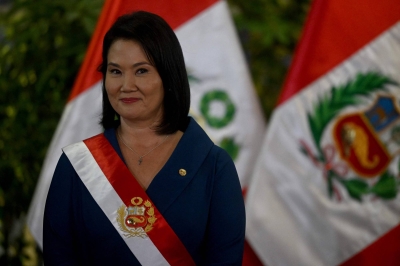
She becomes the ninth president in a decade where every leader since the 1990s has been impeached, imprisoned or targeted in criminal investigations.
03
Keiko Fujimori was sworn in as Peru’s president on Tuesday after winning the June presidential run-off by a margin of fewer than 50,000 votes, a victory that confirmed a regional shift in South America towards the…

04
Keiko toma posse no Peru e fala em usar Forças Armadas para combater crime
Keiko Fujimori took office as president of Peru this Tuesday (28), 26 years after the end of her father's dictatorship, with a tough speech regarding public security - in line with the campaign that brought her to power...
05
Aumento del salario mínimo, operaciones militares y medidas económicas: las claves del primer discurso de Keiko Fujimori como presidenta de Perú
The president addressed Congress and the Andean country after her inauguration in her first official speech.

AI read
What the coverage agrees on, and where it splits
This view is generated from the clustered articles, so it is best read as a map of coverage rather than a replacement for the source reporting.
Broadly agreed
- All covering sources confirm Keiko Fujimori was inaugurated as Peru's president on July 28, 2026.
- Sources agree she vowed to use the Armed Forces to fight crime in her inaugural address.
Contested framing
- Folha de S.Paulo frames the inauguration through the shadow of her father's authoritarian legacy; Japan Times frames it as an institutional stability opportunity; SCMP frames it through a vow to stabilize the nation.
Still unclear
Whether Fujimori will pursue constitutional changes or extend executive power as her father did remains publicly unspecified in the available summaries.
Notable omissions
BBC, CNN, Al Jazeera Arabic, and most major Western outlets provide no coverage of Fujimori's inauguration despite its significance for Latin American regional politics.
Quality check
Inauguration and governance chaos context confirmed; policy direction and outcome remain uncertain.
- Major Western outlets silent (BBC, CNN, Al Jazeera Arabic)
- Whether Fujimori will pursue constitutional power extension unconfirmed; father's authoritarian legacy noted but not predictive
- Armed Forces deployment promise is vague; implementation unclear
- Governance crisis context is real (9 presidents in decade) but Fujimori's actual stabilization capacity untested
Review confidence: 75%
Signal strength
2/5
Narrative divergence
5
Sources compared
1
Days in coverage
How each outlet frames this story
Divergence
2/5
Narrative Divergence
How differently the sources covering this story frame it — measured by tone, emphasis, and what each outlet chooses to highlight or omit.
1 — Sources frame the story almost identically
2 — Minor differences in tone or emphasis
3 — Noticeable differences; some outlets highlight what others omit
4 — Stark contrasts; conflicting narratives
5 — Sources tell fundamentally different stories
Japanese
Yahoo Japan reports Keiko taking office as President of Peru as a brief factual update, without editorial framing.
Japanese
Japan Times frames Fujimori's inauguration as giving Peru a shot to break its cycle of chaos, noting she becomes the ninth president in a decade where every leader since the 1990s faced impeachment, imprisonment, or prosecution.
Chinese
SCMP reports Fujimori sworn in as Peru's president and vowing to stabilize the nation, framing it through institutional stability analysis.
Brazilian
Folha de S.Paulo covers Fujimori taking office 26 years after her father's dictatorship and her announcement of using the Armed Forces to fight crime, integrating humanistic framing of the authoritarian legacy tension.
Colombian
El Tiempo covers the keys to Keiko's first speech including minimum wage increases, military operations, and economic measures, framing through Latin American regional political governance accountability.