Oil prices fall on US-Iran agreement CNN
How the world covered this
Read the editorial comparison
Prose synthesis of how each outlet framed the story, with side-by-side outlet quotes and divergence notes.
8 articles from 7 sources
01
02
A potential US-Iran deal to end the war and reopen the Strait of Hormuz could ease the global energy crunch, but oil prices and supplies may take months to stabilize as shipping restarts and infrastructure recovers.
04
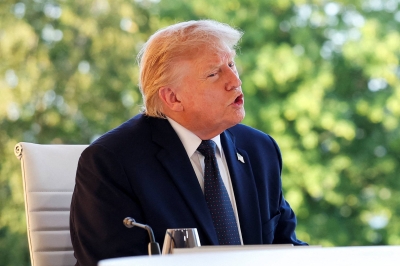
U.S. President Donald Trump said the Strait of Hormuz will be "completely open" by Friday.
05
Pourquoi l’inflation mettra du temps à refluer malgré une réouverture, même rapide, du détroit d’Ormuz
The return to normal will necessarily be slow and disruptions to supply chains will continue to weigh on the global economy. In Europe, growth is expected to decline by 0.4 points in 2026, to...
06
Markets settle into more measured tone on Gulf developments as initial excitement over deal between Washington and Tehran fades

07
Maritime intelligence publication Lloyd’s List estimates that about 600 ships remain stranded west of the chokepoint; last week, Trump claimed that the U.S. military had quietly assisted around 200 commercial vessels…

08
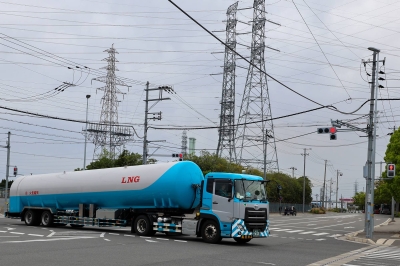
The Ichthys plant in Australia's Northern Territory accounts for about 2% of the world's output and has the capacity to export around 9.3 million tons a year.
AI read
What the coverage agrees on, and where it splits
This view is generated from the clustered articles, so it is best read as a map of coverage rather than a replacement for the source reporting.
Broadly agreed
- All covering sources confirm oil prices fell on ceasefire news but remain elevated relative to pre-war levels.
- Multiple sources confirm shipowners are not resuming Hormuz transit immediately, with the largest tanker operator citing weeks before confidence is restored.
Contested framing
- CNN frames the oil price drop as a clear market-positive outcome of the deal; Le Monde and Deutsche Welle frame the economic normalisation as slow and structurally uncertain, with inflation persistence likely regardless of deal speed.
- Trump claims Hormuz will be completely open and toll-free by Friday; The Hindu's Lloyd's List data and Japan Times allied source reporting directly contradict this timeline.
Still unclear
The timeline for mine clearance, the resolution of the fee/toll dispute between the US (no tolls) and Iran (fees planned), and when insurance premiums will return to pre-war levels all remain unconfirmed.
Notable omissions
The specific economic impact on Asian LNG-dependent economies — Japan, South Korea, Taiwan — beyond market index movements is largely absent from Western outlet coverage, despite these being the most exposed import economies.
Quality check
Oil price fell on ceasefire news but normalisation will be slow; shipping disruption likely continues for weeks.
- Critical omission: Asia LNG-dependent economies (Japan, South Korea, Taiwan) impact largely absent despite being most exposed to supply disruption.
- Trump's 'Friday' timeline directly contradicted by Lloyd's List shipping data; readers should expect weeks of disruption despite ceasefire.
- Fee/toll dispute between US (no tolls) and Iran (planned) is unresolved and could reignite tensions.
- Insurance premium normalisation timeline unconfirmed despite being material to shipping recovery.
Review confidence: 75%
Signal strength
3/5
Narrative divergence
7
Sources compared
1
Days in coverage
How each outlet frames this story
Divergence
3/5
Narrative Divergence
How differently the sources covering this story frame it — measured by tone, emphasis, and what each outlet chooses to highlight or omit.
1 — Sources frame the story almost identically
2 — Minor differences in tone or emphasis
3 — Noticeable differences; some outlets highlight what others omit
4 — Stark contrasts; conflicting narratives
5 — Sources tell fundamentally different stories
American
CNN reports oil prices fell on the US-Iran agreement, framing the deal primarily as a market-positive event without addressing the gap between announcement and actual reopening.
French
Le Monde emphasises that inflation will take time to decline even after a rapid Hormuz reopening, because supply-chain disruptions will continue to weigh on the global economy — a structural rather than event-based framing.
German
Deutsche Welle asks when oil prices will actually fall, noting the deal raises hopes but naval mines, insurance risk premiums, and shipping routing decisions mean relief is weeks away.
Singaporean
CNA analyses that the US-Iran deal may not bring quick relief for auto shops dependent on global supply chains, consistent with its operational problem-solving framing.
Japanese
Japan Times reports the US is at odds with allies over how easy it is to reopen Hormuz, with Trump saying 'completely open' by Friday while maritime experts and allied officials disagree.
Indian
The Hindu reports limited traffic through Hormuz despite Trump's announcement, with Lloyd's List estimating 600 ships remain stranded west of the chokepoint.
Irish
Irish Times reports oil continues to slide but Asian markets are tempering optimism, with markets settling into a more measured tone as initial deal excitement fades.