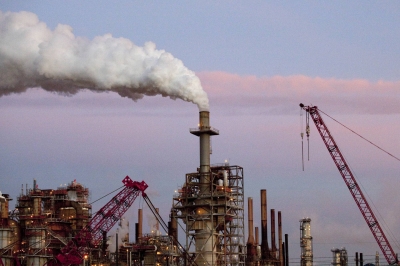
A major research consortium confirming that human-caused warming will breach the Paris Agreement's most ambitious threshold around 2030 — a decade earlier than once hoped — represents a fundamental reckoning with the failure of climate policy.
3 sources5 articles3 perspectives
3Sources in this topicDifferent outlets covering the same story arc.
5Articles collectedThe full set backing this topic page right now.
1/5Narrative divergenceHover for scale explanation.
Narrative Divergence
How differently the sources covering this story frame it — measured by tone, emphasis, and what each outlet chooses to highlight or omit.
1 — Sources frame the story almost identically
2 — Minor differences in tone or emphasis
3 — Noticeable differences; some outlets highlight what others omit
Le réchauffement climatique dû aux activités humaines devrait atteindre 1,5 °C autour de 2030
In a study published Thursday, a consortium of researchers confirms that the most ambitious threshold of the Paris climate agreement, signed in 2015, should be exceeded in the next four years.
A major source of global warming has been left out of official climate plans, with indirect greenhouse gases contributing roughly 0.3 C of warming to date.
Analysis pinpoints areas most vulnerable to hotter, drier weather causing ground to shrink and drag foundations down Millions of homes are at risk from climate-related subsidence, according to an analysis by the British…
Temperatures above 15C ‘very strange’ say scientists, as snow melts and rain falls on glaciers in usually frozen region Temperatures in the Antarctic climbed above 15C this month, shattering the previous winter heat…
Critically endangered Tapanuli orangutan population falls after heavy rain and landslides, fuelled by climate crisis, in North Sumatra Extreme rainfall and landslides fuelled by the climate crisis killed 7% of the…
AI read
What the coverage agrees on, and where it splits
This view is generated from the clustered articles, so it is best read as a map of coverage rather than a replacement for the source reporting.
Broadly agreed
All covering sources confirm the scientific consensus that 1.5°C breach is now expected around 2030.
Sources agree Antarctic temperature anomalies represent alarming confirmation of accelerating warming.
Contested framing
The Guardian focuses on the need to incorporate non-CO2 greenhouse gases into climate plans; Le Monde focuses on the timeline confirmation; Japan Times focuses on policy gap on indirect gases.
Still unclear
Whether any major emitter will revise their nationally determined contributions in response to this timeline update is not confirmed.
Notable omissions
No outlet in this cluster addresses the legal or treaty implications of the 1.5°C breach timeline for countries that ratified the Paris Agreement.
Quality check
Scientific consensus on 1.5°C breach timeline is strong; policy implications remain disputed.
Consensus on ~2030 breach timeline is confirmed across sources
Antarctic anomaly framing is used as 'confirmation' but is distinct from CO2 timeline claim
Contested framing about CO2 vs. non-CO2 gases is legitimate technical dispute rather than consensus failure
Omission of Paris Agreement treaty implications is significant given framework context
Review confidence: 80%
Signal strength
1/5Narrative divergence
3Sources compared
1Days in coverage
How each outlet frames this story
Divergence1/5
Narrative Divergence
How differently the sources covering this story frame it — measured by tone, emphasis, and what each outlet chooses to highlight or omit.
1 — Sources frame the story almost identically
2 — Minor differences in tone or emphasis
3 — Noticeable differences; some outlets highlight what others omit
4 — Stark contrasts; conflicting narratives
5 — Sources tell fundamentally different stories
French
Le Monde reports a consortium of researchers confirms global warming due to human activities is expected to reach 1.5°C around 2030, treating it as a definitive scientific finding requiring elite policy response.
British
The Guardian reports record Antarctic winter temperatures above 15°C as 'very strange,' with snow melting and rain falling on glaciers, and scientists urging countries to look beyond CO2 to tackle indirect greenhouse gases contributing roughly equivalent warming.
Japanese
Japan Times reports scientists urging countries to look beyond CO2 to indirect greenhouse gases that have been left out of official climate plans.
Copied!
Related coverage
More topic clusters connected by category, source overlap, or narrative signal.