A major European climate investment report, urban heat emergencies in Karachi and New Delhi, São Paulo's water crisis, and English green space cuts collectively document the accelerating material costs of climate inaction across multiple continents.
4 sources9 articles8 perspectives
4Sources in this topicDifferent outlets covering the same story arc.
9Articles collectedThe full set backing this topic page right now.
2/5Narrative divergenceHover for scale explanation.
Narrative Divergence
How differently the sources covering this story frame it — measured by tone, emphasis, and what each outlet chooses to highlight or omit.
1 — Sources frame the story almost identically
2 — Minor differences in tone or emphasis
3 — Noticeable differences; some outlets highlight what others omit
Après trois ans de stagnation, les investissements climatiques frémissent en Europe en réaction à la guerre au Moyen-Orient
The Institute for Climate Economics (I4CE) publishes its annual inventory of spending in favor of the energy transition, which reveals contrasting results depending on the sector in 2025. The blockage of the strait…
Exclusive: New loopholes for developers will exacerbate extreme disparities across country, charity coalition warns The poorest and most nature-deprived communities in England will be further left behind in their access…
As São Paulo faces a climate-induced water crisis, campaigners are fighting to reverse the impact of pollution and illegal deforestation on its largest reservoir In a small motorboat laden with water-monitoring…
Global report provides an alternative to climate breakdown, political extremism and economic tensions • ‘Happiness is not just about GDP’: ambitious plan or utopia? Humanity can raise living standards, reduce inequality…
Our plan is radical – but by transforming how we live on a finite planet, nearly everyone gains ‘An equal and habitable world is possible’: academics set out sweeping vision for planetary survival Imagine a future in…
After a series of deaths on the beaches of Brittany, one bereaved family set out to prove the foul-smelling bloom was to blame By Marta Zaraska. Read by Lucy Bromilow Continue reading...
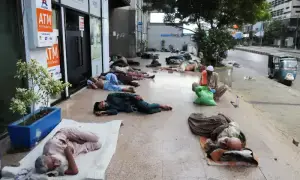
• Cites 2026 study that finds Karachi has highest urban-rural temperature difference • Says emergency response not enough, the city must reduce heat at its source • Links pollution, dense construction, traffic, and tree…
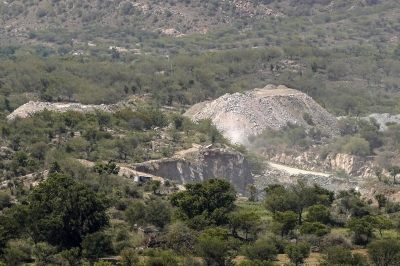
A loss of the hills to mining is boosting already dangerously hot temperatures in New Delhi, raising the risk of desertification, and worsening health problems, experts warn.
ISLAMABAD: The Pakistan Environment Protection Agency during a clean-up drive on the shores of Rawal Lake on Thursday found hazardous material such as discarded syringes, hospital waste and numerous plastic items in…
AI read
What the coverage agrees on, and where it splits
This view is generated from the clustered articles, so it is best read as a map of coverage rather than a replacement for the source reporting.
Broadly agreed
Multiple sources confirm that climate-related heat stress is creating acute public health emergencies across multiple continents simultaneously.
Sources agree European climate investment increased in 2025-26 after a period of stagnation, partly driven by energy security concerns from the Middle East war.
Contested framing
The Guardian frames green space cuts in England's poorest areas as a systemic inequality failure of government planning; the UK government's planning reforms are presented without this critique in other outlets.
Le Monde treats the Middle East war's energy security shock as a positive driver for climate investment; no outlet explicitly contests this framing but the Guardian's poverty-inequality lens suggests structural problems remain unaddressed.
Still unclear
Whether the increase in European climate investment will be sustained beyond the immediate energy security shock of the Middle East war is not confirmed.
Notable omissions
No African outlet covers climate investment or heat emergency despite Sub-Saharan Africa being among the most climate-vulnerable regions; Daily Nation and Premium Times are entirely absent from this cluster.
Quality check
Heat emergencies and investment increases confirmed; causation, sustainability, and African vulnerability assessments incompletely sourced.
Causation unclear: 'Partly driven by energy security concerns' is single source claim, not consensus finding
Heat emergency simultaneous framing may overstate coordination: Events occurring in different regions/seasons without establishment of systemic pattern
Sustainability of investment increase unconfirmed: Explicitly stated as unknown; 'simmer' metaphor undercuts urgency framing
Review confidence: 65%
Signal strength
2/5Narrative divergence
4Sources compared
1Days in coverage
How each outlet frames this story
Divergence2/5
Narrative Divergence
How differently the sources covering this story frame it — measured by tone, emphasis, and what each outlet chooses to highlight or omit.
1 — Sources frame the story almost identically
2 — Minor differences in tone or emphasis
3 — Noticeable differences; some outlets highlight what others omit
4 — Stark contrasts; conflicting narratives
5 — Sources tell fundamentally different stories
French
Le Monde reports European climate investments simmering after three years of stagnation, with the Middle East war ironically accelerating energy transition spending as energy security concerns drive investment.
British
The Guardian reports England's poorest areas face the deepest cuts to green space under new planning laws, framing climate adaptation as a systemic inequality problem where deprivation compounds environmental vulnerability.
British
The Guardian covers São Paulo's water crisis driven by pollution, bacterial contamination, and organised crime threatening the city's vital water source, combining climate and institutional failure framing.
British
The Guardian publishes a sweeping academic report proposing an equal and habitable world as achievable through transformation of how people live on a finite planet.
British
The Guardian warns Europe remains ill-prepared for extreme heat, documenting how the first heatwaves of 2026 exposed governmental failures across the continent.
Pakistani
Dawn reports a warning that Karachi's urban heat could trigger a public health meltdown, noting the city has the world's highest urban-rural temperature difference in a 2026 study.
Japanese
Japan Times reports that mining of India's heat-shield hills near New Delhi is boosting already dangerously hot temperatures and raising the risk of desertification.
Pakistani
Dawn reports hazardous waste found on shores of Rawal Lake during a Pak-EPA clean-up drive, documenting industrial pollution in Pakistan's capital region.
Copied!
Related coverage
More topic clusters connected by category, source overlap, or narrative signal.