Canadian leader Mark Carney says both the US and Canada have an equal responsibility to fight climate change, which experts say are worsening wildfire conditions.
How the world covered this
Read the editorial comparison
Prose synthesis of how each outlet framed the story, with side-by-side outlet quotes and divergence notes.
16 articles from 10 sources
01

02
Republicans say US will ‘act to protect its people’ as smoke from hundreds of Canadian fires spreads across border

03
Trump has blamed Canada for the wildfires and their impact on the US, threatening extra tariffs on the US neighbor. FIFA World Cup organizers are "monitoring closely" the smoky conditions.
04
US President Donald Trump on Friday blamed Canada for wildfire smoke spreading across the United States and said he would add the “incalculable cost” of dealing with the pollution to existing tariffs on Canadian goods.…

05
So far, 263,000ha are on fire in Canada, compared with 242,800ha at the same time in 2025.
06
NEW YORK, July 16 (Reuters) - Heavy smoke from hundreds of wildfires in Canada enveloped a swath of the U.S. from the Midwest to the Northeast on Thursday, prompting warnings from officials that residents should stay…

07
Before and after images: Wildfire smoke casts skylines in dystopian haze CNN
08
Trump says he’s holding Canada responsible for wildfire smoke and threatens higher tariffs CNN
09
Wildfire smoke is driving terrible air quality in major cities, but relief is coming CNN
10
As wildfires burn in Canada and parts of the US, air purifiers can be useful when the air outside is unhealthy With smoke from wildfires in Canada and Minnesota spreading across the US , more than 20 states have issued…
11
Environment Canada has issued health warnings after sky over city turns yellow Smoke from more than 100 active wildfires in northern Ontario have made Toronto’s air quality the current worst in the world and caused…
12
Knowledge learned over more than a century in Australia is being tested by worsening fires. It’s a familiar narrative around the world The violent hot red flames of deadly wildfires across the UK and Europe and scenes…
13
As the climate crisis fuels more intense blazes, pushing them to new parts of the world, those tackling them are forced to ration resources and decide which to fight César Alcaraz had only just become a firefighter in…
14
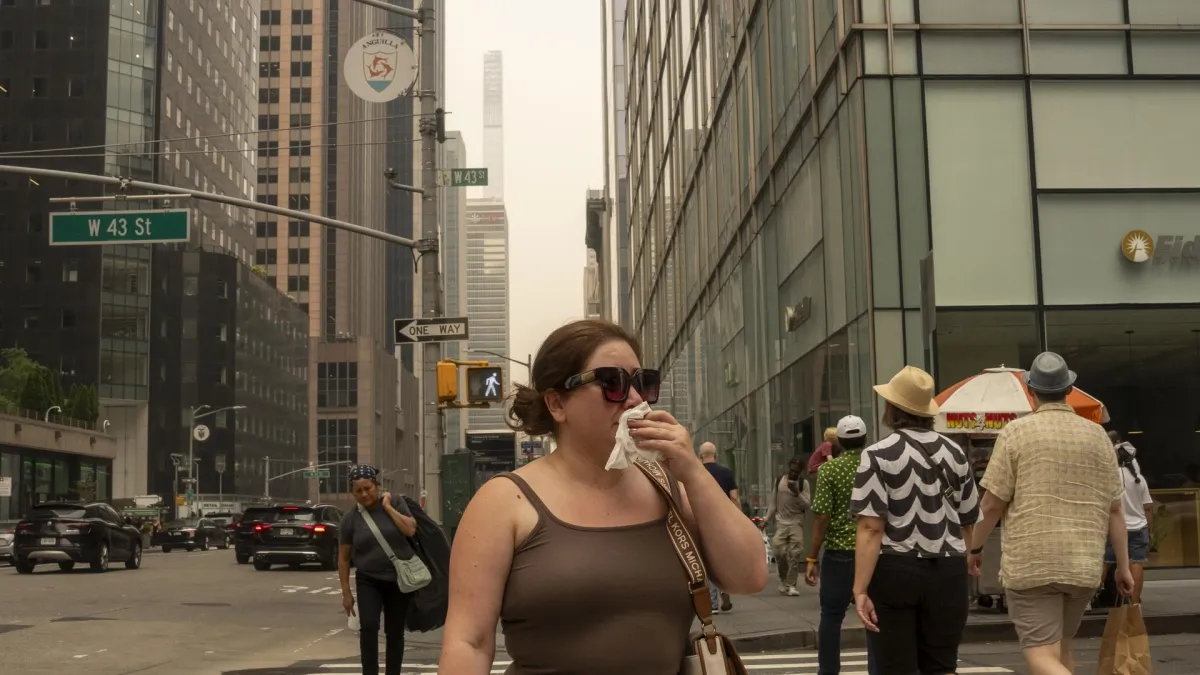
Incendios fuera de control en Canadá afectan a Estados Unidos por la propagación del humo: alerta en Detroit, Chicago, Nueva York y Washington
US President Donald Trump accused Canada of negligence and threatened to impose tariffs.
15
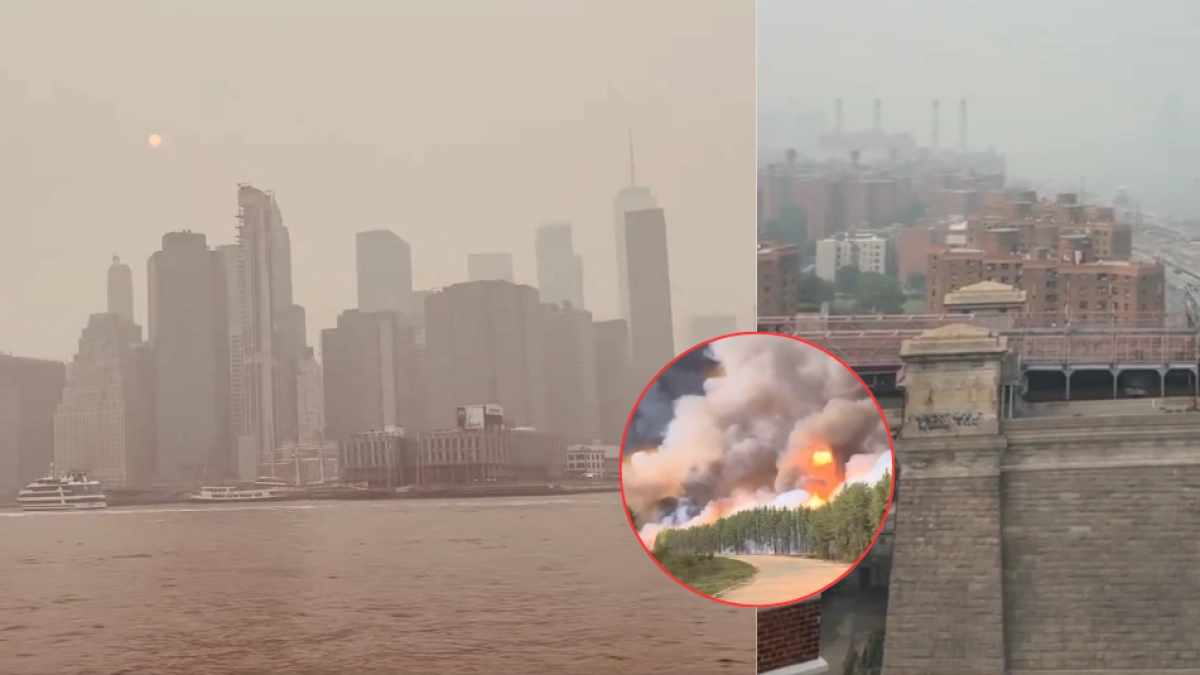
Cubierta de humo: así está Nueva York a pocos días de la final del Mundial 2026 por incendios forestales en Canadá; alerta por calidad del aire
Authorities activated prevention protocols as the columns of smoke advance towards several areas of the northeastern United States.
16
حرائق كندا تلقي بظلالها على نيويورك.. فيفا يحسم الجدل في موعد نهائي المونديال
Deteriorating air quality in New York - the result of wildfire smoke coming from Canada - has raised concerns about the 2026 World Cup final between Spain and Argentina.
AI read
What the coverage agrees on, and where it splits
This view is generated from the clustered articles, so it is best read as a map of coverage rather than a replacement for the source reporting.
Broadly agreed
- All covering sources confirm that Canadian wildfire smoke has reached multiple major US cities and created hazardous air quality conditions.
- Sources broadly agree that Trump has threatened additional tariffs against Canada, blaming Canada for the fires and their US impact.
Contested framing
- BBC and The Guardian frame the smoke as a climate crisis consequence requiring shared responsibility; Trump and Republican voices (as reported by Irish Times) frame it as Canadian negligence requiring economic punishment.
- Deutsche Welle and The Guardian emphasise technological and systemic adaptation responses; CNN and Straits Times focus on the immediate public health and logistics impact without deep climate-policy framing.
Still unclear
Whether Trump will formally implement new tariffs against Canada specifically tied to the wildfire smoke, and what legal basis such tariffs would use, has not been confirmed in available summaries.
Notable omissions
Most sources covering Trump's tariff threat avoid examining the scientific literature on how climate change is intensifying Canadian wildfires, while People's Daily and TASS provide no coverage of the event.
Quality check
Read carefully: Trump's tariff threat is real but uncertain legally; climate-causation debate present but not fully represented.
- Trump tariff threat legality and implementation status unconfirmed
- Scientific climate-change causation literature omitted from source set
- People's Daily and TASS absence limits non-Western framing
- Disagreement on climate crisis framing vs. negligence framing not well-balanced
Review confidence: 75%
Signal strength
3/5
Narrative divergence
10
Sources compared
1
Days in coverage
How each outlet frames this story
Divergence
3/5
Narrative Divergence
How differently the sources covering this story frame it — measured by tone, emphasis, and what each outlet chooses to highlight or omit.
1 — Sources frame the story almost identically
2 — Minor differences in tone or emphasis
3 — Noticeable differences; some outlets highlight what others omit
4 — Stark contrasts; conflicting narratives
5 — Sources tell fundamentally different stories
British
BBC reports Trump threatening new Canada tariffs over 'filthy' wildfire air while Canadian PM Carney says both countries share equal responsibility to fight climate change, which experts confirm; frames the story through institutional accountability and climate science credibility.
Irish
Irish Times covers Trump threatening Canada with sanctions over the wildfire smoke, highlighting Republican statements about acting to protect American people, framing the dispute as a test of US institutional decision-making on climate-adjacent issues.
German
Deutsche Welle reports on the smoke blanketing US cities and Trump's tariff threats against Canada, and covers AI and satellite tools being developed to fight wildfires faster, sustaining its structural adaptation and technology-solution framing.
Chinese
SCMP reports Trump blaming Canada for wildfire smoke and his threat to add costs to tariffs, framing it as part of broader US trade unilateralism rather than a climate governance issue.
Singaporean
Straits Times covers Trump's tariff threat against Canada over wildfire smoke as a concrete supply-chain and bilateral trade risk, consistent with its pragmatic facts-first infrastructure-vulnerability lens.
South African
Daily Maverick provides a Reuters wire report on Canadian wildfire smoke blanketing the US Midwest and Northeast with hazardous air, covering it as an environmental public health emergency without extensive political framing.
Colombian
El Tiempo covers the smoke alert in Detroit, Chicago, New York, and Washington, reporting Trump accused Canada of negligence and threatened tariffs, framing it through US executive accountability and civic consequence.
American
CNN provides before-and-after images of the dystopian haze over US skylines and reports that relief is coming, covering the story primarily as a public health and visual crisis without deep political interrogation of Trump's tariff threat.