Leftist President Lula has defeated right-wing challenger Flavio Bolsonaro to win another term in office. Bolsonaro has refused to concede and called for the results to be annulled.
How the world covered this
Read the editorial comparison
Prose synthesis of how each outlet framed the story, with side-by-side outlet quotes and divergence notes.
38 articles from 18 sources
01
02
Até o final da noite deste domingo (25) os líderes de Bolívia , México , Uruguai , Paraguai , Chile , Peru , Equador e Cuba haviam parabenizado o presidente Luiz Inácio Lula da Silva ( PT ) pela vitória sobre o senador…
03
Depois de fazer da defesa da soberania brasileira uma das bandeiras de sua campanha, Lula ( PT ) iniciará seu quarto mandato com um desafio central na política externa: administrar a relação com Donald Trump nos dois…
04
A imprensa internacional repercutiu na noite deste domingo (25) a reeleição do presidente Luiz Inácio Lula da Silva ( PT ), que derrotou o senador Flávio Bolsonaro ( PL ) no segundo turno das eleições . Leia mais…
05
A eleição brasileira -disputada entre o presidente Luiz Inácio Lula da Silva ( PT ) e Flávio Bolsonaro ( PL )- é destaque neste domingo (25) nos principais jornais do mundo. Leia mais (10/25/2026 - 15h14)
06
Países na Ásia , África e Oceania já encerraram a votação do segundo turno da eleição presidencial deste domingo (25). Leia mais (10/25/2026 - 14h39)
07
O ex-deputado federal Eduardo Bolsonaro esteve no colégio eleitoral de Miami , na Flórida, na manhã deste domingo (25). Em entrevista à Folha , o ex-deputado avaliou positivamente o desempenho do irmão no último debate…
08
El senador cuestionó la decisión judicial que extendió el horario de votación y aseguró que hubo una vulneración del derecho a la igualdad.

09
Oposición en el Congreso, polarización, deuda pública, inseguridad y tensiones con Estados Unidos figuran entre sus principales desafíos.

10
Los excandidatos a la presidencia de Colombia, Iván Cepeda y Claudia López, fueron contundentes en su mensaje.
11
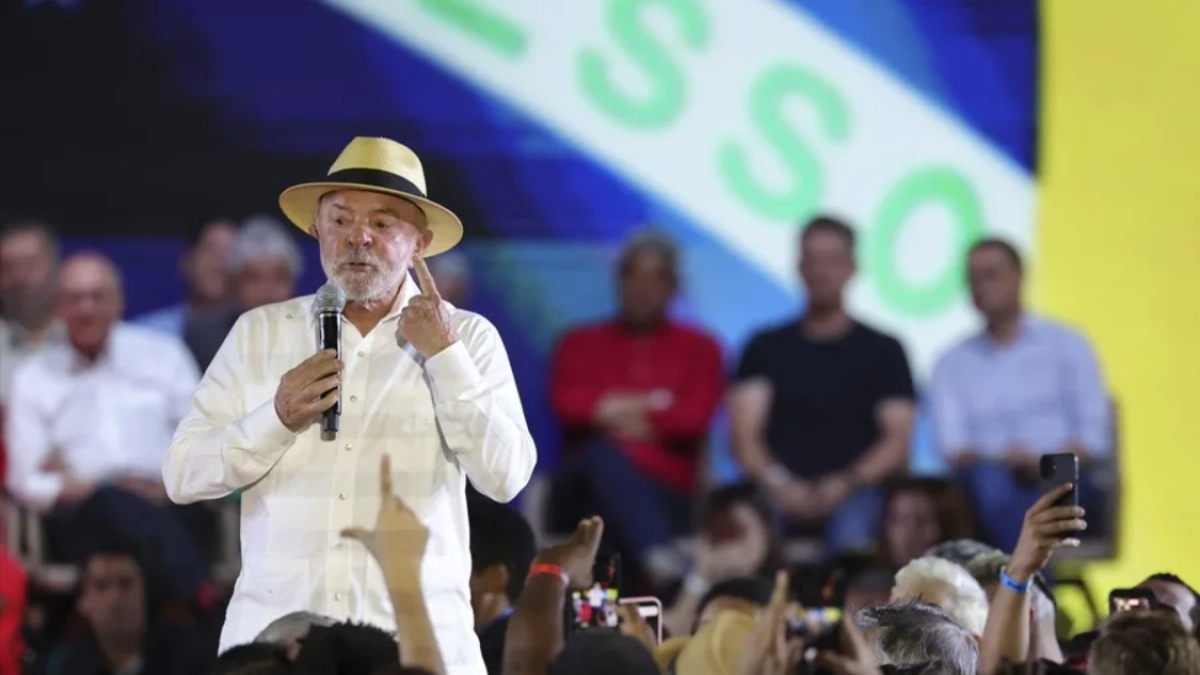
El heredero político del símbolo de la derecha brasileña perdió en el balotaje, con 59 millones de votos frente a los 64 millones de Lula.

12
El mandatario de 80 años fue reelegido por un estrecho margen frente a Flávio Bolsonaro y prolonga una trayectoria política de más de medio siglo.

13
Con más del 99 % del conteo, el dirigente de izquierda acumula más del 51 % de los votos, lo que representa más de 64 millones de respaldos.

14
أعيد انتخاب الرئيس البرازيلي اليساري المنتهية ولايته لويس إيناسيو لولا دا سيلفا الأحد لولاية رابعة غير متتابعة، بعد تغلبه على منافسه المحافظ فلافيو بولسونارو.
15
Il presidente confermato con il 51%. Spoglio rinviato di ore per le code ai seggi.
16
Ha chiuso la campagna saltando, per dimostrare di avere ancora le energie. Ma la democrazia è sotto assedio
17
Scelto dall’ex presidente golpista Jair, prometteva liberismo, conservatorismo religioso e autoritarismo penale. Ma non ha convinto
18
Brazilian President Luiz Inacio Lula da Silva won re-election on Sunday in a dramatic comeback after trailing in the first round, extending the rule of a government that has overseen record Chinese investment. The…

19
A Supreme Court justice in Brazil ordered polls in the presidential run-off to stay open for two more hours on Sunday, minutes after voting had officially ended at 5pm Brasilia time (4am on Monday in Hong Kong). The…

20
Lula won Brazil’s presidency with 51.8% of the vote, beating Flavio Bolsonaro on 48.2%.
21
In his third term, Lula is credited with restoring social programmes eroded by his predecessor.
22
SAO PAULO, Oct 25 - World leaders hailed the victory of Brazil's leftist President Luiz Inacio Lula da Silva in Sunday's presidential election runoff, as he defeated right-wing Senator Flavio Bolsonaro to secure a…
23
Public debt stands at over 82% of Brazil's GDP, and inflation is above the central bank's tolerance.
24
His competitor, Senator Flavio Bolsonaro, said he will ask for the result to be annulled.
25
SAO PAULO, Oct 25 (Reuters) - Brazilian President Luiz Inacio Lula da Silva won an unprecedented fourth term on Sunday, the country's electoral court said, in a shock result that defied polls, precedent and global…

26
Mr Lula’s victory now leaves Mexico and Brazil, Latin America’s two most populous nations, with left-wing leaders. The post President Lula da Silva of Brazil elected for fourth term appeared first on Premium Times…
27
Brazil's leftist President Luiz Inacio Lula da Silva pulled off a dramatic comeback on Sunday as he clinched election victory against right-wing Sen. Flavio Bolsonaro, who trounced him in the first round.
28
As the prospect of a Bolsonaro presidency caused a major concern among the young, especially about public education, healthcare and transport, millions of people joined weekly rallies across the country, pledging…

29
Lula plans a new round of debt relief, this time through discounted purchases of distressed household loans from banks, plus tax debt forgiveness for some small business owners

30
President Luiz Inacio Lula da Silva's victory was eked out in the 11th-hour after voters from his heartland rallied to the rescue.
31
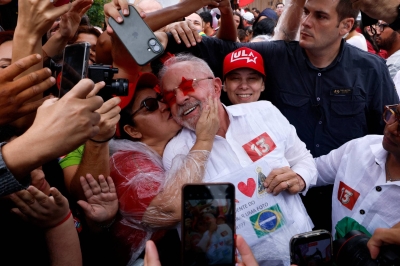
El líder brasileño creció en la pobreza, trabajó desde niño y encabezó movimientos sindicales durante la dictadura antes de fundar el Partido de los Trabajadores

32
Luiz Inácio Lula da Silva logró remontar durante la segunda vuelta de elecciones

33
La Jefa de Gobierno se pronunció en su cuenta de X, donde agregó que “frente a las sombras del neofascismo, nuestros pueblos levantan la bandera de la soberanía"


36
Dom Phillips warned that Jair Bolsonaro would make life more dangerous for reporters and the Amazon rainforest, and that his sons were even more extreme “Bolso shows all signs of fascism, as do his supporters,” the…
37
Нью-Дели и Бразилиа продолжат работать над созданием справедливого мира, заявил премьер-министр республики
38
Claiming historic fourth term in power, 80-year-old leftist received 51.75% of the vote

AI read
What the coverage agrees on, and where it splits
This view is generated from the clustered articles, so it is best read as a map of coverage rather than a replacement for the source reporting.
Broadly agreed
- All covering sources confirm Lula won with approximately 51.8% of the vote in the second round, defeating Flavio Bolsonaro.
- Multiple sources confirm Flavio Bolsonaro has refused to accept the result, calling the process 'unacceptable' and seeking annulment.
- Sources broadly agree Lula faces serious economic challenges including high public debt, inflation above target, and a hostile Congress.
Contested framing
- Le Monde and SCMP emphasise the election chaos caused by the court's extension of voting hours, framing it as contributing to instability; CNN and Daily Maverick do not foreground this procedural controversy.
- CNN frames Lula's win primarily as a defeat for the Trump-aligned Latin American right-wing wave; Folha de S.Paulo and The Hindu focus more on Brazil's internal economic and governance challenges ahead.
- La Repubblica frames the result as a victory for democracy under siege; El Tiempo focuses more on Bolsonaro's refusal and the divisive outcome rather than democratic consolidation.
Still unclear
Whether Bolsonaro's annulment challenge will advance through Brazilian courts and whether it will trigger political instability or institutional crisis remains unconfirmed.
Notable omissions
People's Daily and TASS provide minimal substantive coverage of the political implications, avoiding analysis of what the leftist victory means for global alignment or US-China-Brazil relations.
Quality check
Core facts are solid, but geopolitical framing of regional implications is more contested than consensus suggests.
- Overclaiming about 'Trump-aligned Latin American right-wing wave' halting: sources show mixed Latin American responses, not unified rightward trend.
- Bolsonaro's annulment challenge outcome remains purely speculative; framed as fact risk.
- Minimal coverage from People's Daily and TASS limits geopolitical perspective on US-China-Brazil realignment implications.
- Vote margin of 51.8% is narrow; 'dramatic comeback' language may overstate the decisiveness.
Review confidence: 85%
Signal strength
3/5
Narrative divergence
18
Sources compared
1
Days in coverage
How each outlet frames this story
Divergence
3/5
Narrative Divergence
How differently the sources covering this story frame it — measured by tone, emphasis, and what each outlet chooses to highlight or omit.
1 — Sources frame the story almost identically
2 — Minor differences in tone or emphasis
3 — Noticeable differences; some outlets highlight what others omit
4 — Stark contrasts; conflicting narratives
5 — Sources tell fundamentally different stories
German
Deutsche Welle frames the election as a high-stakes ideological contest decided between leftist Lula and right-wing Bolsonaro, noting the close result without taking a side.
Brazilian
Folha de S.Paulo emphasises the historic nature of Lula's fourth term, international press reaction, concerns over Trump's interference in Brazilian affairs, and Lula's challenge of governing against a hostile Congress and managing US relations.
Colombian
El Tiempo stresses the slim margin of victory, Bolsonaro's refusal to accept results calling the process 'unacceptable', and the governance challenges Lula faces including congressional opposition and economic pressures.
South African
Daily Maverick describes Lula as Brazil's iconic working-class president winning an unprecedented fourth term, framing it as a democratic achievement.
Italian
La Repubblica frames Lula as the last bulwark of South American left, noting democracy is under siege, and covers Bolsonaro's defeat as personal and dynastic failure.
Indian
The Hindu focuses on the five economic challenges Lula faces including debt relief, public debt at 82% of GDP, and inflation above the central bank's tolerance band.
Singaporean
Straits Times emphasises Lula winning with 51.8% of the vote and Flavio Bolsonaro's announcement he will seek annulment of the result.
Nigerian
Premium Times notes Lula's victory leaves both Mexico and Brazil with left-wing leaders, framing it as a hemispheric left turn.
Japanese
Yahoo Japan reports Lula's reelection in brief factual format without editorial framing.
South Korean
Korea Herald provides a factual account of Lula defying odds to clinch victory in a dramatic comeback.
Russian
TASS briefly notes Modi congratulated Lula, framing it through the lens of India-Brazil continued cooperation toward a fair world order.
Mexican
El Universal frames Lula's win as inspirational to left-leaning Mexican leaders, with the Mexico City chief of government saying it 'lights a flame of continental hope'.
Irish
Irish Times provides a factual report of Lula's historic fourth term with 51.75% of the vote, noting his age of 80.
British
The Guardian profiles Dom Phillips, the journalist who warned of Brazil's authoritarian trajectory under Bolsonaro, framing the election as vindication of democratic resistance.