US strikes hit Iran for seventh consecutive night
The US command says it is conducting more strikes to degrade Iran's armed forces, as Iran reports explosions near the Strait of Hormuz.

Seven consecutive nights of US strikes on Iran, Iranian retaliatory attacks on Gulf states, and mine explosions blocking Strait of Hormuz shipping threaten a wider regional war with global oil-supply...
BBC News leads with the US military's characterisation of strikes as targeting armed forces capabilities, while reporting Iranian claims of explosions near the Strait of Hormuz. Folha de S.Paulo explicitly frames the strikes as hitting bridges and airports—civilian infrastructure—and reports the US denial of responsibility for tanker explosions, establishing a factual dispute. The Hindu integrates both the Iranian casualty claims and the Guard's account of mine-caused tanker explosions without adjudicating between versions.
Le Monde reports Tehran's counter-strikes on American radar installations and bases in Syria alongside the casualties from US strikes, foregrounding the tit-for-tat escalation cycle. The Hindu separately emphasises India's interests at Chabahar port, which has become a repeated strike target, narrowing the focus to regional economic infrastructure vulnerability rather than the broader conflict dynamics.
US strikes hit Iran for seventh consecutive night
U.S., Iran escalate strikes across West Asia
American attacks overnight in Iran left eight dead and 20 injured
US escalates war in Iran with attacks on bridges and airport
The full civilian casualty toll from US strikes on Iranian infrastructure and the precise cause and responsibility for the Hormuz tanker explosions remain unverified.
People's Daily and Gazeta.uz are entirely silent on the US-Iran conflict; TASS covers the topic only through the lens of US robot warfare speculation by a State Duma deputy, omitting Iranian civilian casualties.
BBC leads with US strikes hitting Iran for a seventh consecutive night, emphasising Iranian claims of civilian infrastructure damage and documenting decision-maker accountability around the escalation.
The Hindu frames the conflict through India's strategic autonomy lens, noting US strikes damaged Chabahar port while India explicitly says its terminal was unaffected, underscoring India's independent positioning.
Folha de S.Paulo focuses on the human cost — oil tanker explosions from mines, bridges and airports struck — framing the US escalation as an institutional decision requiring accountability.
CNA reports Iran's renewed attacks on Gulf states after another US strike night, with terse focus on naval blockade enforcement and shipping disruption as operational logistics problems.
Straits Times explains why fuel prices could spike this time compared with past crises, analysing the world's reduced capacity to absorb an oil crunch if the conflict drags on.
Times of Israel reports Kuwait army wounded in Iranian drone attack and Iran warning Hormuz is a red line, framing Iran as the regional aggressor threatening allied infrastructure.
Yahoo Japan headlines 'US-Iran risk of all-out war increases' and notes the naval blockade's limited impact on Iran, treating the conflict as a macro-risk event for Asian energy security.
Japan Times frames the crisis as an Asian energy-security and supply-chain problem, reporting tanker explosions from Hormuz mines and US strike continuations through a corporate-resilience lens.
The National reports Iran launching strikes across the region after the seventh night, while separately examining the UAE's Hormuz workaround pipeline as a trillion-dollar vulnerability requiring Gulf strategic autonomy.
Dawn reports Pakistan will set fuel prices daily due to Persian Gulf hostility fluctuations, treating the war primarily as a domestic energy-cost governance challenge.
Premium Times explains why renewed Hormuz fighting will prevent Nigerians from getting cheaper petrol, grounding the conflict in its domestic fuel-price consequence.
SCMP analyses whether US intense attacks have failed to sway Iran and examines Hormuz maritime security through structural institutional vulnerability rather than military-capability framing.
La Repubblica reports Iran attacking bridges, power plants and Kuwait desalination infrastructure, noting a water alarm for Kuwait amid the escalating strike exchange.
El Tiempo reports Iran extending attacks in the Middle East after the new US bombing wave, positioning it as a US institutional decision-making accountability issue.
This page maps the coverage. The 34 articles below are the original reports the comparison is drawn from — open them for each publisher's full reporting.
The US command says it is conducting more strikes to degrade Iran's armed forces, as Iran reports explosions near the Strait of Hormuz.
Iranian officials say recent U.S. strikes have killed dozens of people and wounded hundreds, with new casualties reported Friday, when the US military also acknowledged more injured service members.

The Guards said separately on Saturday (July 18) that they had "stopped" four ships trying to transit the Strait of Hormuz

Chabahar port has been a repeated target of American airstrikes; India operates one of the two terminals at the port

Tehran claimed to have struck American radars in Oman as well as the Al-Tanf military base in Syria. Kuwait, Qatar and Bahrain were also attacked.
Iran's Revolutionary Guard said on Friday night (17), early Saturday morning local time, that two oil tankers exploded after colliding with naval mines in the Strait of Hormuz. The United States,…
The United States intensified bombings against Iran this Friday (17), hitting bridges and an airport, and Tehran responded with attacks on American bases across the Middle East. Read more (07/17/2026 -…
The United States intensified bombings against Iran this Friday (17), hitting bridges and an airport, and Tehran responded with attacks on American bases across the Middle East. Read more (07/17/2026 -…
Iran accused U.S. forces of targeting civilian infrastructure, including an airport, a railway station and two bridges, and said it had struck U.S.
Tehran says the US strikes hit bridges, while the US boards a ship in the Strait of Hormuz.

U.S. forces reported striking Iran for the seventh consecutive night with attacks designed to "continue degrading Iranian military capabilities."
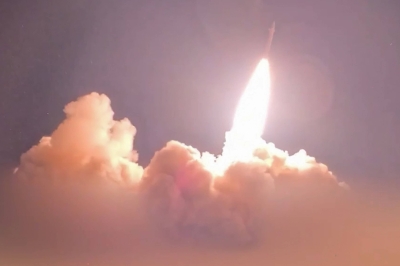
Iran launched renewed attacks on US Gulf allies on Saturday after a seventh straight night of US strikes targeting Iranian military sites including logistics infrastructure, escalating the war one week after a fragile…


WASHINGTON, July 17 - The U.S. military said late on Thursday it completed its latest wave of strikes on Iran that were carried out at President Donald Trump's direction and marked a seventh consecutive night of…
Washington and Tehran have been testing the limits of escalation since their ceasefire agreement collapsed.
Kuwaiti air defense forces intercept Iranian drones
Changes in the schedule are related to Iranian attacks, the company explained
Kuwait army says Iran drone attack wounded several personnel The Times of Israel
Iran says Hormuz a red line, warns of attacks on regional infrastructure The Times of Israel
US expands strikes into Tehran area as Iran threatens to ‘resist until the end’ The Times of Israel
Report: Iran tells regional allies, Hezbollah to prepare for broader conflict The Times of Israel
Iran hits a desalination plant. Mysterious assault in eastern Syria.
The US offensive left at least eight dead. Tehran claimed to have attacked radars in Syria, a version that was denied by Damascus.
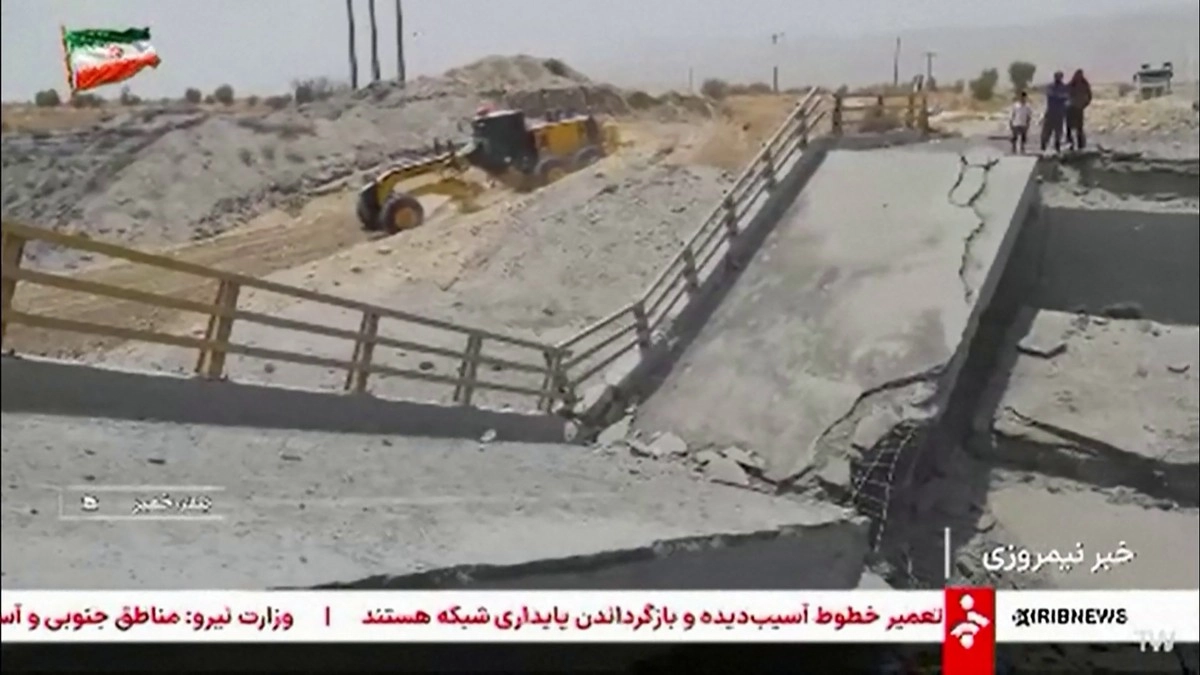
Petroleum Minister Ali Pervaiz Malik on Friday said that fuel prices would now be fixed on a daily basis due to fluctuations in international market prices following renewed hostilities between Iran and the US. The…

Many Nigerians clamoured that petrol prices should return to the pre-war level. The post Nigerians want cheaper petrol, but renewed Hormuz battle won’t make that happen appeared first on Premium Times Nigeria .
Petroleum Minister Ali Pervaiz Malik on Friday said that fuel prices would now be fixed on a daily basis due to fluctuations in international market prices following renewed hostilities between Iran and the US. The…
Turkiye is crisscrossed by several geological fault lines that have previously caused catastrophes in the country.