Senate walks back rebuke of Trump over Iran war - CNN
Senate walks back rebuke of Trump over Iran war CNN
The U.S.-Iran war has formally ended but a fragile preliminary deal is being negotiated while Congress rebukes Trump, Gulf allies express deep anxiety, and Iran claims victory — with the Strait of Hormuz...
Times of Israel presents the preliminary U.S.-Iran deal as appeasement, publishing a poll showing 92% of Israelis believe Iran won the conflict and emerged victorious from negotiations. Deutsche Welle and German analysis, by contrast, frame the same agreement as a fragile but functional de-escalation mechanism that provides Iran with an economic lifeline while constraining military escalation—a fundamentally more positive assessment of the deal's stabilizing potential.
Daily Sabah frames Turkey and President Erdoğan as indispensable restraining forces who kept Turkey out of the war at Trump's request, attributing significant diplomatic agency to Turkish mediation. Al Jazeera Arabic, meanwhile, focuses on Secretary of State Rubio's reassurances to Gulf states regarding the Strait of Hormuz without crediting or mentioning Turkish mediation, presenting a different hierarchy of diplomatic actors.
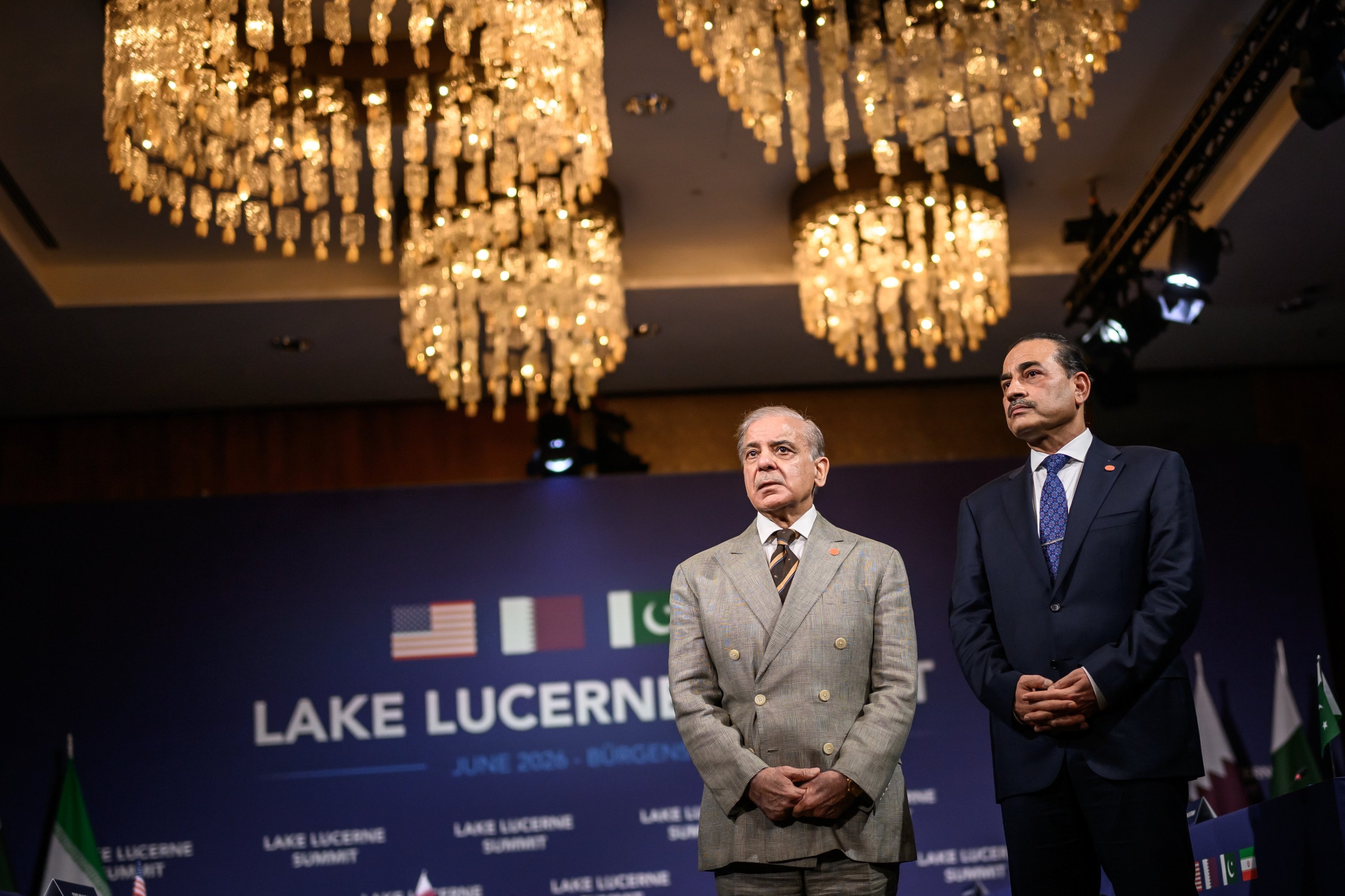
Pakistani Dawn credits General Asim Munir as a key architect of the U.S.-Iran talks, attributing decisive diplomatic agency to Pakistani leadership. No other outlet in this set acknowledges Pakistan's significant role, revealing a gap in how different regional outlets attribute diplomatic credit for the same negotiated outcome.
Senate walks back rebuke of Trump over Iran war
Trump asks Congress for $87bn mostly for Iran war costs
Iran offering very big concessions ahead of next talks
Iran negotiator says peace in Lebanon as important as war's end
Whether Iran will accept IAEA nuclear inspections as part of a preliminary or only a final deal remains unresolved, with Tehran and Washington giving contradictory public signals about the modalities.
Russian outlet TASS is largely absent from coverage of the diplomatic negotiations, consistent with its pattern of avoiding analysis of Western diplomatic achievements; People's Daily is similarly silent on U.S.-Iran diplomacy.
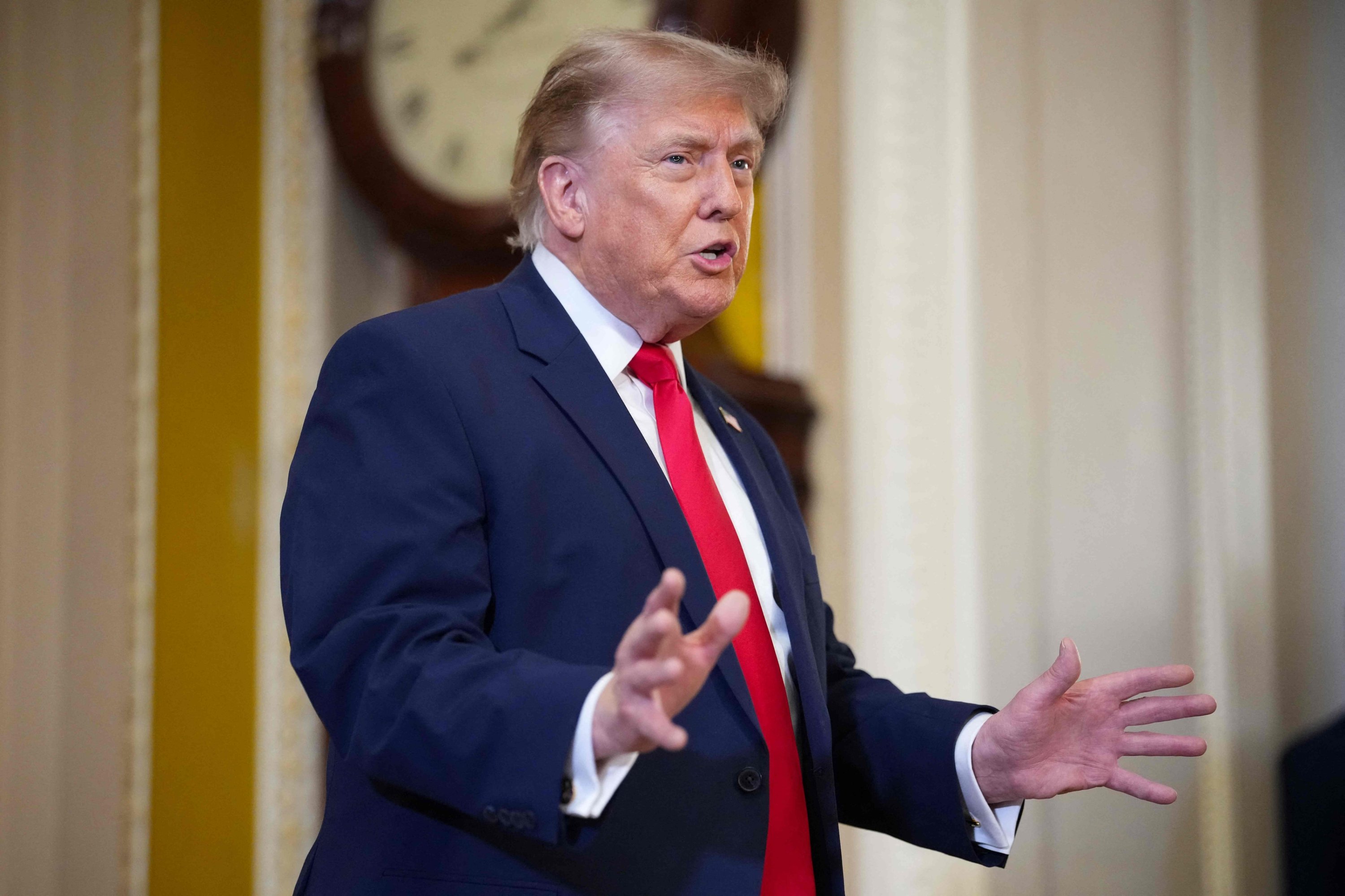
CNN reports the Senate initially rebuked Trump over the Iran war but then walked it back; separately covers Trump's $87 billion emergency request to Congress for war costs, describing it as facing 'an uphill battle.'
BBC News frames the $87 billion request as 'mostly for urgent Iran war costs' and notes it comes a day after Congressional rebuke, emphasising institutional friction.
Dawn highlights Pakistan as a key mediator — crediting army chief Asim Munir for enabling U.S.-Iran talks in Switzerland — and reports Pakistan linking Iran trade to sanctions relief, positioning the country as a diplomatic beneficiary.
Daily Sabah positions Trump's signals on the F-35 for Turkey and praise of Erdogan as linked to Turkey's role in restraining itself from joining Iran, framing Turkey as an indispensable broker.
Al Jazeera Arabic reports Rubio confirming Gulf states' interests and freedom of navigation in Hormuz will be protected in negotiations, framing this as a reassurance to Arab allies.
Times of Israel publishes a poll showing 92% of Israelis believe Iran emerged as the winner after the war and deal; also runs an opinion piece calling Trump's Iran diplomacy 'appeasement with dark echoes.'
Daily Maverick carries Reuters reporting that three ICC judges sued Trump and his administration over sanctions, presenting U.S. actions as generating international legal accountability challenges.
Le Monde reports Iran has intensified internal repression since the war, with NGOs warning of continued crackdowns even as diplomatic nuclear and sanctions discussions proceed.
SCMP presents eight analytical takeaways from the U.S.-Iran war with a structural vulnerability lens, and separately reports Trump casting doubt on U.S. responsibility for the girls' school strike.
Straits Times reports Rubio visiting Bahrain to sell the Iran accord to sceptical Gulf Arab allies, framing it as a diplomatic salesmanship challenge.
The National reports Trump facing sharp criticism from fellow Republicans over the Iran war, framing the domestic political friction as a significant constraint on U.S. policy.
The Hindu covers IAEA chief's statement that Iran inspections will go ahead while working on modalities, and U.S.-Qatar pressure on the EU to change methane rules linked to supply security.
Folha de S.Paulo reports Trump asking Congress for almost $90 billion for ammunition replacement and covers the Senate resolution limiting military action, emphasising institutional accountability framing.
Yahoo Japan covers the U.S.-Iran deal and Israeli public anxiety as linked stories, and separately notes the shouting match between Trump and a Republican senator.
This page maps the coverage. The 31 articles below are the original reports the comparison is drawn from — open them for each publisher's full reporting.
Senate walks back rebuke of Trump over Iran war CNN
But the budget faces an uphill battle, coming a day after lawmakers rebuked Trump's military action.

United States President Donald Trump faced pointed criticism over the Iran war in a closed-door meeting with fellow Republicans on Wednesday, shortly before his administration asked Congress for tens of billions of…
US President Donald Trump said on Wednesday it may never be known who was at fault for a deadly strike on a girls’ school in Iran on February 28, the first day of the Iran war , that killed scores of children. Reuters…
Iran's foreign ministry accused NATO of "active complicity" in the "unlawful war", after the NATO secretary general said hundreds of American planes had launched from bases in Italy.

U.S. President Donald Trump said Wednesday that Iran was making significant concessions in ongoing negotiations, expressing optimism ahead of a new round of talks scheduled for nex...
Iran's main negotiator, Mohammad Bagher Ghalibaf, stated this Wednesday (24) that peace in Lebanon is as important as putting an end to the conflict in the Persian country. The statement comes amid negotiations with…
The President of the United States, Donald Trump, attacked American senators after the Senate approved on Tuesday (23) a resolution that seeks to limit his war powers. The measure may suspend, for example,…
The President of the United States, Donald Trump, asked Congress this Wednesday (24) for an extraordinary contribution of US$ 88 billion (R$ 460 billion) with the objective of, mainly, replenishing the ammunition stocks of…
The IAEA (International Atomic Energy Agency) stated this Wednesday (24) that inspections of Iran's nuclear program will be resumed, but that their scope still needs to be defined in negotiations between the…
أكد وزير الخارجية الأمريكي ماركو روبيو مراعاة بلاده مصالح دول الخليج في المفاوضات مع إيران، مشددا على السعي لضمان حرية الملاحة في مضيق هرمز دون رسوم بدعم دولي واسع.
U.S. Secretary of State Marco Rubio met with the leaders of the United Arab Emirates and Kuwait on Wednesday, pledging that Washington would not compromise Gulf security as he soug...

ABU DHABI/ KUWAIT CITY: US Secretary of State Marco Rubio discussed the US-Iran deal with UAE and Kuwaiti leaders on Wednesday, renewing Washington’s commitment to the Gulf states’ security as he embarked on a tour of…
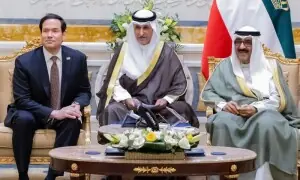
Rubio is on a regional tour to reassure Gulf states targeted by Tehran’s missiles and drones during the conflict.
Tehran has emerged emboldened from the war, vowing not to relinquish control of the Strait of Hormuz and going so far as to call its initial deal with Washington to stop the fighting "a declaration of America's defeat
US Secretary of State Marco Rubio met the leaders of the United Arab Emirates and Kuwait on Wednesday, vowing not to undermine their security as he sought to reassure Gulf allies sceptical of a proposed deal to end the…
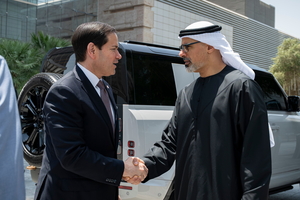
The war in Iran is effectively over. Although the dust has yet to settle, some lessons are already visible.

The international nuclear watchdog responsible for verifying Iran’s stockpile of near-bomb-grade uranium dismissed the conflicting signals from Tehran and Washington overnight and said it expects to resume full…


Rubio: Iran will not be allowed to charge tolls in Strait of Hormuz under any final deal The Times of Israel
Poll: 92% of Israelis believe Iran emerged as winner after war and deal with US The Times of Israel
In Trump's delusions of peace with Iran and efforts to bully Israel, dark echoes of appeasement The Times of Israel
Mr Trump said he had seen no evidence linking the United States to the attack and suggested that the school may have been hit amid the barrage of missiles exchanged during the Iran war. The post Trump doubts US…
WASHINGTON, June 24 (Reuters) - US President Donald Trump said on Wednesday it may never be known who was at fault for a deadly strike on a girls’ school in Iran on February 28, the first day of the Iran war, that…
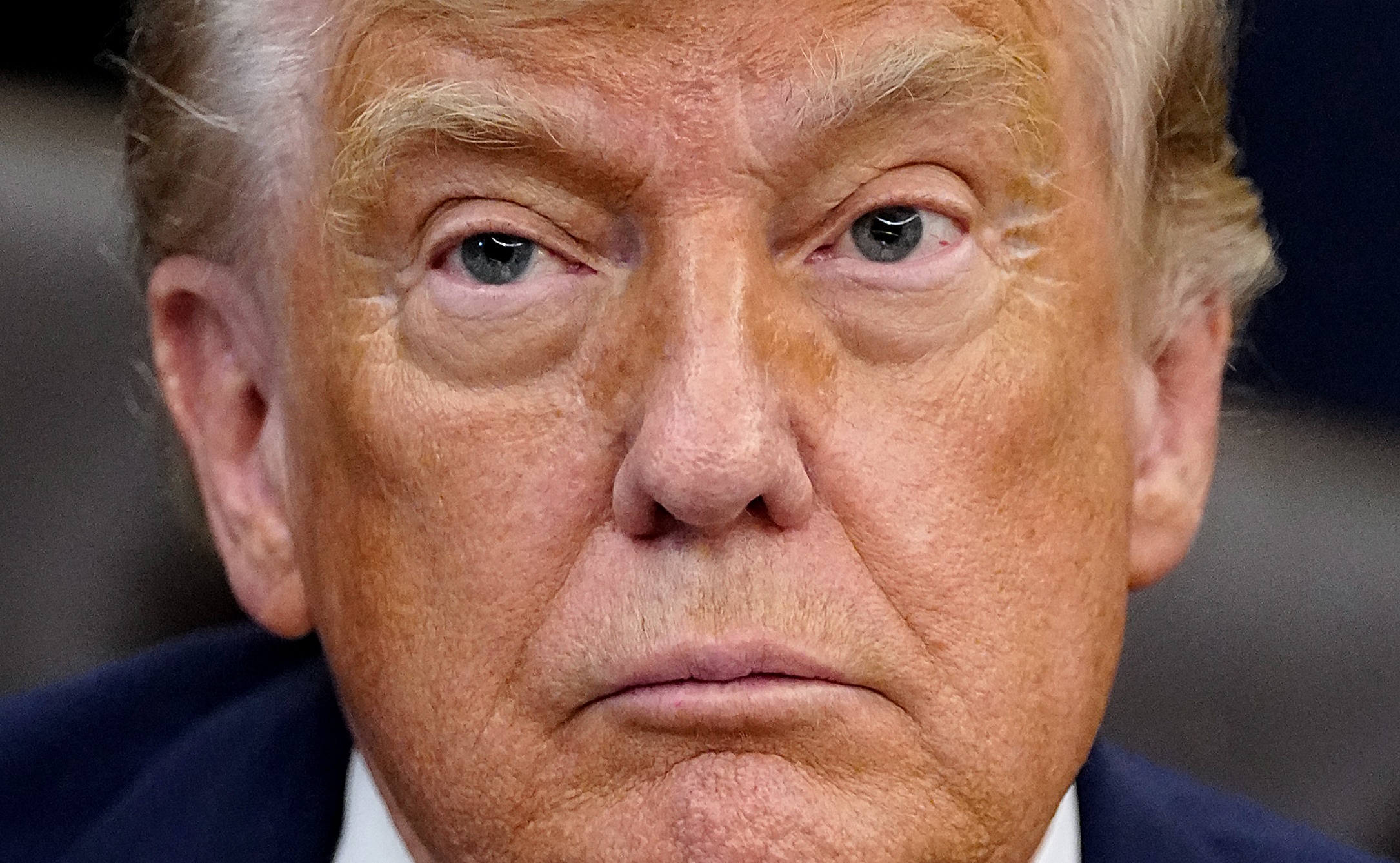
US President Donald Trump said on Wednesday it may never be known who was at fault for a deadly strike on a girls’ school in Iran on February 28, the first day of the Iran war, that killed scores of children. Reuters…

The strike on Feb 28, when the US and Israel attacked Iran, killed more than 175 children and teachers.
It was another example of how the war has weighed on Trump ahead of November elections.
The Senate adopted on Tuesday a resolution already approved by the House of Representatives. Four Republican elected officials joined the Democratic votes.
When U.S. Vice President JD Vance arrived in Switzerland this week for the highest-level direct American-Iranian engagement ever held on foreign soil, he paused before the cameras...