Congress passes war powers measure for first time, rebuking Trump's war with Iran
The resolution is largely symbolic, but it adds to pressure on the White House to end the conflict once and for all.

The US Congress has for the first time passed a War Powers resolution rebuking Trump's war with Iran, while the US and Iran publicly contradict each other on nuclear inspection agreements and Strait of Hormuz...
BBC News leads with the War Powers resolution as a symbolic but meaningful institutional rebuke, while The Hindu frames it as part of broader Senate efforts to stop the war, noting this was the 10th attempt. BBC also reports Iran's denial of new nuclear commitments after Swiss talks, directly contradicting Trump administration claims about inspector access.
On the Strait of Hormuz, BBC emphasises US Secretary of State Rubio's warning that no country can charge passage fees, while separately reporting 42 ships transited on Saturday following the ceasefire deal. The Hindu and BBC align in covering IAEA chief expectations that Iranian nuclear sites "will" be inspected, but Iranian Foreign Ministry statements deny making fresh concessions on this point.
Neither TASS nor People's Daily appear in the available articles, limiting assessment of their coverage silence. The focus across represented outlets remains on institutional US processes (Congress, State Department) and contradictory Iranian-US claims over inspection and maritime access.
Whether the preliminary US-Iran deal will translate into verified nuclear inspection access or a durable ceasefire, given direct public contradictions between both governments on core terms.
People's Daily and TASS provide minimal coverage of the institutional and civilian dimensions of the Iran conflict; TASS focuses on Ukrainian infrastructure strikes and Russian domestic news, effectively insulating its audience from the Iran story's global significance.
BBC foregrounds the War Powers resolution as a symbolic but significant institutional rebuke of Trump, emphasising civilian consequence documentation and scrutinising whether claims about the Iran deal can be verified.
CNN focuses on the political drama of the Senate vote, Trump's characterisation of Congress as 'giving comfort to the enemy', and the live unfolding of Democratic primary wins linked to the anti-war mood.
Folha de S.Paulo foregrounds individual suffering — Iran's president invoking Gaza to justify missiles — and frames Trump's Iran deal as a case of presidential self-interest overriding institutional norms, drawing parallels to FDR's executive expansion.
Al Jazeera Arabic reports Qatari PM discussing Hormuz understandings and Lebanon linkage, positioning Qatar as an active diplomatic intermediary and foregrounding conflicting US-Iran nuclear inspection accounts.
The Hindu maintains non-aligned framing, covering the IAEA chief's signals on inspections and the Senate War Powers vote as institutional processes without endorsing either US or Iranian positions.
Daily Sabah frames the US-Iran understanding as having sidelined Netanyahu and reshaping Lebanon's security architecture, emphasising Turkish institutional positioning in the region.
Yahoo Japan highlights Israeli public anxiety over the US-Iran deal and the implications of nuclear inspection disagreements, framing the story through regional security uncertainty affecting Japanese interests.
Dawn covers the Senate resolution, Iran's regional security overtures, and Karachi port investment growth from Iran war cargo diversion, treating the conflict's economic fallout as locally significant.
Straits Times and CNA cover Hormuz shipping flows, US-Iran deal disputes, and Rubio's Middle East tour through a supply-chain and logistics lens, emphasising operational consequences over military framing.
SCMP analyzes Hormuz maritime security through structural institutional vulnerability, treating it as a supply-chain coherence problem in China-US competition dynamics.
This page maps the coverage. The 32 articles below are the original reports the comparison is drawn from — open them for each publisher's full reporting.
The resolution is largely symbolic, but it adds to pressure on the White House to end the conflict once and for all.
US Secretary of State Marco Rubio warned Iran that no country can charge fees for ships to travel through the strait.

Traffic in the waterway has risen since the US and Iran signed a deal aimed at ending the war, including 42 ships on Saturday alone.

Iran's foreign ministry says it made "no new commitments" on nuclear inspections after talks in Switzerland.

Marco Rubio is in the UAE to ease concerns over tentative Iran deal; U.S. Senate approves War Powers resolution
A spokesperson for the Iranian Foreign Ministry, Esmail Baghaei, said any agricultural purchases would be based on "prices and quality," not terms dictated by Washington

It was the 10th time the Senate has tried to stop the war, and the outcome, on a vote of 50-48, was a stunning turnaround from past efforts

IMO says it has secured necessary safety guarantees, verified the conditions for safe navigation; operation involves cooperation with U.S., Iran, Oman, other coastal States in the region

Mr. Rubio arrived in Abu Dhabi late on Tuesday (June 23, 2026) following a two-day flurry of diplomatic activity between the U.S.

Only 23% of Americans — including just half of Republicans — think the U.S. is now in a stronger position with Iran compared with its position before the war

The president of Iran, Masoud Pezeshkian, stated this Tuesday (23) that the country's missile program is indispensable for its defense and will not be subject to negotiation in diplomatic talks. According to him, without this…
The United States Senate approved this Tuesday (23) a resolution that seeks to limit Donald Trump's war powers and could suspend, for example, all military action or threats made by the Republican leader...
Certainly something about this preliminary agreement between the United States and Iran must have seemed familiar to the American real estate mogul president. After all, it reads like a real estate bankruptcy filing - an act…
The President of the United States, Donald Trump, stated this Tuesday (23) that Iran has agreed to allow permanent nuclear inspections, but Tehran denied the existence of any agreement in this regard,…
Iranian President Masoud Pezeshkian said on Tuesday that Iran's missile program is non-negotiable, arguing that the country would have ended up 'just like Gaza' without its ba...
Prime Minister Benjamin Netanyahu has been sidelined by a new U.S.-Iran understanding that has curtailed Israel's freedom of action in Lebanon and altered the regional balance...

Both sides appear to be in conflict over major aspects of the framework deal they recently signed.
WASHINGTON: The US Senate has passed a largely symbolic resolution on Tuesday, calling for an end to President Donald Trump’s war with Iran, delivering a fresh rebuke to the White House as it tries to negotiate a…
JERUSALEM: A former Israeli prime minister acknowledged on Tuesday that Israel had smuggled Starlink internet receivers into Iran to help anti-government protesters, though he said Prime Minister Benjamin Netanyahu’s…
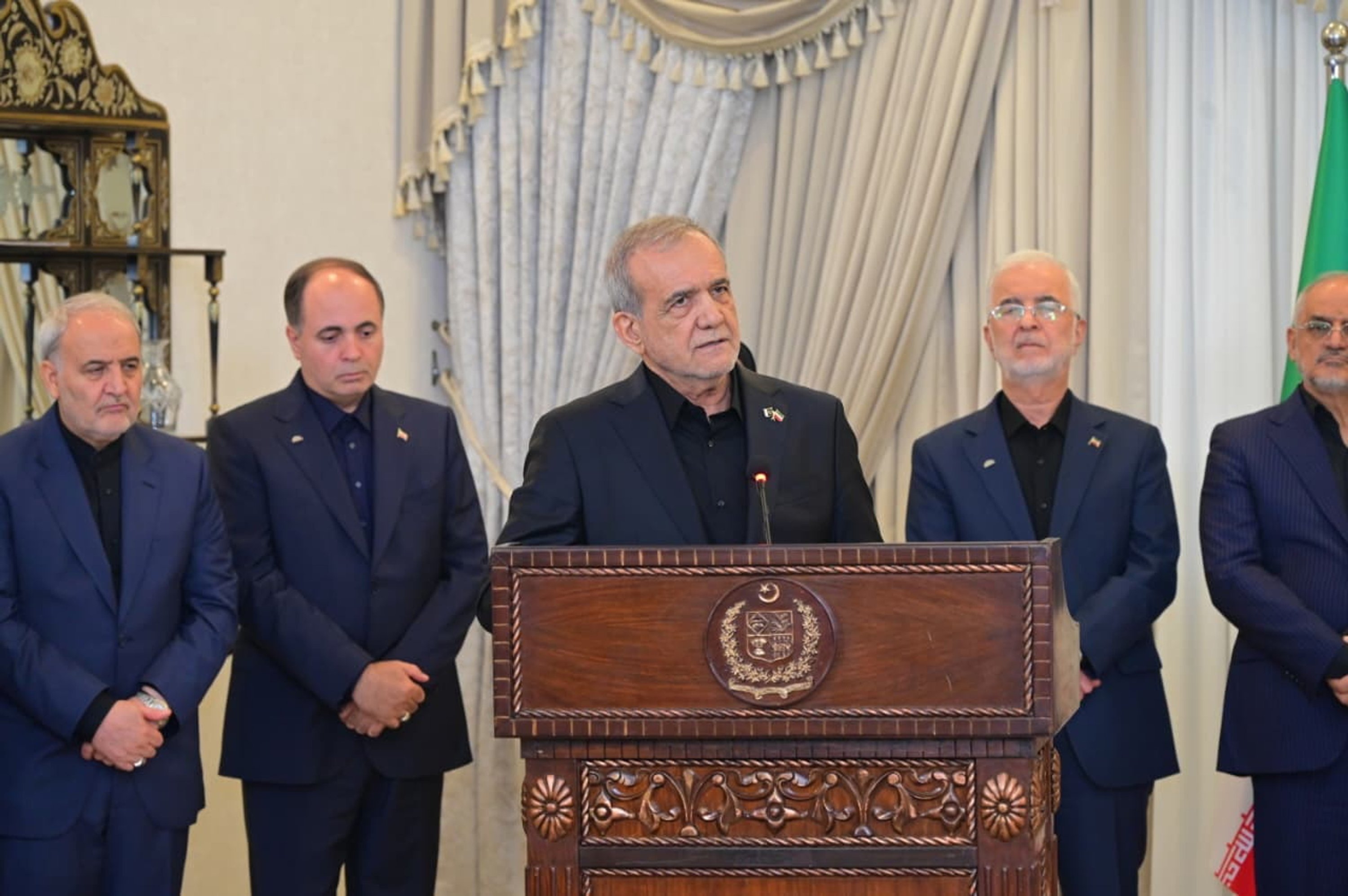
Iran’s President Masoud Pezeshkian on Tuesday called for a “united front” of Muslim nations, extending “hands of friendship” for a new regional security structure. Key developments Iranian president holds “ productive ”…
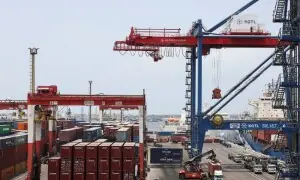
The Karachi Gateway Terminal Ltd (KGTL) is planning up to $100 million in new investment within five years as Pakistan tries to cut freight costs and turn a cargo surge triggered by the Iran war into longer-term…
Washington and Tehran, which held a first round of negotiations in Switzerland that ended on Monday, presented conflicting narratives about Iran's financial incentives, control of the Strait of Hormuz, and the parallel war waged by Israel in Lebanon.
US President Donald Trump on Tuesday insisted that Iran has agreed to “highest level” nuclear inspections even as Iranian officials disputed his claim, exposing how much remains contested even with a tentative agreement…

ABU DHABI, June 24 - U.S. Secretary of State Marco Rubio begins a Middle East tour in earnest on Wednesday, seeking to reassure Gulf allies who view concessions in President Donald Trump’s Iran deal that include a…
Russia has accused the US of failing to deliver on “understandings” reached between presidents Vladimir Putin and Donald Trump at a summit in Alaska last August, a shift that suggests growing frustration in Moscow. In…

Russia is considering fuel imports and corresponding subsidies to cap prices as ways to mitigate supply disruptions of petrol and diesel caused by Ukrainian strikes on oil refineries, Vedomosti daily reported on…

Iran's foreign ministry says it made "no new commitments" on nuclear inspections after talks in Switzerland.
Senate votes to limit Trump’s Iran war powers in rare rebuke CNN
Trump keeps claiming Iran made concessions. Iran keeps denying them CNN
Iranian President Masoud Pezeshkian said on Tuesday that Iran's missile program is non-negotiable, arguing that the country would have ended up 'just like Gaza' without its ba...
Prime Minister Benjamin Netanyahu has been sidelined by a new U.S.-Iran understanding that has curtailed Israel's freedom of action in Lebanon and altered the regional balance...