Deal to end fighting would lead to Hormuz reopening, Iran says
The deal which will pave the way for hostilities to end is close to being finalised, the US, Iran and mediators Pakistan say.

A potential US-Iran peace deal and Strait of Hormuz reopening would end a three-month war, stabilise global oil prices, and reshape Middle East security architecture — but active drone exchanges continued even...
BBC News leads with Iran's statement that a Hormuz reopening deal is 'close to being finalised,' anchoring the narrative around mutual progress toward agreement. CNN and BBC both emphasise the gap between Trump's declarative claim and Iran's insistence that 'nothing is finalised,' framing this as potential miscommunication or strategic positioning.
The Hindu takes a different structural approach, arguing the US should lift its blockade before demanding Hormuz reopening, implying asymmetric US demands. This contrasts with CNN and Deutsche Welle's framing of 'sticking points' as mutual technical obstacles. Simultaneously, The Hindu reports both Pakistan's claim that 'the final text is agreed upon' and Iran's denial of finalisation, capturing institutional discord without resolution.
La Repubblica's analyst warns of a 'Gaza scenario' where agreement fails in a second phase, engaging the fragility risk explicitly. SCMP and CNA, by contrast, frame the deal primarily as logistics and supply-chain restoration without examining whether the underlying conflict dynamics have genuinely shifted.
Whether the final text Pakistan's PM described as agreed has been formally accepted by both Washington and Tehran remains unconfirmed by either government.
Russian state outlet TASS provides no analytical coverage of the US-Iran conflict or its implications for global energy markets, consistent with its pattern of avoiding coverage that would foreground Western strategic successes or Russian geopolitical exposure.
BBC focuses on institutional decision-making and the gap between Trump's triumphalist claims and Iran's denial that anything is finalised, foregrounding credibility examination of both parties.
Deutsche Welle frames the standoff through endurance and institutional sustainability, analysing the main sticking points and positioning the conflict as an energy infrastructure shock threatening European economic stability.
The Hindu emphasises strategic autonomy, argues the US should lift its blockade before demanding Hormuz reopening, and highlights that Iranian attacks on Indian-crewed ships complicate India's non-aligned positioning.
The National highlights Gulf Arab states' push for Hormuz talks at the G7 and frames the crisis through regional energy security and collective autonomy rather than Western alliance framing.
Folha de S.Paulo covers US-Iran signals of proximity while noting differences on conditions, and separately examines the maritime drone rescue of US helicopter crew, foregrounding humanitarian consequence framing.
CNA and Straits Times apply a terse logistics lens, reporting the US assessment of 80-85% confidence in signing and analysing the deal's provisions through supply-chain and institutional vulnerability framing.
Japan Times examines why a 'very close' deal is taking so long through the lens of sticking points and implementation complexity, and separately analyses Asian energy security vulnerability if Hormuz remains closed.
La Repubblica covers the exchange of accusations while noting the draft agreement holds, and analyses the deal's four key elements — Strait, frozen funds, sanctions, and nuclear programme — through an elite institutional competence lens.
Le Monde runs a live Middle East war blog foregrounding the US military interception of Iranian drones threatening commercial ships even as peace talks advanced, sustaining analytical tension between diplomacy and active conflict.
Al Jazeera Arabic covers the nuclear deal through a New York Times leak summary, emphasising information management by both Washington and Tehran and noting Qatar's own reported preferential treatment from Tehran early in the war.
El Tiempo reports Iran's assertion that a deal could be signed 'in coming days' but emphasises Iran's warning about enriched uranium use, and tracks the oil price fall as optimism grew.
Daily Sabah positions Iran's foreign minister's 'never been closer' statement as an institutional decision-making milestone and frames energy security through Turkish strategic positioning.
This page maps the coverage. The 58 articles below are the original reports the comparison is drawn from — open them for each publisher's full reporting.
The deal which will pave the way for hostilities to end is close to being finalised, the US, Iran and mediators Pakistan say.
The U.S. should lift the blockade before asking Iran to open the Strait of Hormuz
There was no immediate reaction from the White House or Iranian authorities on Mr. Shehbaz's assertion

Three vessels with Indian crew came under attack off the Oman coast this week. One of them resulted in the death of three Indian seafarers on June 10, 2026

Foreign Minister Abbas Araghchi’s comments came after Iran’s Mehr news agency, citing a source close to the country’s negotiating team, claimed that the deal would see “the release of $24 billion of Iran’s blocked funds…

Meanwhile, in Lebanon, Hezbollah said its fighters confronted Israeli forces advancing towards a southern Lebanese town, as Israel pressed on with its strikes
The Mehr news agency published a draft deal with the United States which would, if adopted, secure the release of $24 billion in frozen assets within a 60-day period

A maritime drone was used to save two crew members from a US Army helicopter that crashed off the coast of Oman earlier this week, according to the US military - becoming the first...
The United States and Iran signaled this Friday (12) that they may be closer to an agreement to end the war in the Middle East, which began in February, after a day marked by narrative disputes in…
US Central Command announced the downing of Iranian drones that it said targeted commercial ships in the Strait of Hormuz, confirming the continuation of shipping traffic, despite increasing indications that a preliminary understanding between Washington and Tehran is imminent.
Axios reported that US President Donald Trump discussed with Israeli Prime Minister Benjamin Netanyahu the file of the agreement with Iran, while an American official confirmed that Washington is heading to conclude an understanding within days amid Israeli reservations.
Hezbollah announced that it had confronted Israeli incursions into southern Lebanon, with military operations and Israeli escalation continuing despite the announcement of a ceasefire.
The proposed Turkish-Saudi corridor - to pass through Syria and Jordan - reflects Israeli concerns about the decline of Tel Aviv's role in the trade link between Asia and Europe in favor of alternative paths.
The Zionist project failed to eliminate the peoples of Palestine and its neighbourhood, and it became the final settlement project, historically headed towards exhaustion, isolation and disintegration, in light of the nation’s steadfastness and its inability to be uprooted and exterminated.
Iran's foreign minister and the US president have both stated that an agreement to end the war in Iran could be imminent. Mediators in Pakistan say they are working "to finalize the next steps." DW has more.
The US and Iran may be nearing a breakthrough, according to Donald Trump. DW looks at what has emerged so far, and the key risks and challenges shaping any possible agreement.
The United States and Iran have 'never been closer' to a deal on ending the war in the Middle East, Iranian Foreign Minister Abbas Araghchi said on Friday. 'The Islamabad Memorand...
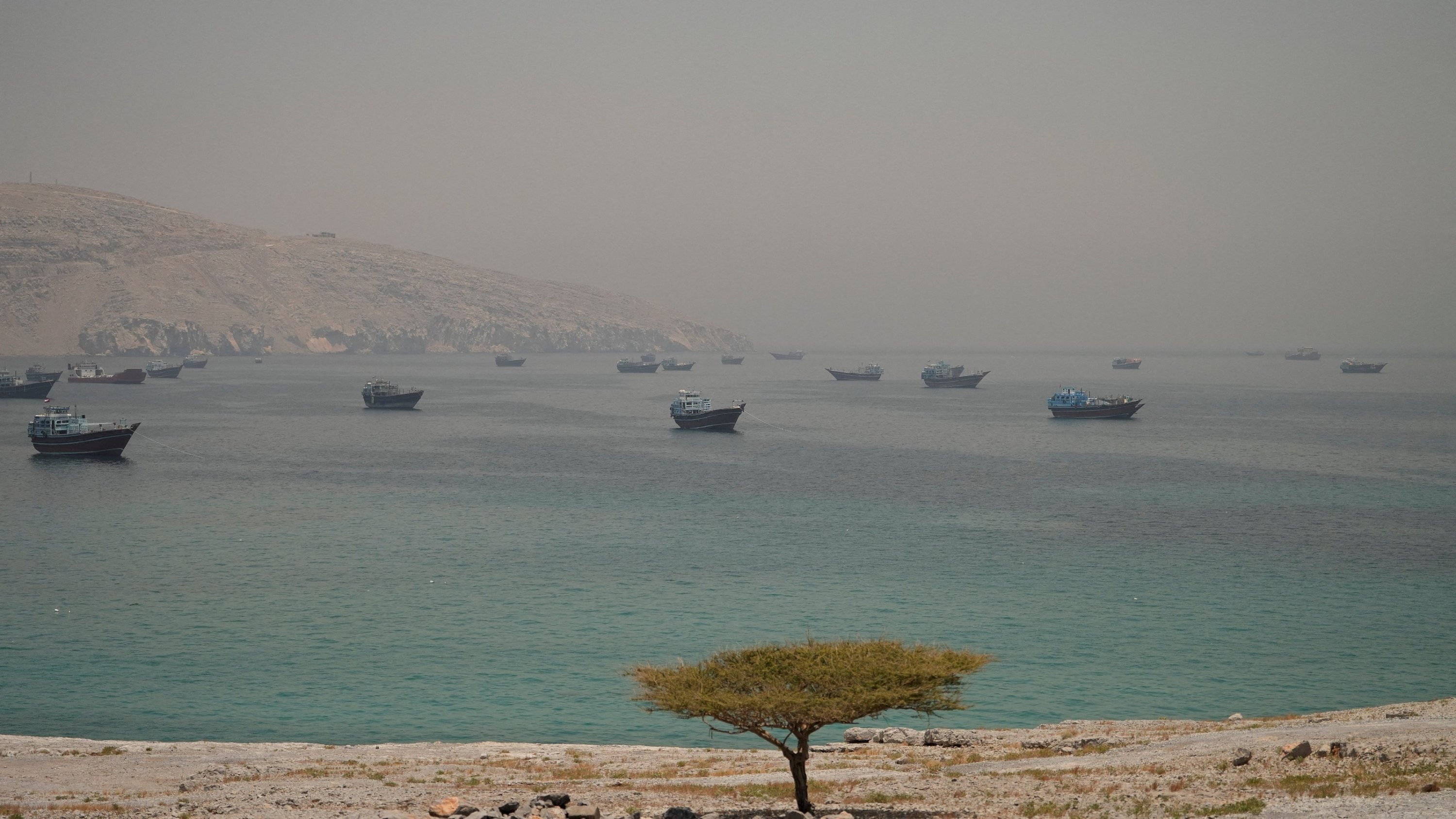
The deal which will pave the way for hostilities to end is close to being finalised, the US, Iran and mediators Pakistan say.
The U.S. should lift the blockade before asking Iran to open the Strait of Hormuz
There was no immediate reaction from the White House or Iranian authorities on Mr. Shehbaz's assertion
Three vessels with Indian crew came under attack off the Oman coast this week. One of them resulted in the death of three Indian seafarers on June 10, 2026
Foreign Minister Abbas Araghchi’s comments came after Iran’s Mehr news agency, citing a source close to the country’s negotiating team, claimed that the deal would see “the release of $24 billion of Iran’s blocked funds…
Meanwhile, in Lebanon, Hezbollah said its fighters confronted Israeli forces advancing towards a southern Lebanese town, as Israel pressed on with its strikes
The US president says a "great settlement" to end the conflict has been reached. Iran says reports of a deal are "speculative".

The BBC's Gary O'Donoghue looks at the US president's mixed messaging over the war and the questions it raises.

Iran's foreign minister and the US president have both stated that an agreement to end the war in Iran could be imminent. Mediators in Pakistan say they are working "to finalize the next steps." DW has more.
The US and Iran may be nearing a breakthrough, according to Donald Trump. DW looks at what has emerged so far, and the key risks and challenges shaping any possible agreement.
Analysts say a litany of sticking points have delayed finalizing an accord and will complicate its implementation.
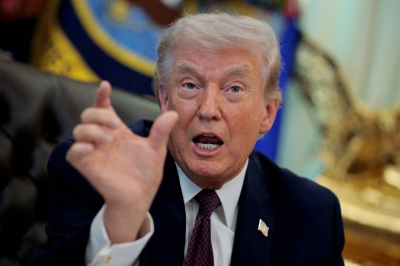
A senior U.S. administration official said both sides had agreed on a text and that Washington expects to sign an initial deal in the coming days.
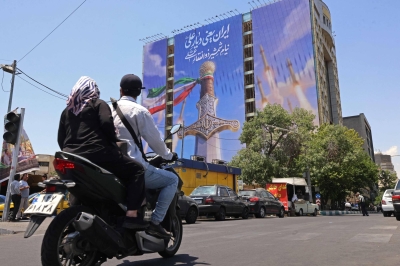
The Trump administration on Friday said that it is “80-85 per cent” confident of signing the peace agreement with Iran to reopen the Strait of Hormuz and end the war in the Middle East. “We do expect to be signing this…

The US and Iran may sign an agreement to reopen the Strait of Hormuz on the sidelines of the Group of Seven world leaders summit next week, according to senior officials. A senior Iranian official indicated overnight…


DUBAI/WASHINGTON, June 12 - The United States and Iran signaled on Friday that an agreement to end their war was close, with a senior U.S. administration official saying both sides had agreed on a text and that…
A senior US administration official said both sides had agreed on a text.
WASHINGTON, June 12 - The U.S. says it is close to signing a peace deal that would end the three-month-old war with Iran, though terms have not yet been made public.
On Thursday, President Donald Trump said he had suspended planned attacks on Tehran because of progress in talks.

A barrel of North Sea Brent for delivery in August fell to $87.33. West Texas Intermediate is $84.88.
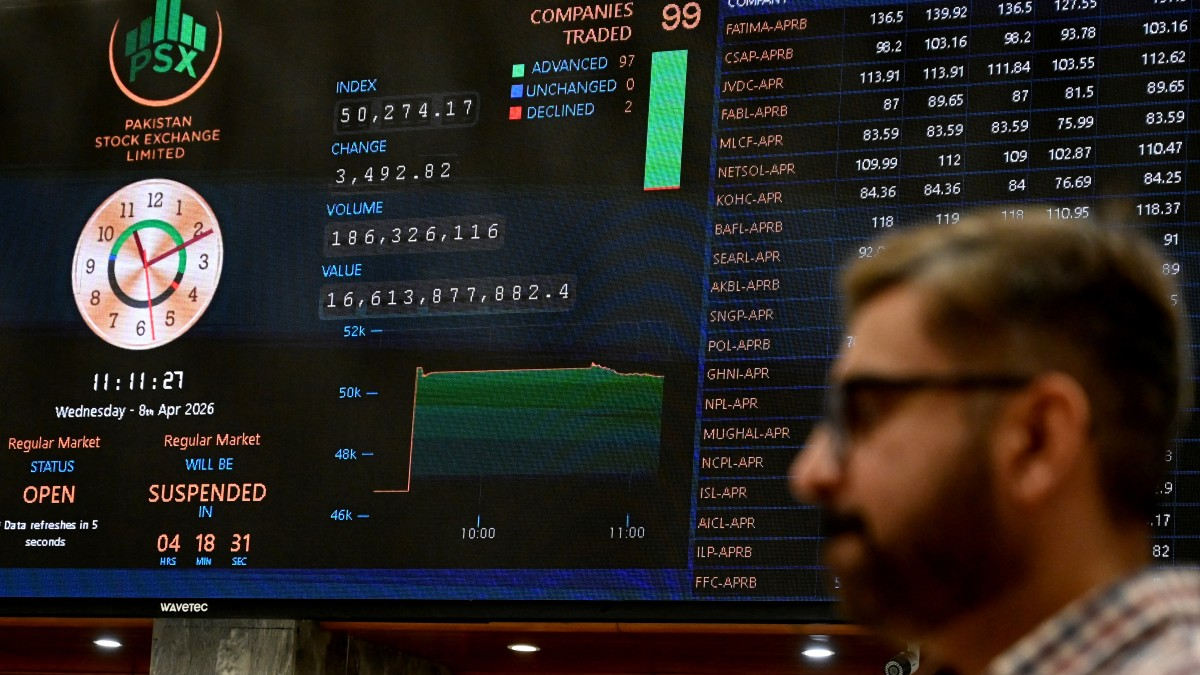
The United States and Iran have 'never been closer' to a deal on ending the war in the Middle East, Iranian Foreign Minister Abbas Araghchi said on Friday. 'The Islamabad Memorand...
The president said this Thursday at the White House that he had reached a 'great peace agreement' with Iran.

The Iranian spokesman recalled that the Islamic Republic is not willing to give in on its "red lines."

However, Fars, citing an anonymous source close to the Iranian negotiating team, claimed that Tehran has not yet approved an agreement.

Washington insists the waterway "remains open to traffic"

“Iran has launched several attack drones with the aim of striking commercial ships transiting the Strait of Hormuz,” the US Middle East Command (Centcom) wrote on X. “The forces…
Iran said on Thursday that no final decision had been made on a peace deal with the United States after US President Donald Trump announced he was calling off further strikes...
The United States and Iran signaled this Friday (12) that they may be closer to an agreement to end the war in the Middle East, which began in February, after a day marked by narrative disputes in…
Iran's foreign minister said that while changes in the deal were still possible, the tentative agreement showed his country had emerged stronger from the conflict.

The cause of their dispute is, on the surface, simple. Israel says the April ceasefire between Tehran and Washington did not cover Lebanon.
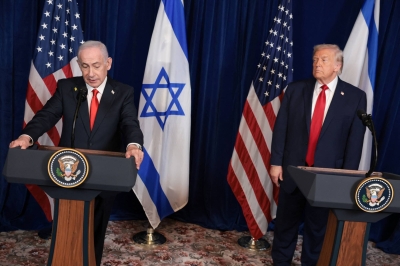
Tehran's Foreign Minister confirms the draft and warns: "The enemy must stop making threats. We will not give in to pressure"
The preliminary agreement revolves around four elements: the Strait, the frozen funds and sanctions, the nuclear bomb and the Lebanon issue
The Swiss city serves as a logistics hub for the G7 in Evian, just 45 km away. In the Intercontinental hotel a history of great agreements
The analyst: “The agreement does not address the problems between the contenders, so the conflict could arise again later”
In China, the initial public offering was watched as a benchmark for a younger industry eager to go public.
A senior U.S. administration official said both sides had agreed on a text and that Washington expects to sign an initial deal in the coming days.
A maritime drone was used to save two crew members from a US Army helicopter that crashed off the coast of Oman earlier this week, according to the US military - becoming the first...