Tanker struck near Strait of Hormuz as Trump heads to NATO summit - CNN
Tanker struck near Strait of Hormuz as Trump heads to NATO summit CNN
Iranian Revolutionary Guard missile strikes on commercial tankers near the Strait of Hormuz directly threaten global oil supply routes through which roughly 20% of the world's oil transits, with Iran...
Dawn and SCMP describe the incident using cautious language around an 'unknown projectile' striking the tanker, while Daily Maverick, Straits Times, and The National directly attribute the strikes to Iran's Revolutionary Guards, citing Axios and US officials. Deutsche Welle and Al Jazeera Arabic use similarly measured phrasing about projectiles and damage, though Al Jazeera notes an American official's accusation of the Revolutionary Guard.
CNN frames the strike as a security incident occurring as Trump heads to NATO, contextualizing it within broader alliance dynamics. The Hindu uniquely reports Iran's state television claim that the tanker ignored warnings, presenting Tehran's narrative alongside the incident description. No outlet reports the Folha de S.Paulo dimension about US fears of Israeli targeting of Iranian negotiators.
Tanker struck near Strait of Hormuz as Trump heads to NATO summit
Iran fires missiles at commercial ships in Strait of Hormuz
Oil tanker hit by 'unknown projectile' in Strait of Hormuz region
Oil tanker struck in Strait of Hormuz, UK says
Tanker set ablaze after hit by projectile in Strait of Hormuz region
Iran fires missiles at commercial ships in Strait of Hormuz
Iran fires missiles at two commercial ships in Strait of Hormuz
Two tankers were injured in the Strait of Hormuz, American official accuses Revolutionary Guard
Whether the tanker strikes represent an Iranian escalation signal, a domestic factional assertion within post-Khamenei Iran, or a pre-planned military response to continued US pressure remains publicly unconfirmed.
Russian state outlet TASS is entirely absent from coverage of the Hormuz strikes, consistent with its pattern of avoiding content that could complicate Russia-Iran relations or undermine its strategic narrative.
CNN leads with the tanker strike as the backdrop to Trump's NATO summit departure, framing Iran as the aggressor and signalling potential military escalation if no deal is reached.
Daily Maverick reports the missile strike factually via Reuters, without framing it through Western or Iranian narratives, treating it as a hard security development.
Dawn reports the tanker as hit by an 'unknown projectile,' hedging attribution and noting transport fares in Karachi remain high from the Iran-US war period, foregrounding civilian economic impact.
Deutsche Welle confirms the UK maritime report of a projectile strike and fire, framing the incident through endurance and institutional sustainability rather than escalation rhetoric.
The Hindu covers Iran's state television claim that the tanker ignored warnings, presenting both sides without taking a position, consistent with its non-aligned framing.
Straits Times reports Iran fired missiles at two commercial ships per Axios, noting significant damage but no casualties, with a terse supply-chain-consequence lens.
The National reports the missile strikes factually, framing the Gulf security environment as a regional collective concern affecting the UAE's energy sector positioning.
Al Jazeera Arabic reports the tanker strike and Araqchi's statement that final negotiations cannot begin while US military threats continue, foregrounding Iranian diplomatic conditions.
Japan Times frames the missile reports through Asian energy security and infrastructure disruption consequences, treating the strait crisis as a logistics and corporate resilience problem.
Times of Israel reports Trump claiming Iran made concessions before admitting they are not final, framing the negotiation as incomplete and Iran's nuclear threat as ongoing.
This page maps the coverage. The 15 articles below are the original reports the comparison is drawn from — open them for each publisher's full reporting.
Tanker struck near Strait of Hormuz as Trump heads to NATO summit CNN
July 6 (Reuters) - Iran’s Revolutionary Guards fired at least two missiles at commercial ships transiting through the Strait of Hormuz on Monday night, Axios reported, citing two U.S. officials.

An “unknown projectile” struck and caused a fire on an oil tanker off the coast of Oman near the Strait of Hormuz on Monday, British maritime security agency United Kingdom Maritime Trade Operations (UKMTO) said. The…
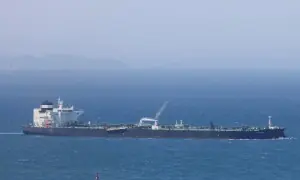
The incident occurred east of Limah, Oman. A projectile struck a tanker and caused a fire while it was traveling southbound, with no casualties reported.
An “unknown projectile” struck and caused a fire on an oil tanker off the coast of Oman near the Strait of Hormuz on Monday, British maritime security agency UKMTO said. The incident occurred near one of the world’s…

Two commercial ships suffered significant damage but had no casualties.

An oil tanker was hit by a projectile off the coast of the Sultanate of Oman in the Strait of Hormuz, according to the British Maritime Trade Operations Authority. Meanwhile, an American official accused the Iranian Revolutionary Guard of firing two missiles at two commercial ships.
The tanker set ablaze after being hit by a projectile hit near Limah, Oman, in the strait, said the United Kingdom Maritime Trade Operations Centre
The United Kingdom Maritime Trade Operations Centre said the tanker had been hit near Limah, Oman, in the strait

Indirect U.S.-Iran talks ended last week without any public sign of headway toward a lasting peace

As Iran asserted its power, the crown prince urged a cease-fire, and is now pursuing his security priorities.
Two commercial ships suffered significant damage but had no casualties, according to the report that cited U.S. officials.
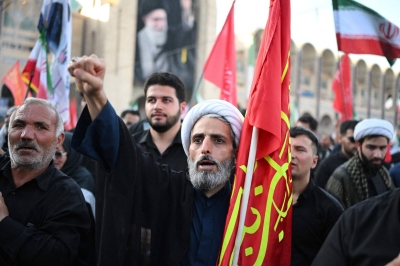
Trump claims Iran’s made concessions, before admitting that they’re not final The Times of Israel
Russian staff to return to Iran’s Bushehr nuclear plant from mid July — report The Times of Israel