Trump says US-Iran deal to be signed on Sunday as Tehran casts doubt on timing
The US president's comments come as Iran says an exact date has not been decided, but it "will not be tomorrow".

A US-Iran agreement to end active hostilities and reopen the Strait of Hormuz would be the most consequential Middle East diplomatic event in decades, reshaping global energy markets, regional security...
BBC News leads with Iran's denial of the Sunday signing date, framing Trump's announcement as a credibility test for the US president. CNA reports the deal's substance—frozen asset releases and sanctions waivers—while noting timing remains unclear. Al Jazeera Arabic explicitly connects Trump's deadline pressure to his 80th birthday, treating the urgency as image-driven rather than substantive.
La Repubblica emphasizes structural fragility, citing an analyst's warning that retaining enriched uranium makes any truce unsustainable. The outlet frames the deal as a US concession driven by institutional miscalculation rather than strategic advantage. SCMP implies Iran negotiates from strength by highlighting its military reconstitution during ceasefire periods, a dimension absent from Western framing.
Trump says deal to be signed Sunday as Tehran denies timing
US, Iran inch closer to deal as timing remains unclear
Why is Trump in hurry to sign agreement for his 80th birthday
US pushes, Iran slows down as deal fragility emerges
Whether Iran has formally agreed to specific uranium disposition terms remains unverified, with the US and Iranian accounts of the deal's commitments described by multiple sources as diverging significantly.
People's Daily and TASS provide no substantive coverage of the deal's terms or Iran's internal opposition, omitting the structural fragility analysis that Western, Gulf, and South Asian sources emphasise.
BBC foregrounds the institutional credibility gap between Trump's claim of a Sunday signing and Iran's explicit denial, framing the story around decision-maker reliability and strategic miscalculation risk.
Le Monde reports the anticipated Sunday signing as a live diplomatic development, noting that once the deal is signed the Strait of Hormuz will open to all, maintaining its expert-interpretation lens.
The Hindu covers the deal through India's strategic autonomy lens, noting US warnings to India about Iranian oil shipments and positioning India as an independent actor navigating between Washington and Tehran.
Dawn emphasises Pakistan's active mediator role, with PM Shehbaz Sharif expressing hope the deal will lead to lasting peace and Pakistan preparing for an 'electronic signing,' highlighting Pakistani institutional agency.
Al Jazeera Arabic frames the deal through an analysis of why Trump is rushing to sign while Iran remains wary, suggesting the birthday optics motivate US urgency and that Iran sees concessions as insufficient.
CNA and Straits Times both report the draft terms—frozen asset releases and Hormuz reopening—through a terse logistics and supply-chain consequence lens, noting the timing remains unclear.
Yahoo Japan and Japan Times frame the deal through energy security and institutional vulnerability, with PM Takaichi vowing diplomatic efforts on the Strait of Hormuz and Japan analysing the deal as an infrastructure-logistics problem.
Folha de S.Paulo reports Trump's claim of a Sunday signing alongside Tehran's non-confirmation, integrating humanistic consequence framing around the deal's uncertain scope.
The National reports Trump's statement that the Strait of Hormuz will 'immediately open to all' after signing, framing the deal through Gulf regional energy and strategic autonomy.
SCMP reports through structural vulnerability analysis, noting Western intelligence assessments that Iran used the ceasefire period to replenish missile stockpiles with Russian-built weapons.
La Repubblica frames the deal as 'peace hanging on a digital signature,' emphasising fragility and Iranian hardliner resistance, with an analyst warning the truce won't last if Iran retains enriched uranium.
This page maps the coverage. The 37 articles below are the original reports the comparison is drawn from — open them for each publisher's full reporting.
The US president's comments come as Iran says an exact date has not been decided, but it "will not be tomorrow".
Draft terms described by multiple sources indicate the US would begin releasing billions of dollars in frozen Iranian assets and waive sanctions on its oil exports, in return for Iran opening the Strait of Hormuz.

North Korea's statement came after a trilateral meeting between South Korea, Japan and the United States in Tokyo, at which the allies reaffirmed their commitment to the "complete denuclearisation of the Korean…

At a time when Washington and Tehran are approaching a preliminary agreement that may pave the way for broader negotiations on the nuclear program and the future of regional balances, the New York Times believes that Iran has emerged from the war and is more willing to bear pressure.
The two parties to the US-Iranian agreement are moving toward a preliminary understanding to reduce the escalation, open the Strait of Hormuz, and ease sanctions, despite a political and symbolic disagreement over the date and nature of the signing.
The President of the United States requests that the Memorandum be signed today. The Pasdaran reply: "He only insists because he only wants his birthday present."
The Canergie analyst: "The White House has overestimated the objectives, now it will have to deal with the concreteness of what will really be achieved"
Western allies believe Iran has most likely added new-build Russian weapons to its inventory and reconstituted large swathes of its missile arsenal during the eight-week ceasefire, giving the Islamic Republic the…

US and Pakistani leaders forecast a Sunday signing of a long-elusive framework agreement to end fighting between the United States and Iran, but Tehran cast doubt over the timing and hardline protesters in Iran voiced…

US President Donald Trump is expected to discuss plans to demine the Strait of Hormuz with allies during next week’s Group of Seven summit in France, a senior US administration official said on Saturday, as mediators…

Mediators Pakistan said it was preparing for an electronic signing on June 14.
Iran offered a different timeline but nonetheless signalled an agreement was in the offing.
• Shehbaz hopes deal will pave way for lasting peace, says Pakistan preparing for ‘electronic signing’ • Trump claims signing scheduled for today; threatens Iran; official says Washington to take part in de-mining •…
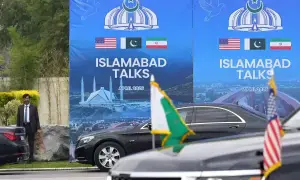
• Netanyahu not coming to Trump’s bilateral meetings • One-on-one session with Zelensky not planned WASHINGTON: US President Donald Trump will meet Middle Eastern leaders and attend a working session with Ukrainian…
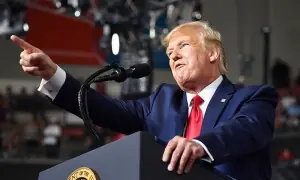
THE US war on Iran has exposed the fundamental strategic vulnerability of the Arab Gulf states. The double blockade of the Strait of Hormuz by Iran and the US has significantly affected the oil and gas exports of the…

U.S. and Iran have released conflicting information about the contents of the deal, as each seeks to show it emerged from the war with the upper hand
Pakistan Prime Minister Shehbaz Sharif says the United States and Iran are expected to sign a peace agreement within the next 24 hours, marking a major step toward ending months of conflict in West Asia. According to…

Khamenei, was killed in Israeli and U.S. strikes on Iran in February

The President of the United States, Donald Trump, stated this Saturday (13) that the agreement to end the war in the Middle East "is scheduled" to be signed this Sunday (14), which will allow the reopening of…
The funeral of Ali Khamenei, former supreme leader of Iran killed in February at the start of the war against the United States and Israel, will begin on July 4 in Tehran, according to state media. The ceremony will last six…
While U.S. bombings heavily degraded Tehran's military, experts say the war has left Iran's hardliners more entrenched than before.
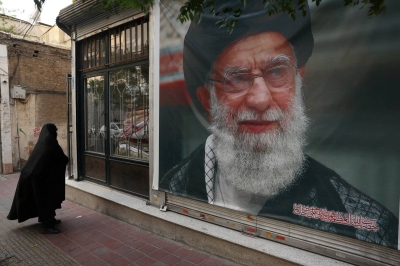

“Iran has launched several attack drones with the aim of striking commercial ships transiting the Strait of Hormuz,” the US Middle East Command (Centcom) wrote on X. “The forces…
The United States said it downed multiple Iranian drones targeting commercial ships in the Strait of Hormuz early on Saturday, hours after both sides said a deal to end the Middle East war was closer than ever. The…

The Trump administration on Friday said that it is “80-85 per cent” confident of signing the peace agreement with Iran to reopen the Strait of Hormuz and end the war in the Middle East. “We do expect to be signing this…

It comes as an upcoming peace deal faces opposition from hardline Iranian figures.
