US and Iran exchange strikes in Gulf in latest test of ceasefire
The US military strikes Iranian drones and radar sites and Tehran says it has targeted US bases in Kuwait and Bahrain.

Ongoing US-Iran military exchanges near the Strait of Hormuz risk choking a critical global shipping lane, threatening energy supplies and triggering broader Gulf state involvement as Iran strikes US bases in...
BBC News and The Hindu frame US strikes on Iranian drones and radar facilities as defensive responses to threats to shipping, with The Hindu emphasizing Pakistan's diplomatic intervention. Folha de S.Paulo and Dawn, citing Iranian sources, characterize the same US strikes as violations of an existing ceasefire, with Iran claiming successful counterstrikes on US bases in Kuwait and Bahrain. TASS quotes experts asserting Iran inflicted enormous damage on US facilities and that no military solution exists, whereas BBC and other Western outlets foreground US operational successes without assessing damage to American positions. Deutsche Welle and La Repubblica provide operational accounts of the exchange without foregrounding either side's damage claims. The National frames the crisis primarily through Gulf economic disruption risks, while SCMP and Japan Times emphasize supply-chain and corporate resilience consequences.
US military strikes Iranian drones and radar sites near Hormuz
US says it destroyed two Iran drones targeting Hormuz shipping
Iran launches fresh missile and drone attacks on Kuwait and Bahrain
Iran says US violated ceasefire, launches missiles at Kuwait and Bahrain
Iran targeted US bases in Gulf after US shot down Iranian drones
US targeted Iranian radars; Tehran responds with missiles on Gulf bases
US Central Command says it shot down two Iranian attack drones
The extent of damage to US military bases in Kuwait and Bahrain from Iranian strikes, and whether the April 8 ceasefire framework remains operative, have not been independently verified from the available summaries.
Most Western outlets omit detailed reporting on civilian casualties or infrastructure damage from Iranian missile strikes on Kuwait and Bahrain; Gulf-based outlets focus on economic disruption rather than military damage assessments.
BBC frames the exchange as a bilateral US-Iran test of ceasefire limits, documenting both sides' strikes and Iranian claims of ceasefire violation with institutional accountability emphasis.
The Hindu leads with US CENTCOM confirmation of drone shootdowns and Pakistan's diplomatic shuttle to Tehran, foregrounding South Asian regional stakes and non-aligned positioning.
Folha de S.Paulo reports Iran's accusation that US violated the ceasefire by striking radar/surveillance facilities, foregrounding Iranian grievance framing.
Dawn covers the escalation through the lens of Pakistan's interior minister carrying messages to Tehran, positioning Pakistan as a de-escalatory broker.
The National focuses on trade and energy disruption consequences if Hormuz closure extends to September, framing the crisis through Gulf economic vulnerability.
La Repubblica frames US strikes as targeting Iranian radar to 'blind' the Revolutionary Guard and allow shipping passage, emphasizing the strategic military logic.
Le Monde reports US military confirmation of downing Iranian attack drones threatening Hormuz maritime traffic, treating it as institutional decision-making.
CNA reports US plans to seize Iranian assets for Gulf allies' reconstruction and examines Southeast Asia's structural economic exposure to prolonged conflict.
Straits Times frames the escalation as complicating ceasefire efforts and reports on Dubai luxury hotels pivoting to resident clientele as tourists flee.
Japan Times analyzes Dubai hotel disruption and Iranian asset seizure plans through supply-chain and corporate resilience consequences for Asian energy security.
SCMP analyzes how the Iran war is enabling Dubai residents to access luxury hotels at discounted rates, treating the conflict through a structural market vulnerability lens.
TASS carries an expert quote asserting there is no military solution and that Iran has caused enormous damage to US bases, some still non-operational, inverting the US victory narrative.
Yahoo Japan reports US interception of Iranian attacks and US military strikes on Iranian radar facilities in brief factual terms.
This page maps the coverage. The 23 articles below are the original reports the comparison is drawn from — open them for each publisher's full reporting.
The US military strikes Iranian drones and radar sites and Tehran says it has targeted US bases in Kuwait and Bahrain.
Pakistan’s Interior Minister Mohsin Naqvi reached Tehran on Saturday (June 6, 2026) to push for peace amidst rising tensions
• Iran launches fresh missile, drone attacks on Kuwait, Bahrain • Kuwait says new attack ‘dangerous escalation’; Bahrain denounces ‘blatant aggression’ • Falling debris causes ‘material damage’ in Kuwait • Centcom says…
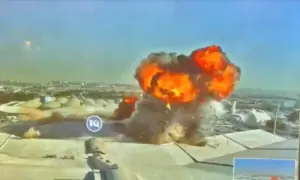
Iran said on Saturday (6) that American attacks on radar and coastal surveillance facilities in the Gulf constitute a "flagrant violation of the ceasefire", in force since April 8, and launched missiles against the…
Kuwait reported intercepting drones while Bahrain sounded air-raid sirens. This came after the United States said it shot down Iranian drones and attacked radar sites.
The Americans want to blind the "eyes" of the Pasdaran to allow the ships to pass to Hormuz. US bases in the Gulf targeted.
The crossfire between the United States and Tehran continues
According to the US Central Command, these aircraft “threatened international maritime traffic in the Strait of Hormuz”.


As the war on Iran marks its 100th day on Monday (Jun 8), CNA looks at how the geopolitical crisis is filtering into everyday life across the region.

Global airline chiefs open their annual summit in Rio de Janeiro on Saturday facing a sharper test of the industry’s post-pandemic recovery, as the Iran war drives up fuel costs and disrupts airspace while carriers try…

Iran accused the US of breaking an April 8 ceasefire deal with strikes on surveillance sites.
The revelation came a day after a wave of attacks by Iran against Kuwait and Bahrain.
The disclosure came a day after an adviser to Iran's supreme leader said that a peace deal hinged on the release of $24 billion in Iranian assets frozen by the United States.

US Treasury Secretary Scott Bessent has directed a team to assess costs for damages already inflicted on Gulf allies by Iran, the source said.

The US government will attempt to redirect Iranian assets to Gulf states for rebuilding and repairs of damage caused by Iran, a source familiar with the matter said, as Tehran followed up a wave of strikes against…

U.S. Treasury Secretary Scott Bessent has also directed a team to assess costs for damage already inflicted on Gulf allies by Iran, the source said, adding that the U.S.

Iran has caused enormous damage to American bases in the region - some of them are still not operational, noted the Secretary of International Affairs of the US Communist Party
US forces attacked Iranian coastal radar installations this Saturday (6), after shooting down drones launched by Iran towards the Strait of Hormuz, the US Army reported, in the latest escalation that…
US forces struck Iranian coastal radar sites on Saturday after shooting down drones launched by Iran towards the Strait of Hormuz, the US military said, in the latest escalation complicating efforts to end the war…

The US military claimed to have intercepted six missiles and that a seventh had failed to “hit its intended target”. “Enemy bases in the region were hit,” the Revolutionary Guards said.