Uganda's leading media outlets shut down by army chief
NTV and Daily Monitor say their offices in the capital are under "military siege".

Uganda's army chief ordering the closure of the country's leading independent TV and newspaper represents a significant blow to press freedom in East Africa and consolidates military authority under the...
Deutsche Welle centers Muhoozi Kainerugaba's ideological position, reporting he stated he does "not believe in a free press," framing media closure as doctrinal authoritarianism. BBC News uses neutral institutional language—"NTV and Daily Monitor say their offices in the capital are under military siege"—without editorializing on motivation or ideology.
The Hindu foregrounds the dynastic angle, noting Kainerugaba "is the son of President Yoweri Museveni" and "has asserted growing control in recent months," treating the media shutdown as an expression of presidential succession maneuvering rather than anti-press ideology alone. Japan Times and Daily Nation report the factual closure ("remain closed until further notice") without framing the closure through either ideology or dynasty.
Uganda's leading media outlets shut down army chief
Uganda army chief shuts down leading independent media group
Uganda military chief shuts media outlets slams free press
Ugandan army chief shuts down main independent media group
What we know so far NTV Uganda Daily Monitor military siege
No available summary confirms whether Ugandan judicial or legislative bodies have challenged the closure order or whether any international bodies have formally protested.
No source provides any statement from the Ugandan government beyond Kainerugaba himself, and the response of Ugandan civil society organisations beyond media outlets is entirely absent.
BBC reports NTV and Daily Monitor are under 'military siege' with offices closed, foregrounding the institutional shock to independent journalism.
The Hindu frames Muhoozi Kainerugaba's growing control as an assertion of dynastic military authority, noting he is the president's son and has been accruing power.
Deutsche Welle quotes Kainerugaba explicitly stating he does not 'believe in a free press,' framing the shutdown as an ideological rejection of press freedom rather than merely a regulatory action.
Japan Times covers the shutdown with the factual detail that NTV Uganda and Daily Monitor will remain closed 'until further notice,' treating it as an institutional governance event.
Daily Nation covers the story under 'NTV Uganda, Daily Monitor still under military siege' and connects it to a broader regional media freedom concern, consistent with its pattern of press freedom scrutiny.
This page maps the coverage. The 6 articles below are the original reports the comparison is drawn from — open them for each publisher's full reporting.
NTV and Daily Monitor say their offices in the capital are under "military siege".
Muhoozi Kainerugaba, the head of Uganda's military and President Yoweri Museveni's son, has asserted growing control in recent months, ordering the arrests of politicians, activists and now a media shutdown

Muhoozi Kainerugaba said that he issued the order as he does not "believe in a free press." He is the son of President Yoweri Museveni, who has held his grip on power for decades.
Nation Media Group's television station NTV Uganda and Daily Monitor newspaper will remain closed until further notice, Uganda's army chief said in a series of posts on X.
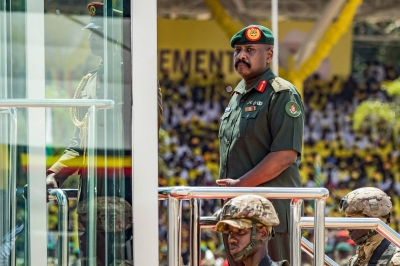
Armed security personnel surround Uganda’s leading independent media house

The media’s role includes highlighting breaches of public trust and engaging in investigative...