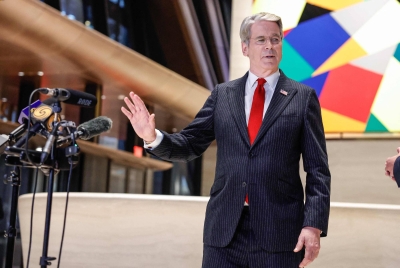
Trump says US will form 'AI Force' and appoint an artificial intelligence tsar
The president said his administration "will not in any way hinder or stifle the growth" amid amid warnings about the emergent technology.

Trump's announcement of a dedicated 'AI Force' and appointment of an AI tsar, combined with US-China agreement to establish an AI national security dialogue, marks a pivotal moment in the institutionalisation...
BBC frames the AI Force as balancing 'acceleration with safety concerns,' citing Trump's statement that his administration 'will not in any way hinder or stifle the growth' while acknowledging warnings about emerging technology. Deutsche Welle frames the announcement as a response to 'mounting pressure' from voices 'calling for policing the fast-growing technology,' treating Trump's AI Force as institutional resistance to regulatory demand.
The Hindu frames the US-China AI dialogue through catastrophic risk fears ('increasingly capable artificial intelligence systems could wipe out humanity'), while Straits Times frames it as pragmatic 'national security risk management between rivals.' Japan Times reports that 'both sides agreed to set up an AI dialogue aimed at reaching a common understanding on goals,' emphasising institutional coordination. The convergence on the preparation talks contrasts with divergence on whether the AI Force represents acceleration-friendly deregulation or defensive risk management.
Trump says US will form AI Force and appoint artificial intelligence tsar
Trump announces new AI force amid mounting pressure
AI alert system over national security concerns being discussed between US, China
U.S. seeks AI dialogue with China as officials set stage for Trump-Xi summit
Bessent hails very successful China talks on AI and trade
The specific mandate and budget of the new US AI Force, and the identity of the appointed AI tsar, are not confirmed in the available summaries.
No available summary addresses the reactions of US AI companies — OpenAI, Google, Anthropic — to the AI Force announcement or whether they were consulted in its design.
BBC reports Trump announced an 'AI Force' and AI tsar while vowing his administration will 'not hinder or stifle' AI growth, balancing acceleration with concerns about emergent technology risks.
Deutsche Welle covers Trump's AI Force announcement amid mounting pressure from the AI industry itself for regulatory oversight, foregrounding the tension between acceleration and governance.
Japan Times reports Treasury Secretary Bessent hailed 'very successful' China talks in which both sides agreed to set up an AI dialogue aimed at common understanding on national security risks.
Straits Times reports the US and China are discussing an AI alert system for national security concerns, framing it as institutional risk management between the two AI superpowers.
The Hindu frames the US 'AI dialogue' proposal to China as driven by rising fears that increasingly capable AI systems could wipe out human oversight — the most catastrophic risk framing among covering outlets.
This page maps the coverage. The 7 articles below are the original reports the comparison is drawn from — open them for each publisher's full reporting.
The president said his administration "will not in any way hinder or stifle the growth" amid amid warnings about the emergent technology.
Several voices, including from within the AI industry, have been calling for policing the fast-growing technology. Trump has once again called AI warnings "hoaxes" and vowed to "cherish, help" the industry.
U.S. Treasury Secretary Scott Bessent and Chinese Vice Premier He Lifeng were expected to meet on Sunday to try to prepare ground for potential agreements on artificial intelligen...
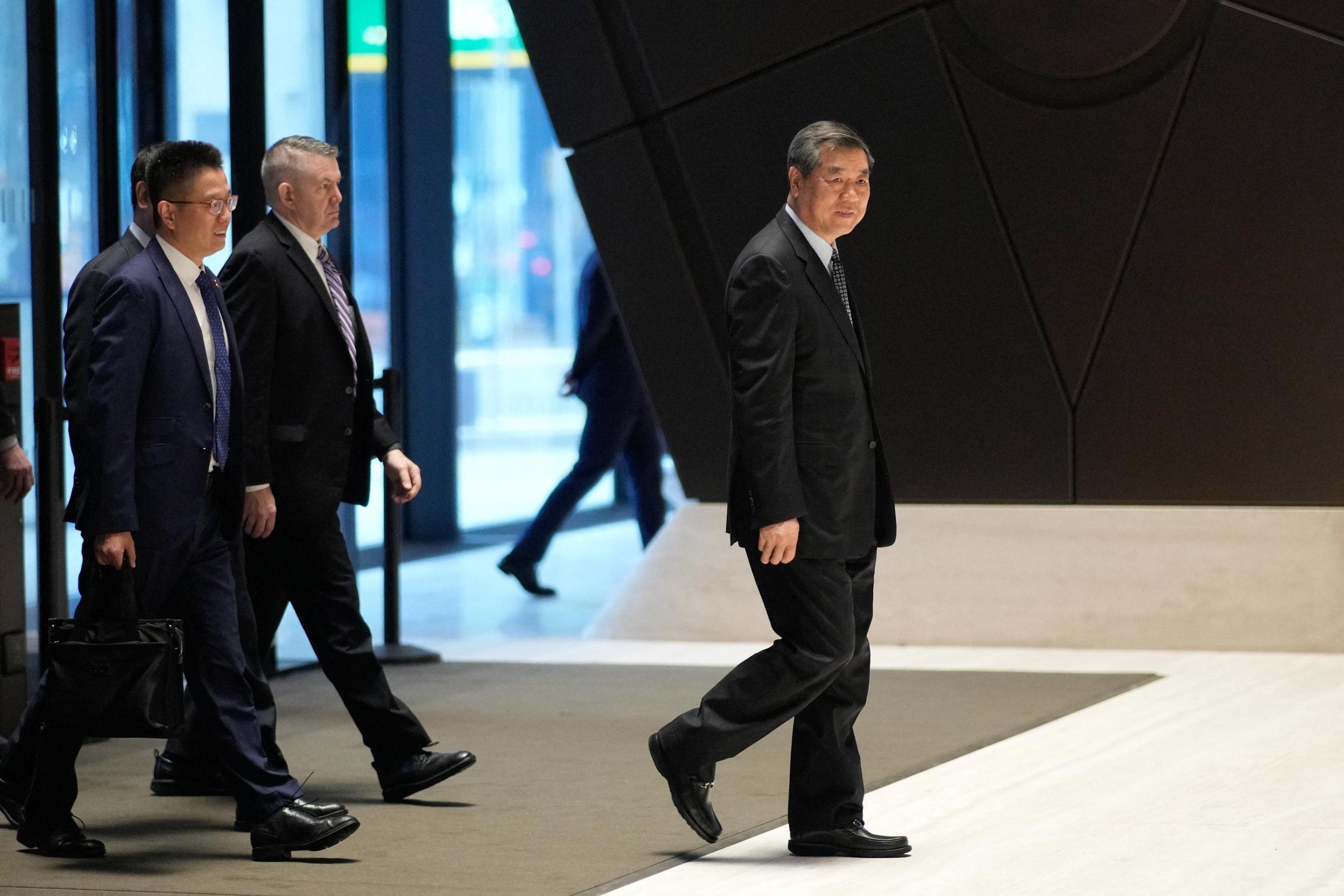
The two sides discussed a system to check AI incidents that involved national security.
The talks come as both powers confront rising fears that increasingly capable artificial intelligence systems could wipe out humanity, offering a rare incentive for cooperation despite an intensifying race for…

Although Beijing is yet to officially announce the trip, U.S. media reports have said that Mr.

U.S. Treasury chief Scott Bessent said the two sides agreed to set up an AI dialogue aimed at reaching a common understanding on goals and threats.