Oil prices slide after US-Iran deal announced
Under the agreement, the key Strait of Hormuz waterway will be reopened, US President Donald Trump said.

Oil prices fell nearly 5% on news that the Strait of Hormuz would reopen under the US-Iran peace framework, directly reducing energy costs for importing nations and reshaping global commodity markets after...
BBC News and The National lead with the oil price decline directly caused by the Hormuz reopening announcement. BBC frames this as a market response to increased energy supply stability. The National reports prices slid nearly 5% and notes this as a regional energy stability achievement.
Straits Times frames the deal as potentially benefiting Iran more than the US economically, suggesting asymmetric gains. Trump claimed the Strait would be 'permanently toll free' according to Straits Times, though no Iranian source confirms this framing and the actual reopening timetable remains tied to the June 19 signing.
Oil prices slide after US-Iran deal announced and Hormuz reopens
Oil slides nearly 5% as US-Iran deal enables Hormuz reopening
Japanese stocks surge as US-Iran peace deal reduces Middle East risk
Nikkei average surges above 69,000 to record high
Iran deal sends global stocks soaring while oil prices fall
Oil prices fall on US-Iran agreement
Whether oil prices will remain suppressed once markets price in the significant risks of deal collapse during the 60-day negotiating phase remains unclear from available summaries.
The economic impact on nations that benefited from higher oil revenues during the blockade period — including Russia and Gulf producers — is absent from coverage focused on importing-nation relief.
BBC reports oil prices sliding after the US-Iran deal, framing the Hormuz reopening as the key market driver — consistent with institutional consequence documentation.
CNN headlines oil price falls as a direct consequence of the US-Iran agreement, treating it as a market validation of the deal's significance.
The National leads with oil sliding nearly 5% and frames the Hormuz reopening as a Gulf regional energy sector event, examining UAE economic positioning.
Japan Times and CNA report Japanese stocks surging (Nikkei above 69,000 for first time) and government bond yields tumbling as the deal removed the biggest risk factor for the Asian economy.
The Hindu documents global stock market surges — Japan's Nikkei up 4.99%, South Korea's Kospi up 5.54% — framing the deal's economic impact through Asian market data.
The National separately analyses how the Iran war has 'bent the world's metals industry out of shape,' contextualising the deal's commodity market implications beyond oil.
This page maps the coverage. The 7 articles below are the original reports the comparison is drawn from — open them for each publisher's full reporting.
Under the agreement, the key Strait of Hormuz waterway will be reopened, US President Donald Trump said.


The Nikkei 225 Index jumped as much as 5.5 per cent to 69,657.09, surpassing the 69,000 level for the first time.

Expectations that turmoil in the Middle East, widely regarded as one of the biggest risk factors for the global economy, would subside led to broad-based buying of Tokyo equities.
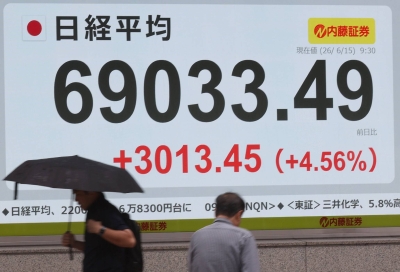
Meanwhile, Japan’s Nikkei 225 index jumped 4.99% and South Korea’s benchmark Kospi index soared 5.54%

Oil prices fall on US-Iran agreement CNN