Israel and Lebanon sign framework agreement after US-brokered talks
Hezbollah is not party to Friday's agreement, and previous ceasefires between Israel and Lebanon have still seen near-daily cross-border strikes.

The US-brokered trilateral framework agreement between Israel, Lebanon, and the US represents the first formal diplomatic architecture for ending the Israel-Lebanon conflict, but Hezbollah's exclusion from the...
Times of Israel reports that Israeli and Lebanese officials previously denied US claims of IDF withdrawal from Lebanese territory, suggesting a gap between how the US characterised the agreement and how Israeli and Lebanese parties understood its terms. Le Monde's analysis notes the deal does not require total Israeli withdrawal but rather entrusts the Lebanese army with control of two "pilot areas," implying ambiguity in the actual scope of Israeli military disengagement. BBC News and The Hindu emphasise the agreement's fragility given Hezbollah's exclusion and ongoing IDF-Hezbollah clashes, framing implementation as deeply uncertain.
Daily Sabah's reporting of FM Fidan warning of Israeli "provocations to derail US-Iran diplomacy" implicitly links the Lebanon deal to the Iran situation in ways other outlets do not, suggesting Turkish concern about interconnected regional escalation. La Repubblica frames the agreement as an opportunity to build a new multinational force including Gulf states, a constructive multilateral angle absent from BBC and The Hindu's more cautious framings.
Israel and Lebanon sign framework agreement after US-brokered talks
Lebanon and Israel sign a framework agreement for lasting peace and security
West Asia war LIVE: Lebanon, Israel and US sign trilateral framework pact
Lebanon, Israel and US sign trilateral peace agreement
US, Lebanon, Israel sign framework agreement
Israel and Lebanon reach framework deal aiming to end conflict
Agreement in Washington between Israel and Lebanon, but Hezbollah isn't in it
The specific terms regarding IDF withdrawal timelines and the Lebanese army's capacity to assume control of designated areas have not been made publicly available in any summarised source.
No source provides Hezbollah's formal official response to the agreement beyond street protest coverage; the Palestinian Authority's position on the Lebanon deal is entirely absent.
BBC notes Hezbollah is not party to the agreement and that 'previous ceasefires between Israel and Lebanon have still seen near-daily' violations, foregrounding institutional fragility.
Le Monde provides precise diplomatic detail: the text does not require total Israeli withdrawal but would entrust the Lebanese army with control of two areas, analysing through elite institutional competence lens.
Deutsche Welle reports Secretary Rubio announcing the agreement with Lebanese officials entering direct talks, emphasising the diplomatic process without military framing.
The Hindu's live coverage places the Lebanon-Israel-US trilateral pact within the same West Asia war live blog as Iranian retaliatory strikes, contextualising it within broader regional instability.
Times of Israel reports IDF soldiers injured in a Lebanon clash with a Hezbollah gunman on the same day as the agreement, and that Lebanese and Israeli officials had earlier denied US claims of IDF withdrawal — foregrounding implementation gap.
La Repubblica reports Meloni thanking the US for mediation and Italy and France proposing a new UNIFIL including Gulf states Qatar and Saudi Arabia — framing Italy as a proactive diplomatic architect.
Folha de S.Paulo provides factual confirmation of the trilateral signing without additional framing depth.
El Tiempo covers Hezbollah supporters setting tires on fire in Lebanon to protest the framework deal, foregrounding domestic Lebanese opposition.
Yahoo Japan frames it as 'Israel and Lebanon Framework Agreement,' providing straight factual label without analytical framing.
Straits Times reports Hezbollah supporters blocking main roads near the government seat in Beirut, emphasising domestic implementation risks.
ABC Australia documents a Beirut Ashura procession simultaneously becoming a display of Hezbollah's force, contextualising the group's street power alongside the agreement.
This page maps the coverage. The 18 articles below are the original reports the comparison is drawn from — open them for each publisher's full reporting.
Hezbollah is not party to Friday's agreement, and previous ceasefires between Israel and Lebanon have still seen near-daily cross-border strikes.
The text signed on Friday does not provide for a total Israeli withdrawal, but to entrust the Lebanese army with control of two “pilot zones”. Hezbollah’s rejection of this agreement constitutes a major obstacle to its…
Iran’s Revolutionary Guards said that they had attacked U.S. sites in the Gulf region in retaliation to American strikes in Iran
The officials did not share details on the agreement that was signed by Yechiel Leiter, the Israeli Ambassador to the United States, and Nada Hamadeh, Ambassador of Lebanon to the United States

The United States, Israel and Lebanon signed this Friday (26) an agreement to cease hostilities in the region. The agreement was announced by US Secretary of State Marco Rubio after negotiations in Washington.
US Secretary of State Marco Rubio has announced a trilateral framework agreement. Lebanese officials began direct talks with Israel in Washington in April.
Israel will maintain a "security zone" along the boundaries of the yellow line, which marks a seized territory that stretches some 10 km into Lebanon from the Israeli border.
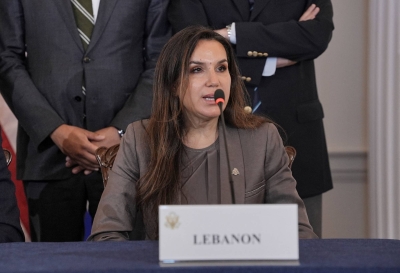
Agreement for a first, gradual withdrawal of the IDF from some "pilot areas". Rubio cautious: “Much remains to be done.”
Meloni: “Thanks to the United States for the mediation”. The goal is now to set up a large expedition, with Qatar and Saudi Arabia
IDF: 4 soldiers hurt in clash with Hezbollah operative in southern Lebanon The Times of Israel
Israel-Lebanon talks extended an extra day as deal on IDF withdrawal remains elusive The Times of Israel
4 IDF soldiers injured in Lebanon clash with Hezbollah gunman, ahead of another day of talks The Times of Israel
Lebanon’s Aoun backs French-Italian initiative for multinational force to succeed UNIFIL The Times of Israel
Some had gathered near the seat of the government and blocked a main road nearby.
Images broadcast in local media and on social networks showed hundreds of Hezbollah supporters in their vehicles.
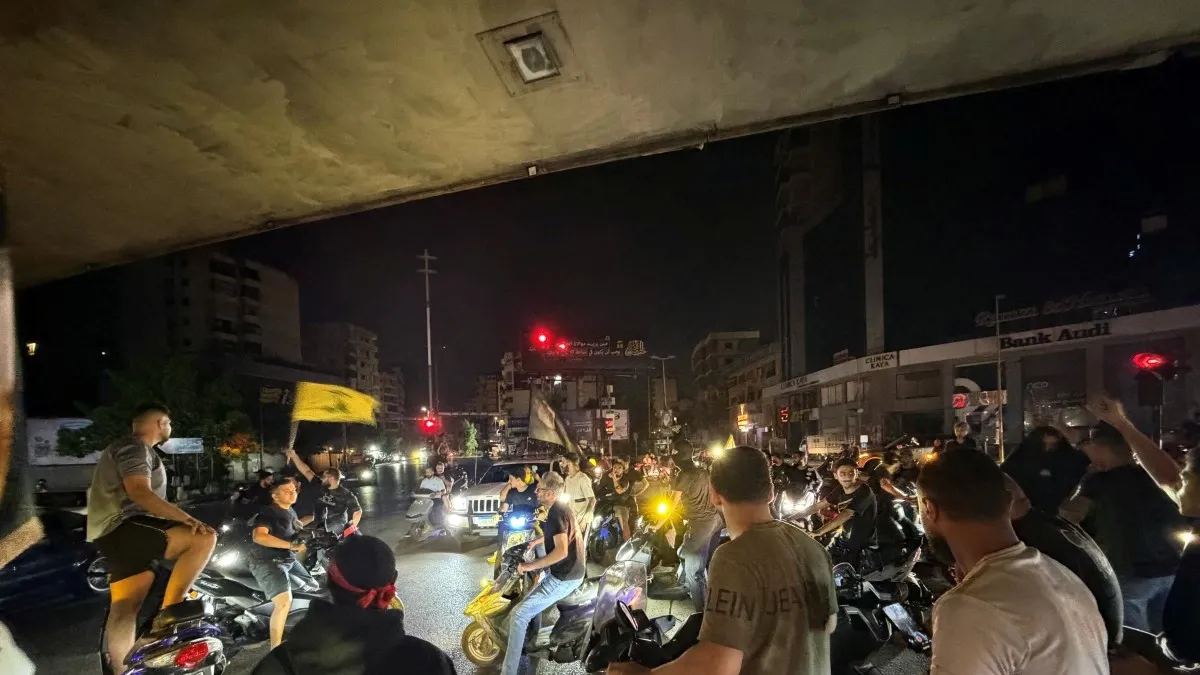
Tens of thousands of Shiite Muslims gathered in Beirut for the largest Ashura procession in years, as Hezbollah used the holy day to project strength despite growing pressure to disarm after months of war with Israel.
Israel to withdraw from two areas in Lebanon under newly signed agreement CNN